

Key Takeaways
Transmission & Drivetrain Solutions cover far more than the gearbox alone. Understanding how the complete system works makes it easier to choose parts, interpret symptoms, and plan repairs sensibly.
- The transmission, differential, axles, driveshafts, and related mounts work as one power-delivery system.
- Drive layout affects traction, handling, service access, and component loads.
- Slipping, harsh shifts, leaks, vibration, and delayed engagement deserve timely investigation.
- The right replacement part must match the vehicle, transmission code, calibration, and intended use.
- Maintenance, heat control, and realistic repair planning protect reliability over the long term.
Understanding transmission and drivetrain systems
A vehicle’s drivetrain is the chain of mechanical components that transfers engine power to the tires. The transmission changes the relationship between engine speed and road speed, while the rest of the system carries that output through the vehicle. These parts operate under changing loads, temperatures, and traction conditions, so a problem in one area can feel like a problem somewhere else. A clear mental picture is the best starting point for any transmission service or upgrade.
What the transmission and drivetrain include
The transmission contains the gears, clutches, shafts, bearings, seals, and controls needed to deliver usable torque. The drivetrain also includes the differential, driveshaft or half-shafts, axles, constant-velocity joints, transfer case on many all-wheel-drive vehicles, and the mounts that hold everything in position. Even the fluid and cooling circuit matter because lubrication and temperature control affect how these parts survive.
A torque converter is common in traditional automatics, while a clutch connects the engine to a manual transmission. Continuously variable transmissions use a different method of changing ratios, and electric vehicles may use a simpler reduction gear arrangement. The exact hardware varies, but the basic purpose remains the same: deliver engine or motor torque to the wheels in a controlled way.
How power moves from the engine to the wheels
Power begins at the crankshaft and passes through a clutch, torque converter, or another coupling device. The transmission selects a ratio, multiplying torque when the vehicle needs to move or climb and reducing engine speed during cruising. From there, the output reaches a differential or transfer system before traveling through axles and joints to the wheels.
Each transition introduces potential losses and loads. A worn mount can allow excessive movement, a damaged joint can create vibration, and a restricted cooler can raise fluid temperature even when the gearbox itself appears normal. That is why diagnosis should follow the complete path rather than focusing on the most familiar component.
Differences between front-wheel drive, rear-wheel drive, and all-wheel drive
Front-wheel-drive vehicles package the engine, transmission, and differential toward the front, with half-shafts sending power to the front wheels. This layout can provide useful traction in many everyday conditions, though the front tires handle steering, braking, and acceleration loads at once. Rear-wheel-drive vehicles separate the driven axle from the engine and transmission, typically using a driveshaft and rear differential.
All-wheel-drive systems distribute torque between two axles through a transfer case, center differential, clutch pack, or electronically managed arrangement. Their added hardware can improve traction, but it also creates more fluids, joints, bearings, and calibration requirements. Tire circumference, matching service parts, and correct fluid selection become especially important when the system depends on balanced wheel speeds.
Common signs of drivetrain problems
A symptom is useful evidence, not a diagnosis. Notice when it occurs, whether the vehicle is hot or cold, which gear or direction is involved, and whether road speed or engine speed changes first. That record can help separate a transmission concern from an axle, differential, mount, or wheel-related issue.
Common warning signs include:
- Engine speed rising without a matching increase in vehicle speed.
- A pause or bump when selecting Drive or Reverse.
- Fluid spots, a burning odor, or fluid that looks unusually dark.
- Clunks, humming, whining, or vibration that changes with acceleration.
These details narrow the investigation, but they do not replace inspection. Continuing to drive with a worsening symptom can turn a contained repair into damage across several connected components.
Choosing the right transmission solution
Selecting a transmission solution starts with the vehicle’s original design and ends with its actual use. A commuter, a tow vehicle, and a modified performance car may need entirely different priorities. Compatibility includes more than the number of gears: software, bellhousing dimensions, sensors, cooling, final-drive ratio, and torque capacity all matter. Good research prevents an apparently attractive part from creating new problems after installation.
Automatic, manual, and continuously variable transmissions
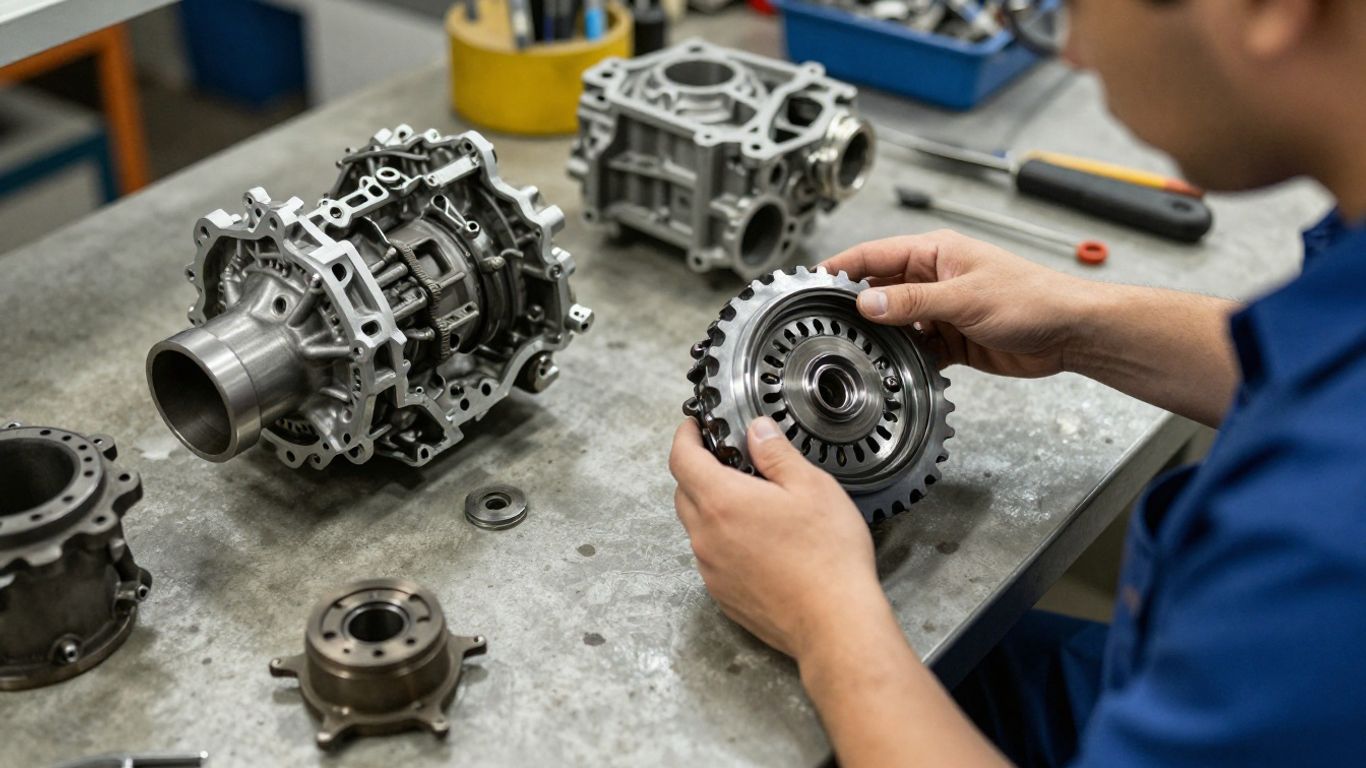
Traditional automatic transmissions use hydraulic pressure, electronic controls, and internal clutches to select gears without a clutch pedal. Manuals rely on driver-controlled clutch engagement and gear selection, while continuously variable transmissions change ratio without fixed conventional gears. Each design has its own fluid specification, service procedure, failure patterns, and driving feel.
The best choice is usually the one engineered for the vehicle and duty cycle, not simply the one with the most aggressive reputation. A replacement must communicate correctly with the vehicle’s control modules and work with the engine’s torque output. Changes in tire size, engine calibration, or final-drive ratio can also alter shift behavior and loading.
OEM, rebuilt, and aftermarket replacement options
An OEM replacement generally aims to reproduce the vehicle maker’s original fit and operating characteristics. A rebuilt unit is disassembled, inspected, and reassembled with selected replacement parts; the quality depends on the builder’s process and the parts used. An aftermarket unit or upgrade may change materials, clutch capacity, cooling, or control strategy, but it must still suit the rest of the vehicle.
Pure Drivetrain Solutions provides high-performance transmission and drivetrain components, along with resources covering transmission variations, applications, identification, procedures, and service details. That kind of application information is useful before ordering, especially when several versions of a transmission look similar from the outside.
Matching components to vehicle specifications
Start with the vehicle identification number, model year, engine, drive layout, transmission code, and existing final-drive ratio. Then confirm connector locations, control-module compatibility, torque-converter or clutch dimensions, cooler connections, and required programming. For an all-wheel-drive vehicle, verify transfer-case and differential compatibility as well.
A simple comparison can prevent expensive mismatches. The following items deserve a place in the parts-selection record:
| Specification | Why it matters | Where to verify |
|---|---|---|
| Transmission code | Identifies the correct internal and external configuration | Vehicle records and unit label |
| Engine torque output | Establishes expected clutch, gear, and shaft loads | Factory data and verified calibration |
| Drive layout | Determines transfer, differential, and axle requirements | Vehicle build information |
| Fluid specification | Affects lubrication, pressure, and clutch operation | Service documentation |
Once these details are confirmed, the shortlist becomes much smaller. It also gives the installer a clear basis for checking fitment before the old unit is removed.
Balancing cost, performance, and long-term reliability
The lowest purchase price is not necessarily the lowest ownership cost. Include removal and installation labor, fluids, programming, cooler flushing, seals, mounts, shipping, and the possibility of related parts being worn. A stronger component may be sensible for a modified car, but unnecessary changes can add cost and introduce calibration or drivability compromises.
Pure Drivetrain Solutions documents high-performance transmission upgrades and rebuild kits, modifications of OEM components, proprietary billet parts, C6X Steels, FSR Frictions, and the SIAG gearbox. Those documented offerings illustrate why a buyer should evaluate the exact product scope and application rather than assuming every performance part suits every vehicle.
Diagnosing common transmission issues
Transmission diagnosis works best as a sequence of observations and tests. A road symptom can originate in the gearbox, its control system, the fluid circuit, or a connected drivetrain component. Begin with the customer’s description, then inspect for obvious physical clues before interpreting scan data. This order limits guesswork and keeps a familiar symptom from becoming an automatic parts recommendation.
Identifying slipping, hard shifting, and delayed engagement
Slipping often feels like engine speed flaring while acceleration falls behind. Hard shifting may come from incorrect pressure, worn friction elements, a control fault, or a mechanical problem elsewhere. Delayed engagement happens when Drive or Reverse takes too long to apply, and it can be related to fluid level, hydraulic leakage, seals, or internal wear.
Record the conditions carefully: cold start, operating temperature, uphill load, throttle position, and selected gear. A single harsh shift after a battery disconnect is different from a repeatable flare under load. The pattern helps a technician decide whether to inspect controls, pressures, software, or internal components first.
Understanding leaks, noises, and unusual vibrations
Fluid color and smell can provide clues, but they should not be treated as conclusive by themselves. Clean the area, identify the highest wet point, and check the pan, cooler lines, axle seals, output seals, and case seams. A leak that appears to come from the transmission may actually be traveling from an engine seal or another nearby component.
Noise changes are equally useful. A whine that follows engine speed points in a different direction from a hum that follows road speed, while a vibration during acceleration may implicate a joint, mount, driveshaft, or differential. Inspection on a lift should be performed safely, with attention to looseness and damaged boots.
Using diagnostic scans and fluid inspections
A scan tool can reveal stored or pending fault codes, sensor readings, adaptation information, and communication problems. It cannot directly measure every mechanical failure, and the absence of a code does not prove that the transmission is healthy. Fluid level must be checked at the specified temperature and procedure, because an incorrect level can imitate more serious faults.
A careful inspection combines scan results with the fluid’s condition, service history, road-test behavior, and visual examination. For troubleshooting habits outside automotive work, a systematic DNS troubleshooting guide makes a similar point: isolate the failure, test one assumption at a time, and verify the result rather than guessing.
The practical value of any diagnostic result comes from how it changes the next step. A code may justify a wiring check, while debris in the pan may justify internal inspection; neither finding alone should dictate a complete replacement without supporting evidence.
Knowing when professional testing is necessary
Professional testing is appropriate when symptoms are intermittent, the vehicle has multiple warning lights, fluid contamination is present, or the repair requires pressure testing, programming, or internal disassembly. Specialist equipment can measure hydraulic behavior and confirm whether a control concern is actually producing a mechanical result.
Seek help promptly if the vehicle loses forward or reverse movement, overheats, leaks heavily, or produces a rapidly worsening vibration. A qualified provider should explain the tests performed, separate confirmed findings from possibilities, and show why a proposed repair addresses the evidence.
Improving drivetrain performance
Performance work should begin with the vehicle’s intended use and the limits of the complete drivetrain. More engine torque raises demands on clutches, gears, shafts, differentials, mounts, and cooling systems together. Improving one component without considering the others can simply move the failure point downstream. A well-planned build improves consistency as much as peak output.
Upgrading differentials, axles, and driveshafts
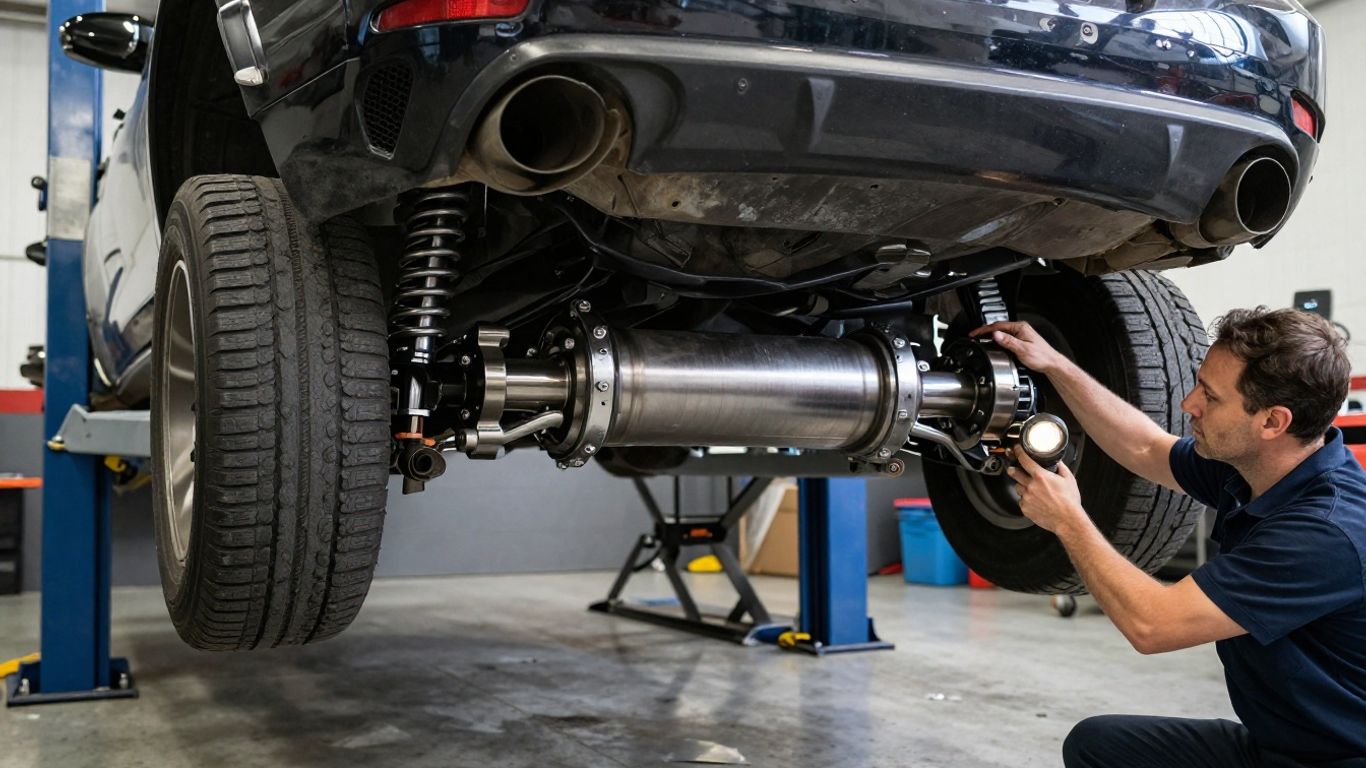
Differentials manage the speed difference between driven wheels, while axles and driveshafts carry torque through changing angles and suspension movement. Upgrades may involve stronger shafts, improved joints, revised differential internals, or a driveshaft selected for the vehicle’s power and operating speed. Fitment, balancing, clearance, and correct fastener torque are essential.
A component rated for high power is not automatically suitable for a daily-driven vehicle. Noise, vibration, harshness, lubrication needs, and service access all affect whether an upgrade works well in practice. The rest of the system must be checked for weak links before installation.
Selecting components for towing and heavy-duty use
Towing increases heat and sustained load, particularly during launches, hill climbs, and low-speed maneuvering. The right plan considers trailer weight, grade, ambient temperature, axle ratio, cooling capacity, tire size, and the manufacturer’s limits. A stronger transmission alone cannot make an overloaded vehicle safe.
For heavy-duty use, prioritize predictable temperature control and parts with a documented application. Recheck fluid levels, cooler routing, mounts, and driveshaft angles after installation. Towing behavior should be evaluated under controlled conditions before a vehicle is committed to a long trip.
Enhancing acceleration and power delivery
Acceleration improvements can come from gearing, clutch capacity, converter behavior, traction, or calibration. The desired result should be stated precisely: quicker launches, faster shifts, smoother roll-on power, or more consistent performance after repeated runs. Each goal leads to a different combination of parts and setup decisions.
Pure Drivetrain Solutions is described as offering high-performance ZF transmission rebuilds for Toyota Supra A90/A91 and BMW M3/M4 G80/G82 applications, with Stage 1, 2, and 3 rebuilds for listed ZF 8HP models. That narrow application detail is a useful reminder to verify the exact vehicle and transmission before treating a performance rebuild as interchangeable.
Managing heat, friction, and component stress
Heat is one of the clearest threats to transmission durability. Adequate cooling, correct fluid, clean passages, and sensible shift strategy help control temperature, while excessive slip creates additional friction and heat. Differential and transfer-case fluids also need attention when a vehicle sees repeated high-load use.
Track use, drag racing, frequent towing, and aggressive calibration should each have a maintenance plan. Data from temperature sensors or inspections can reveal whether a change is helping. If a component becomes hotter, noisier, or less consistent after an upgrade, the build needs reassessment rather than more power.
Maintaining transmission and drivetrain components
Preventive maintenance is less dramatic than a rebuild, but it often has greater influence on ownership cost. Service intervals should reflect the vehicle maker’s requirements and the actual conditions in which the vehicle operates. Stop-and-go traffic, towing, extreme temperatures, water exposure, and modifications can all change the workload. Consistent records make later diagnosis much easier.
Following fluid change and inspection intervals
Use only the specified fluid or a clearly approved equivalent, and follow the correct level-check procedure. Some transmissions have no conventional dipstick, while others require a particular temperature range and fill position. A fluid change should not be used to conceal a known mechanical problem, but it can support normal service when the unit is otherwise healthy.
Inspect the pan, plug, magnet, cooler lines, and fluid condition during service. Differential, transfer-case, and manual-transmission fluids should be scheduled separately when their requirements differ. The service record should include mileage, fluid type, quantity, and any observations.
Checking seals, mounts, joints, and bearings
Small inspections can catch problems before they affect the gearbox. Look for wet seals, cracked boots, loose mounts, damaged guibos or couplings where fitted, worn universal joints, and bearing play. A failed mount can create harsh engagement and driveline clunks that resemble internal transmission damage.
Road speed and engine speed provide useful clues during a test drive, but a visual and hands-on inspection is still needed. Replace compromised boots before contamination reaches a joint, and address leaks before low fluid causes accelerated wear. These repairs are often simpler when handled early.
Preventing wear through proper driving habits
Driving style changes the loads placed on the drivetrain. Avoid selecting Reverse or Drive before the vehicle has stopped, do not hold the vehicle on a hill with throttle, and allow the transmission to engage fully before accelerating. Smooth inputs reduce shock loads without requiring unusually slow driving.
When towing or carrying heavy loads, use the vehicle’s recommended mode and observe temperature warnings. If a vehicle is stuck, repeated wheelspin followed by sudden traction can damage axles and differentials. Recovery should be controlled and appropriate to the vehicle’s equipment.
Adjusting maintenance for modified or high-mileage vehicles
Modified vehicles need a service plan based on the new power level, tire size, gearing, and use. High-mileage vehicles may also need more frequent leak checks, mount inspections, and fluid-condition reviews, especially when service history is incomplete. More frequent maintenance is not a substitute for correcting a known fault.
Keep records of software changes, replacement parts, fluid services, and unusual symptoms. That information helps a shop distinguish long-standing behavior from a new failure. It also supports more honest decisions when several repairs compete for the same budget.
Planning transmission and drivetrain repairs
Repair planning combines technical judgment with financial realism. A useful estimate identifies the failed component, the evidence supporting that diagnosis, and the work required to access it. It should also account for related wear discovered during disassembly. Clear explanations matter because transmission work can involve substantial labor before the final cause is visible.
Estimating repair, replacement, and labor costs
Ask for a written estimate that separates parts, labor, fluids, programming, diagnostics, taxes, core charges, and shop supplies. Compare the cost of a targeted repair with a rebuilt or replacement unit, but make sure each option includes the same supporting work. Cooler flushing, seals, mounts, and calibration are easy to overlook in a headline price.
A used unit may cost less initially but carry unknown history and limited support. A new or professionally rebuilt unit may cost more while reducing uncertainty. The useful comparison is total expected cost and risk, not just the first invoice number.
Comparing repair shops and specialist providers
Look for providers who routinely work on the vehicle’s transmission type and can explain their testing process. Ask whether they perform internal rebuilding, outsource it, or install exchange units. Check how they handle programming, break-in procedures, warranty claims, and post-repair concerns.
A credible shop should welcome specific questions rather than relying on vague promises. For broader service decisions, even a professional testing guide reinforces the value of independent evaluation, clear standards, and separating inspection from the work that may follow. The subject differs, but the decision-making principle is useful.
Evaluating warranties and replacement-part quality
Read the warranty for coverage length, exclusions, labor reimbursement, fluid requirements, tuning restrictions, and geographic limitations. Ask what evidence is needed if a failure occurs and whether the provider supplies technical support during diagnosis. A warranty has practical value only when its conditions are understood before purchase.
Part quality should be evaluated by application, materials, manufacturing process, and inspection—not by marketing language alone. Keep invoices and installation records, and follow any break-in or service instructions. If the vehicle is modified, disclose those modifications before agreeing to coverage.
Deciding between repair, rebuild, and full replacement
A repair makes sense when the failure is localized and the remaining unit is in acceptable condition. A rebuild is more appropriate when wear is widespread but the case and major hard parts remain serviceable. Full replacement may be justified when damage is extensive, parts are unavailable, contamination is severe, or a verified exchange unit offers better value.
The decision should reflect vehicle value, future use, parts availability, and confidence in the diagnosis. Do not choose a complete replacement simply because the symptom sounds serious, and do not choose a small repair when inspection shows broad internal wear. A documented evaluation gives the owner a defensible path forward.
Conclusion
Transmission & Drivetrain Solutions are most effective when treated as a complete system rather than a single replacement part. Understanding power flow, matching components carefully, diagnosing symptoms methodically, controlling heat, and maintaining supporting hardware all contribute to dependable performance. With clear testing and a realistic estimate, owners can choose repairs or upgrades that fit both the vehicle and the way it is driven.
Frequently Asked Questions
What is included in a vehicle drivetrain?
The drivetrain generally includes the transmission, differential, driveshafts or half-shafts, axles, joints, transfer case where fitted, and related mounts and couplings. The exact arrangement depends on the vehicle’s drive layout.
How can I tell if a transmission is slipping?
A common sign is engine speed rising without a matching increase in vehicle speed. Slipping may appear during acceleration, uphill driving, or a particular gear, but testing is needed to identify the cause.
How often should transmission fluid be changed?
The correct interval depends on the vehicle, fluid type, transmission design, and operating conditions. Follow the service documentation and consider more frequent inspections for towing, severe use, or modified vehicles.
Is a rebuilt transmission better than a used one?
A rebuild can provide more known information about inspected and replaced parts, while a used unit may have an unknown service history. The better option depends on the builder, warranty, application, and total installed cost.
Can a transmission problem cause vibration?
Yes, but vibration can also come from mounts, driveshafts, axles, joints, differentials, wheels, or tires. The timing and speed at which vibration occurs help determine which systems need inspection.
What should I do if transmission fluid is leaking?
Check the fluid level according to the specified procedure and arrange an inspection soon. Driving with low fluid can increase heat and wear, while identifying the leak early may prevent wider damage.
When should I stop driving the vehicle?
Stop driving and seek professional help if the vehicle loses forward or reverse movement, leaks heavily, overheats, makes severe mechanical noise, or develops a rapidly worsening vibration. Continuing may increase both damage and repair cost.