
Key Takeaways
Throttle response issues Renault drivers notice can come from the air path, electronic throttle controls, engine sensors, wiring, or basic electrical problems. A careful diagnosis is usually more useful than replacing parts at random.
- A delay after pressing the accelerator may indicate a throttle, sensor, air, fuel, or electrical fault.
- Hesitation and stalling should be treated more urgently than mild, consistent pedal lag.
- Diagnostic trouble codes are clues, not proof that the named component has failed.
- Live data, wiring checks, and voltage tests help separate related faults.
- Cleaning, repairing leaks, replacing failed parts, and completing relearning procedures can restore normal response.
What throttle response issues feel like in a Renault
Throttle response is the delay and smoothness of the engine’s reaction after the accelerator pedal moves. A small change in response may be hard to notice at first, while a larger fault can affect pulling away, merging, or maintaining speed. The pattern matters because symptoms that appear only under load can point in a different direction from symptoms present at idle.
Drivers may also confuse throttle lag with turbo lag, a slipping clutch, or an automatic transmission issue. Note what the engine does, when it happens, and whether warning lights appear. A short recording of the instrument panel and the sound of the engine can help a technician reproduce the concern.
Delayed acceleration after pressing the pedal
The classic complaint is a pause between pressing the accelerator and feeling the vehicle move forward. The engine may rev slowly, or the pedal may seem to do very little before power arrives. A gradual delay can be caused by incorrect pedal or throttle signals, restricted airflow, or a fuel delivery problem, but the symptom alone cannot identify one part.
A useful observation is whether the delay is identical every time. Consistent response may reflect a control or mechanical issue, whereas a delay that varies with bumps, temperature, or pedal position raises suspicion of an intermittent electrical connection.
Hesitation, surging, or engine stalling
Hesitation feels like a brief cut in power when the throttle opens. Surging is the opposite pattern: the vehicle accelerates unevenly even though the pedal is held steady. If the engine stalls while pulling away or when the accelerator is released, the fault may involve idle control, crankshaft timing information, air leaks, or fuel mixture control.
Do not continue repeated road tests in traffic if the engine can stall without warning. The common causes of throttle lag include electronic throttle control concerns and dirty sensors, but those possibilities still need to be checked against the vehicle’s codes and live data.
Reduced power and limp-home mode
A vehicle that suddenly limits engine power may be protecting the engine or responding to conflicting throttle signals. The accelerator can feel unusually weak, and the engine may refuse to rev beyond a restricted range. This reduced-power behavior is often accompanied by a warning message or an engine light, although the exact display varies by vehicle.
Switching the ignition off and back on may temporarily clear the behavior, but it does not repair the underlying fault. Record the warning message before clearing anything, because stored or pending codes may provide useful evidence.
Differences between cold-start and warm-engine symptoms
Symptoms that occur only during a cold start can involve temperature-dependent sensor readings, air leaks that change as components warm, or fuel mixture corrections. A problem that begins after several minutes may instead relate to heat-sensitive wiring, charging voltage, or a sensor that becomes unreliable at operating temperature.
Compare the first few minutes with the same route after the engine is warm. Also note outside temperature, fuel level, weather, and whether accessories such as the air conditioning are running. Those details make the symptom more repeatable and reduce guesswork.
Common causes of poor throttle response
Poor response is not one diagnosis. The throttle body and pedal sensors are obvious suspects, but air leaks, contaminated intake parts, poor electrical supply, and unrelated engine faults can produce a similar driving complaint. Begin with the simplest visual and code checks before authorizing expensive component replacement.
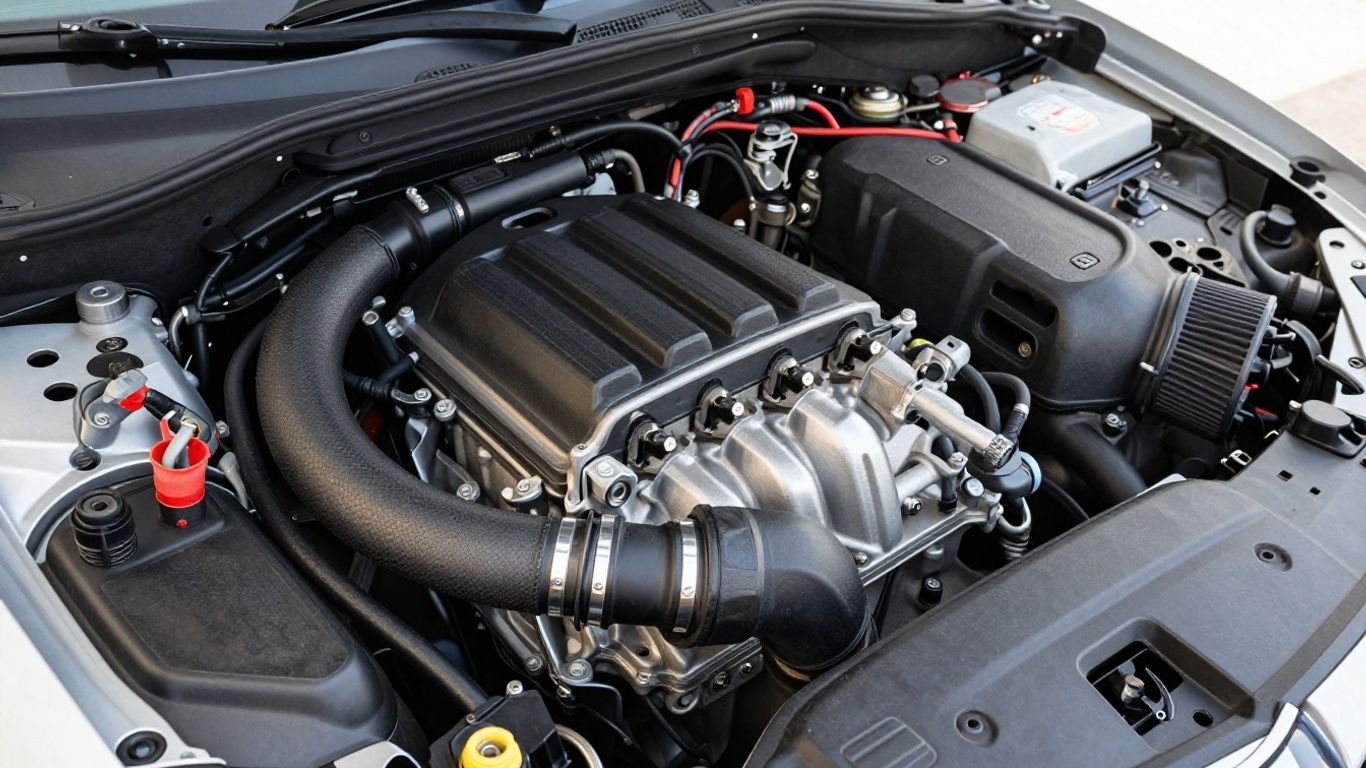
The following image depicts the kind of inspection area a technician may examine, including the intake tract and electronic throttle hardware.
Dirty or failing throttle body
Deposits around the throttle plate can interfere with controlled airflow, especially at small openings and during idle transitions. A failing motor or internal position sensor can create a more pronounced delay, inconsistent response, or a reduced-power condition.
Cleaning may help when deposits are the cause, but forcing the plate open or spraying an unsuitable solvent into an electronic assembly can create new damage. Before cleaning, inspect the housing, connector, and intake duct for signs of oil mist, cracks, or loose fittings.
Accelerator pedal position sensor faults
An electronic accelerator pedal normally reports its position through one or more signal circuits. If the signals disagree, jump, or drop out, the control system may limit throttle opening for safety. The driver may feel dead spots, abrupt changes in power, or no response from part of the pedal travel.
A pedal fault should be confirmed with live-data comparison and an electrical test. Replacing the pedal without checking its connector, reference voltage, ground, and wiring can leave the original problem unresolved.
Throttle position sensor and electronic throttle problems
The throttle position signal tells the engine controller how far the throttle has opened. A worn track, damaged motor, poor connector contact, or mismatch between commanded and actual position may cause hesitation and fault codes. Because the pedal and throttle are separate devices, a code for one should not automatically lead to replacement of the other.
The Mégane II throttle discussion illustrates why drivers often distinguish pedal-to-throttle delay from turbo behavior. Owner observations can suggest useful tests, but modifications to wiring or control circuits should not be attempted without a proper electrical diagnosis.
Air leaks, intake restrictions, and contaminated filters
Unmetered air entering after the airflow sensor can upset mixture calculations and make acceleration uneven. A collapsed hose, loose clamp, blocked filter, or restricted intake path can also reduce the air available when the engine needs more power. Some faults are obvious under the hood; others appear only when the engine moves on its mounts.
A practical first-pass check should include:
- Looking for split rubber hoses, loose clamps, and disconnected breather lines.
- Checking the air filter and its housing for blockage or poor sealing.
- Listening for hissing around the intake while the engine idles.
- Inspecting whether the intake duct changes shape when the engine is loaded.
These checks do not replace smoke testing or pressure testing, but they can reveal a straightforward cause. A throttle response diagnosis guide also discusses restricted fuel flow and faulty vehicle components as possible explanations for sluggish acceleration.
How engine management sensors affect acceleration
Engine management depends on several signals arriving at the right time and agreeing with one another. The controller uses them to estimate airflow, engine position, mixture, and requested torque. When one signal is implausible, the system may adjust fueling or throttle opening, set a code, or enter a reduced-power strategy.
Sensor faults are particularly confusing because a bad reading may be caused by the sensor, its wiring, a shared supply, or a mechanical problem that makes the reading look abnormal. Testing the complete circuit is therefore more reliable than treating a code description as a verdict.
Mass airflow and manifold pressure sensor errors
Airflow and manifold-pressure sensors provide information about the engine’s breathing. A contaminated sensor, blocked port, intake leak, or wiring fault can make the controller misjudge the amount of air entering the engine. The result may be flat acceleration, surging, poor idle quality, or an illuminated warning lamp.
Look for disagreement between the sensor reading and the engine’s actual condition. For example, an implausible value at idle or a reading that does not change when engine load changes deserves investigation, but exact expected values depend on the engine and operating state.
Crankshaft and camshaft position sensor faults
The crankshaft and camshaft signals establish engine speed and position. If one becomes weak or intermittent, injection and ignition timing can be affected, producing hesitation, difficult starting, sudden stalling, or a failure to start. Heat and vibration can make these faults appear only during a particular part of a drive.
A stored code may identify a signal problem without proving that the sensor itself is defective. Checking signal quality, connector security, and synchronization data is especially valuable when the vehicle restarts after cooling down.
Oxygen sensor and fuel-trim problems
Oxygen-sensor feedback helps the controller adjust the mixture after the engine reaches operating temperature. A vacuum leak, exhaust leak, injector issue, or weak fuel supply can drive fuel trims away from normal and make the oxygen sensor appear to be the cause. This is why replacing the sensor alone may not cure poor response.
Compare short- and long-term fuel-trim behavior under different conditions. A trim that changes substantially at idle but improves under load can point toward an air leak, while a problem that worsens during acceleration may require fuel-pressure and delivery checks.
Wiring, connectors, and shared sensor circuits
A loose terminal or corroded ground can affect several systems at once. Vibration may interrupt a circuit for a fraction of a second, leaving a code that seems unrelated to the driver’s main complaint. Shared sensor supplies and grounds deserve attention when multiple warnings appear together.
Electrical faults are often found by moving a harness while monitoring live data, checking voltage drop under load, and inspecting terminals closely. A shared sensor circuit explanation shows why an apparently unrelated electrical fault can sometimes influence engine behavior.
How to diagnose throttle response issues Renault vehicles
Diagnosis should move from symptom confirmation to code retrieval, live-data analysis, physical inspection, and targeted testing. Avoid clearing codes before recording them, since freeze-frame information may show the conditions under which the fault appeared. The goal is to identify the failed system and verify the repair, not simply turn off a warning light.
A scan tool is useful, but it cannot see a cracked hose or a loose ground by itself. Pair electronic evidence with a careful inspection and a short, safe road test when appropriate.
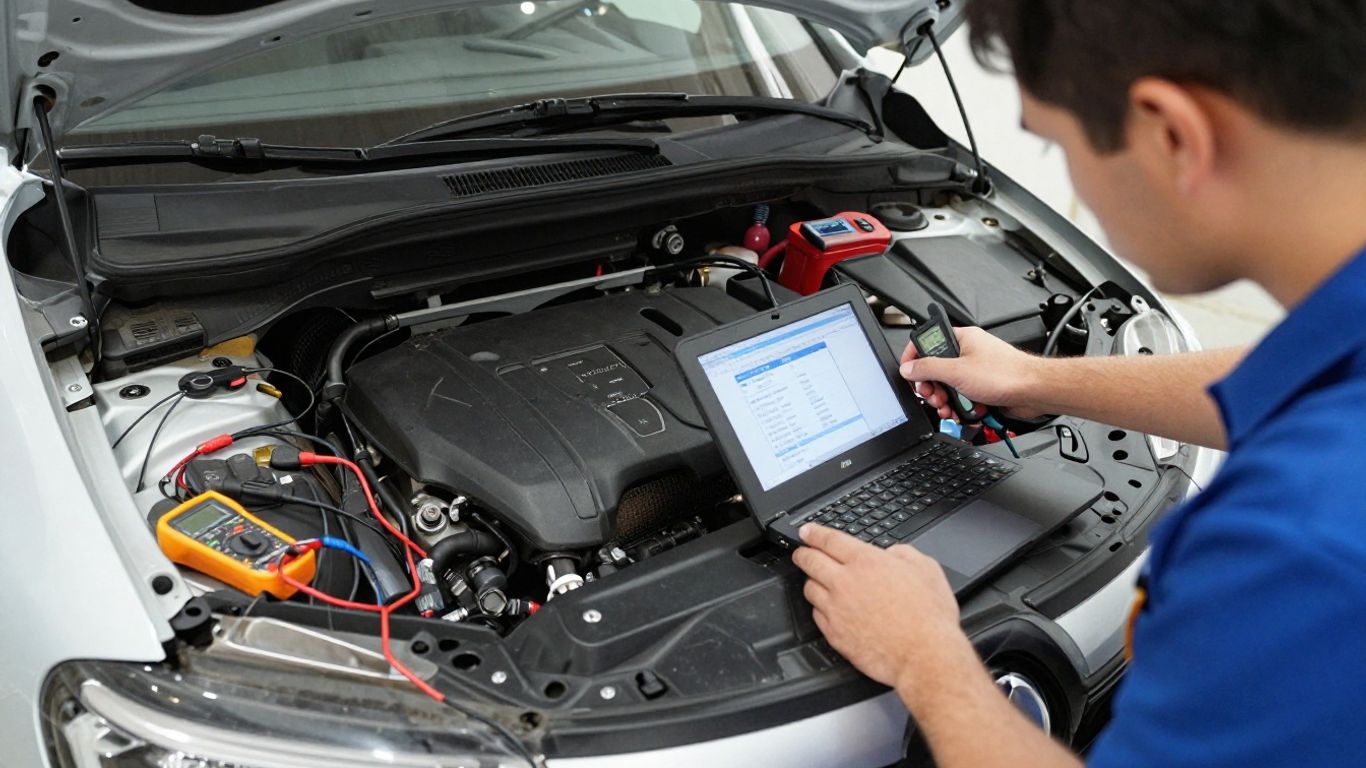
Reading diagnostic trouble codes with an OBD scanner
Start by recording stored, pending, and manufacturer-specific codes, along with freeze-frame data. Codes related to pedal position, throttle position, airflow, engine synchronization, or system voltage can help narrow the search. They should be interpreted alongside the symptom and the conditions in which it occurred.
Do not assume that a throttle code means the throttle body must be replaced. A low battery, damaged reference circuit, or inconsistent pedal signal may produce a similar result. After repairs, rescan the vehicle and confirm that the code does not return.
Checking live data from the throttle and pedal sensors
Live data can reveal whether pedal input changes smoothly and whether the throttle follows the requested position. Compare redundant pedal signals with each other, then compare commanded throttle opening with actual position. Sudden jumps, dropouts, or disagreement between channels are more meaningful than a single value viewed in isolation.
This is also a useful time to check engine speed, airflow, manifold pressure, and fuel trims. A smooth signal matters because a sensor can remain within a broad range while still producing a brief dropout that causes hesitation.
Inspecting intake hoses, wiring, and electrical connections
Look over the intake duct, throttle housing, vacuum lines, breather connections, and filter housing before removing parts. Then inspect wiring for chafing, stretched sections, oil contamination, and terminals that do not grip firmly. A smoke test can find leaks that are too small to see or hear at idle.
The sluggish acceleration checklist is a useful reminder that power loss can also involve fuel delivery, ignition, exhaust restriction, or mechanical drag. Those areas should be considered when throttle data looks normal.
Testing battery voltage, charging output, and grounds
Electronic throttle systems need a stable electrical supply. Low battery voltage during cranking, excessive charging voltage, or a poor engine ground can create several misleading fault codes. Measure voltage during starting and with electrical loads operating, then check voltage drop across the main grounds.
Correct the supply problem before judging other components. A sensor that behaves normally after voltage and ground faults are repaired may not need replacement at all.
Repairs that can restore throttle response
The correct repair depends on the test results. Some vehicles need only a cleaned throttle housing or a replaced hose; others require a sensor, wiring repair, or a formal adaptation procedure. After any repair, verify response under the same conditions that originally produced the complaint.
Keep removed parts and scan records until the repair is confirmed. That simple habit makes it easier to revisit the diagnosis if the symptom returns.
Cleaning the throttle body safely
Follow the service information for access, cleaning products, and plate handling. Disconnecting the battery is not automatically appropriate because it may erase learned settings or create additional relearning needs. Protect electronic connectors and avoid flooding the motor or sensor area with solvent.
After cleaning, inspect the gasket and intake connection before reassembly. If the plate still sticks or the position signal remains erratic, cleaning was not the complete repair.
Replacing a faulty pedal or throttle position sensor
Replacement is justified when testing confirms an unstable signal, internal failure, or a mechanical defect. Use the correct part for the engine and model, and inspect the connector before installing it. A new component will not correct a broken wire or poor ground.
Once fitted, clear relevant codes only after recording them, then perform the required calibration or adaptation. Confirm that pedal movement and throttle response are smooth throughout their range.
Fixing vacuum leaks and damaged intake components
Replace split hoses, damaged seals, loose clamps, and distorted intake sections rather than relying on temporary tape repairs. A smoke test can confirm that the repaired system is sealed. If the intake is restricted, restore the correct filter and housing arrangement before evaluating acceleration again.
A leak repair may change fuel-trim values gradually as the controller relearns. A follow-up scan and road test help establish whether the mixture and response have returned to a stable pattern.
Performing throttle adaptation or relearning procedures
Some electronic throttle systems need an adaptation after cleaning, battery disconnection, or component replacement. The exact sequence depends on the vehicle and diagnostic equipment, so use the correct service procedure rather than relying on a generic pedal routine found online.
Keep the battery adequately charged during the process and avoid interrupting it. If adaptation fails, investigate voltage, wiring, mechanical binding, and incompatible parts instead of repeating the procedure indefinitely.
When professional diagnosis is necessary
A professional inspection is sensible when the vehicle loses power unexpectedly, stalls in traffic, or returns to reduced-power mode after a basic check. Modern throttle systems combine mechanical and electronic components, so guessing can become expensive quickly. The best workshop will explain what was tested and why a repair follows from the evidence.
Bring the symptom timeline, warning messages, scan results, and details about recent maintenance. Those small pieces of context often shorten the diagnostic process.
Warning signs that make the vehicle unsafe to drive
Stop driving and arrange assistance if the accelerator becomes unresponsive, the engine stalls repeatedly, the vehicle cannot maintain safe speed, or warning lights appear with severe misfiring. A car that enters reduced power in a busy road situation may not accelerate when needed. Do not test an intermittent fault by taking unnecessary risks in traffic.
If the vehicle can be moved safely, keep the trip short and avoid highways, steep hills, and overtaking. When in doubt, have it transported for diagnosis.
Why intermittent faults require deeper testing
Intermittent faults may disappear when the vehicle reaches the workshop. Heat, vibration, moisture, and harness movement can all change the result. Technicians may need to monitor data during a road test, perform voltage-drop tests, or apply controlled movement to wiring while watching for signal changes.
A code that has not returned does not prove the problem is gone. Reproducing the original conditions is often more valuable than replacing the most obvious component.
Choosing between dealer and independent Renault specialists
A dealer may be useful when the vehicle needs manufacturer-specific software, technical information, or a complex control-system procedure. An independent specialist with suitable diagnostic equipment can also be appropriate, particularly when the issue requires careful electrical and mechanical testing rather than a routine service.
Ask whether the workshop can access manufacturer-specific codes and live data, explain its diagnostic steps, and provide a clear distinction between confirmed faults and possibilities. The technical debt assessment process is unrelated to vehicle repair, but its evidence-first idea applies here: decisions should follow documented findings rather than assumptions.
Preventing recurring throttle response problems with maintenance
Keep intake filters, battery terminals, and electrical grounds in good condition, and address warning lights before a minor fault becomes a reduced-power event. Inspect hoses during routine servicing, especially after work near the intake or battery. Use the correct cleaning and maintenance procedures for the engine rather than treating every hesitation with an additive or replacement part.
A simple maintenance record can show whether symptoms follow weather, fuel, service work, or battery age. For non-automotive links that may appear in unrelated search material, such as corrective chiropractic care, leash-reactive dog training, budget hotels in Chambéry, or lacunar stroke research, the topics are separate from vehicle diagnosis and should not be treated as automotive guidance.
Conclusion
Throttle response issues Renault drivers experience are best approached as a structured diagnostic problem: describe the symptom, capture codes and live data, inspect the air path and wiring, test the electrical supply, and verify the repair. That method helps distinguish a dirty throttle body from a sensor, leak, or circuit fault and reduces unnecessary parts replacement.
Frequently Asked Questions
What is throttle response?
Throttle response is how quickly and smoothly the engine reacts after the accelerator pedal is pressed. Poor response may feel like a pause, hesitation, surge, or weak acceleration.
Can a dirty throttle body cause delayed acceleration?
Yes, deposits can interfere with airflow and throttle movement. Cleaning may help, but the throttle motor, position feedback, wiring, and related air leaks should be checked if the symptom remains.
Can a weak battery affect throttle response?
It can. Low cranking voltage, charging faults, and poor grounds may disrupt electronic controls or create misleading sensor codes.
Is limp-home mode safe to drive in?
Only move the vehicle as far as necessary to reach a safe location, and avoid traffic situations that require strong acceleration. Repeated or severe power loss warrants professional assistance.
Should diagnostic codes be cleared before repair?
No. Record the codes and freeze-frame information first. Clearing them can remove useful clues about when the fault occurred.
Can an air leak cause hesitation?
Yes. Unmetered air can disturb mixture calculations and produce hesitation, unstable idle, or uneven acceleration. Visual inspection and smoke testing can help locate the leak.
Does a throttle body always need relearning after cleaning?
Not always, but some vehicles require an adaptation procedure after cleaning, battery disconnection, or component replacement. Follow the vehicle-specific service instructions.