
Key Takeaways
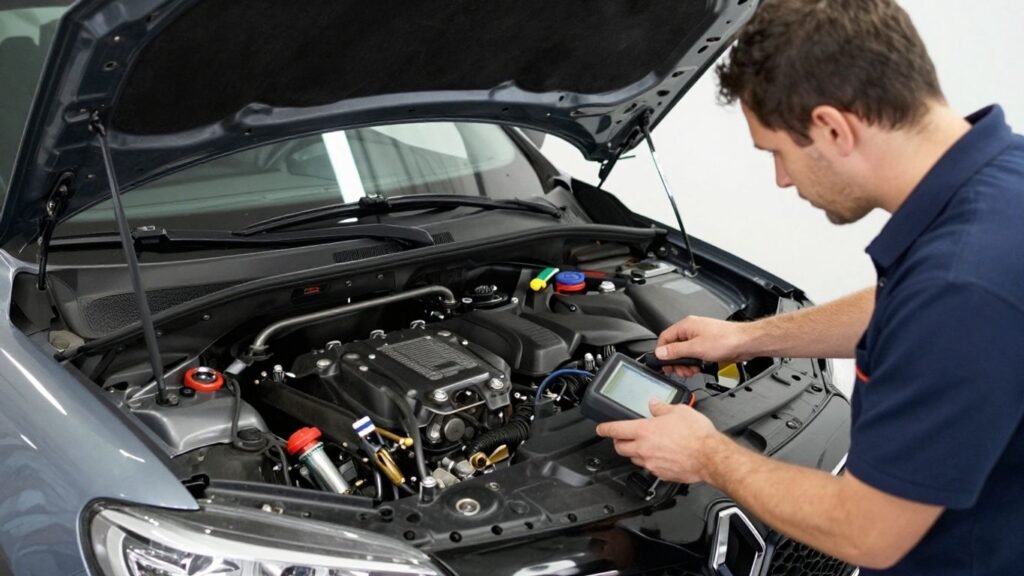
Glow plugs support cold starting and stable combustion in a diesel engine, but several electrical and fuel-system faults can create similar symptoms.
- Hard starting, white smoke, rough idle, and warning lights are common clues.
- A scan tool should be used alongside resistance and wiring checks.
- Engine code, model year, and access affect the repair method.
- Glow plugs can snap during removal if corrosion or carbon is present.
- Replacing the underlying electrical fault matters as much as fitting new plugs.
How glow plugs work in Renault diesel engines
A diesel engine does not use spark plugs to ignite its fuel. Instead, glow plugs heat the combustion area before and sometimes during startup, helping the engine begin combustion when the air and cylinder walls are cold. That is why glow plug failure Renault diesel symptoms are usually most obvious on cold mornings.
The role of glow plugs during cold starts
Each glow plug contains an electrically heated element. When energized, it reaches a high temperature and helps create the conditions needed for fuel to ignite during cranking. A healthy set does not make a diesel engine run like a gasoline engine; it simply gives the first combustion events a better chance of being clean and consistent.
Cold weather exposes weak plugs quickly. The engine may crank normally but take several seconds longer to fire, particularly if the battery, fuel system, or compression is not operating at its best. General background on diesel cold starts can help put these symptoms in context.
How the glow plug control module manages heating
A relay or control module supplies power to the plugs and determines when heating begins and ends. Modern systems may continue heating briefly after the engine starts, helping stabilize combustion while the cylinders warm. The module also monitors electrical behavior, so a fault may illuminate a warning lamp even when the engine still starts.
The control circuit is separate from the physical heating elements. A new plug will not solve a failed fuse, damaged harness, poor ground, or defective controller. Diagnosis therefore needs to test the whole circuit rather than stopping at the first failed component.
Differences between Renault dCi engine generations
Different dCi generations use different glow plug specifications, control strategies, connectors, and access arrangements. Even engines with similar displacement can require different parts or tightening procedures. The engine code and vehicle identification information should be checked before ordering anything.
A model that starts well in mild weather may still have one weak plug. Conversely, a difficult start on an older diesel may involve compression, injectors, or fuel delivery rather than the heating system. Treat the engine family as a starting point for diagnosis, not as proof of a particular failure.
Why glow plugs affect emissions and drivability
Poor preheating can leave fuel only partly burned during the first moments after startup. The result may be pale smoke, an uneven idle, or a noticeable vibration that fades as the engine reaches operating temperature. In some diesel systems, post-heating also supports stable early running and exhaust-system operation.
The glow plug function is therefore broader than simply switching off a dashboard lamp. Still, smoke or hesitation alone cannot identify a failed plug. The symptoms must be matched with electrical measurements and stored fault information.
Common symptoms of glow plug failure in a Renault diesel
A single weak plug may be difficult to notice in warm conditions, while several failed plugs can make a cold start immediately unpleasant. Record when the symptom appears, how long it lasts, and whether the engine is warm or cold. That simple history often prevents a cold-start complaint from being confused with a permanent engine fault.
Hard starting or extended cranking
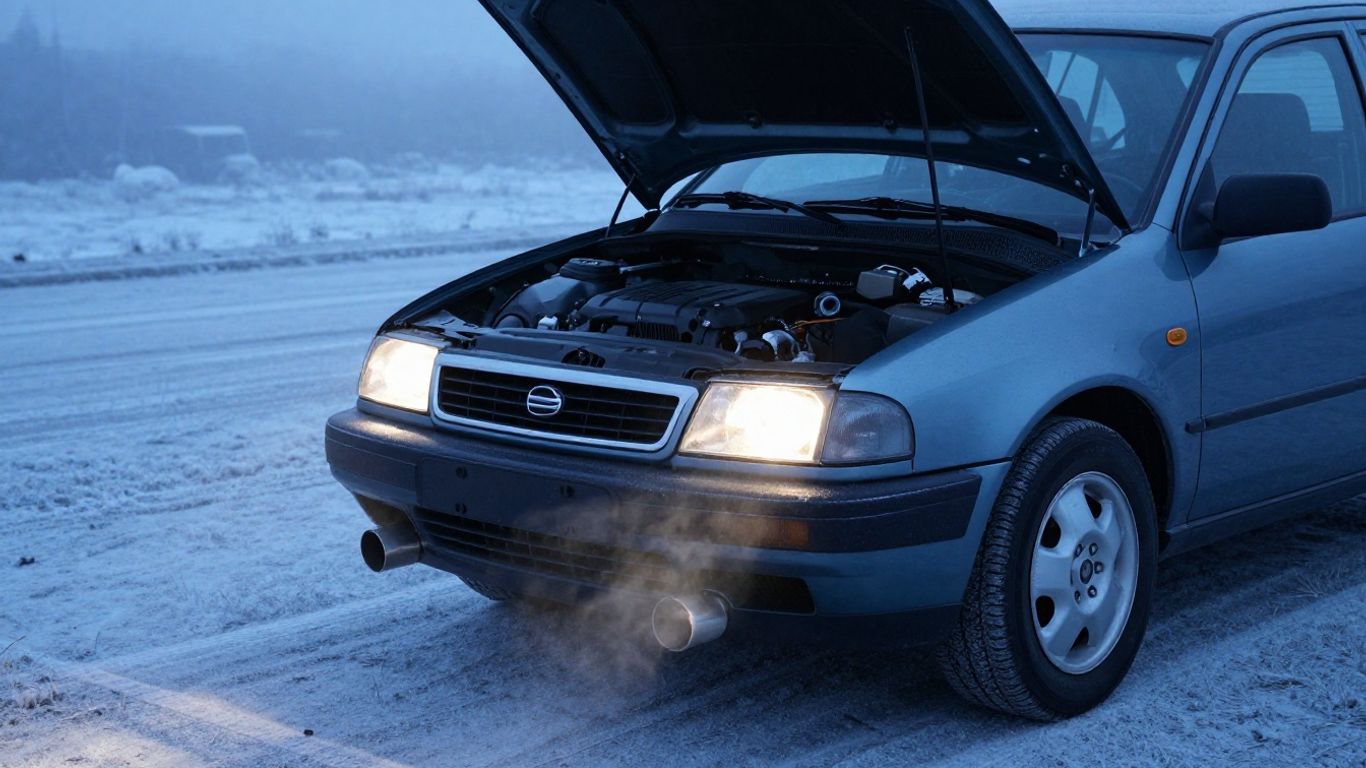
The starter may need to turn the engine longer before it fires, especially after the vehicle has sat overnight. If cranking speed is slow, however, the battery or starter must be checked first. A diesel needs both adequate cranking speed and sufficient heat, so one problem can hide another.
White or gray exhaust smoke after startup
White or light gray smoke can indicate fuel that has entered a cold cylinder without burning completely. It may clear within seconds or continue while the engine runs unevenly. Coolant leaks, injector problems, and low compression can produce similar smoke, so color is a clue rather than a diagnosis.
Rough idle, misfires, or engine vibration
A weak glow plug can leave one cylinder contributing less during the first part of a cold idle. The vehicle may shake, stumble, or sound uneven until combustion improves. If the fault continues after warm-up, investigate injectors, compression, air leaks, and fuel quality as well.
Glow plug or check engine warning lights
A glow plug symbol that stays on, flashes, or appears together with a check engine light deserves a scan. The code may point to a plug circuit, a controller, or another engine-management issue. A forum account describing a Clio warning light and jerky acceleration is only an individual report, but it illustrates why warning-light symptoms should not be interpreted in isolation.
Reduced performance in cold weather
Some drivers notice sluggish response or uneven acceleration before they notice a complete starting failure. Cold temperatures can expose marginal electrical supply, weak plugs, restricted fuel flow, or a tired battery at the same time. If the problem is seasonal, compare cold-start behavior with the same vehicle after it has warmed up.
What causes glow plug failure
Glow plugs are consumable heating components, but their surroundings matter. Heat cycles, combustion deposits, voltage problems, and moisture can all shorten their useful life. Finding the cause is worthwhile because replacing the plugs alone may leave the original fault in place.
Normal wear and high mileage
Repeated heating and cooling gradually changes the resistance and condition of the element. At higher mileage, one plug may fail first and the others may be close behind. A vehicle that has recently become harder to start should therefore be assessed as a complete system.
Carbon buildup around the glow plug tip
Combustion deposits can make a plug difficult to remove and may hold it tightly in the cylinder head. Deposits around the tip can also interfere with heat transfer or indicate an underlying combustion issue. Force is rarely a good answer; careful cleaning and the correct removal method reduce the chance of damage.
Faulty relays, modules, or wiring
A relay contact can burn, a connector can loosen, or a harness can develop high resistance. These faults may affect every plug at once, making a set of apparently failed plugs look like the problem. The supply voltage should be checked at the connector and traced back toward the control unit.
Incorrect voltage or charging-system problems
Glow plugs are designed for a specified electrical supply. An alternator fault, poor battery connection, incorrect replacement component, or bad ground can create abnormal voltage and excessive heat. Checking battery and charging performance is especially sensible when multiple plugs fail together.
Water, oil, or corrosion contamination
Oil or water around the plug and connector can encourage corrosion and poor contact. Leaks from nearby components may contaminate the area, while road moisture can affect exposed wiring. Cleaning the area before testing helps prevent dirt from being pushed into the cylinder head during removal.
How to diagnose glow plug problems
Diagnosis works best as a sequence rather than a parts lottery. Begin with the complaint and a cold vehicle, then inspect the stored codes, electrical supply, individual plugs, and related engine systems. The glow plug replacement signs are useful as a symptom reference, but they do not replace vehicle-specific testing.
Reading Renault fault codes with a scan tool
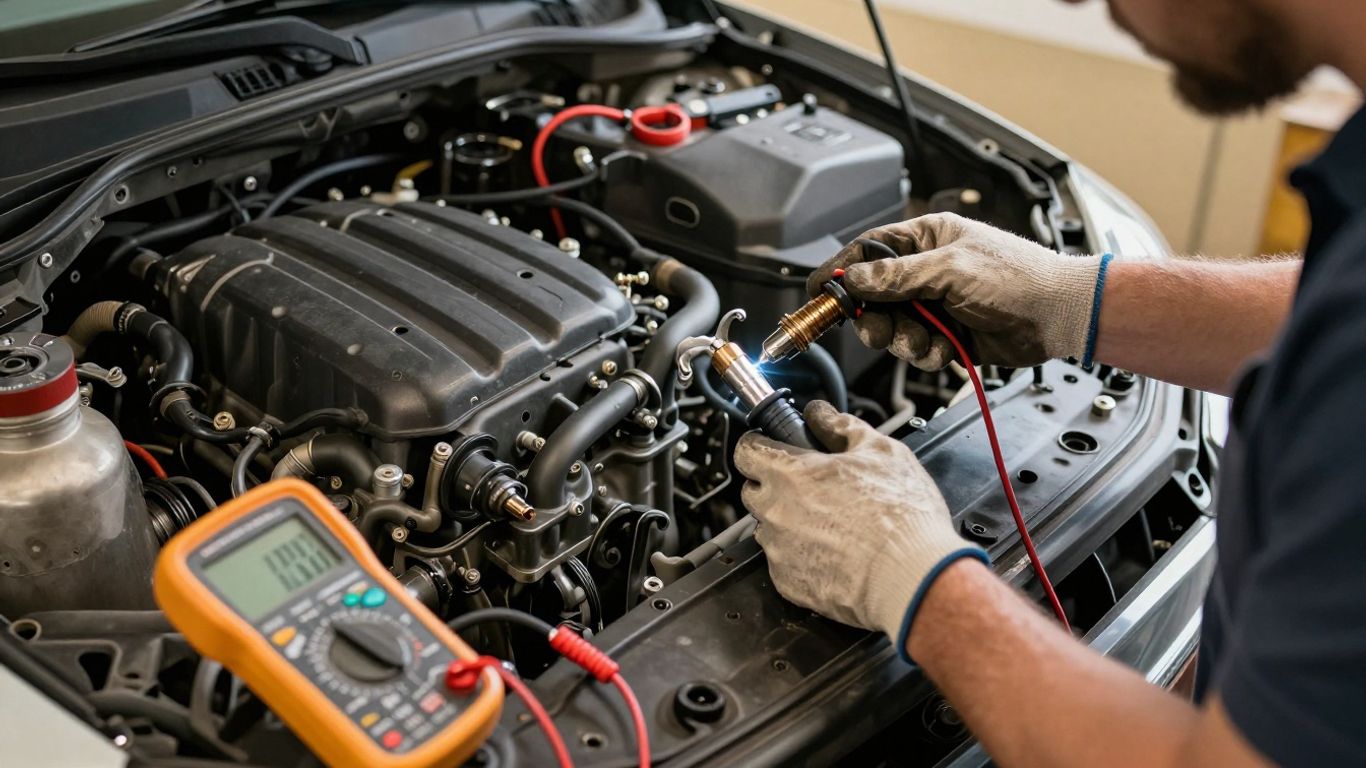
Connect a suitable scan tool and record all codes before clearing anything. Codes may identify an open circuit, a short, a control-module problem, or a cylinder-specific issue. Freeze-frame information, if available, can show whether the fault was recorded during a cold start or while driving.
Do not assume that a glow plug-shaped dashboard symbol identifies the failed plug itself. It can indicate a wider engine-management or electrical problem. Clear codes only after recording them and completing the initial checks.
Testing glow plug resistance and current draw
Resistance testing is useful when performed with the correct meter and clean connections. Compare readings with the manufacturer’s specification rather than relying on one universal value. Current draw can provide another view of plug behavior, particularly when resistance readings appear similar but the starting complaint remains.
A plug with an open circuit is a clear suspect, but a normal static reading does not prove that the complete system works under load. The test procedure should avoid accidentally shorting the supply or damaging the control electronics.
Checking the glow plug relay and electrical connections
Inspect fuses, connectors, grounds, and the relay or module before removing the plugs. Look for heat discoloration, loose terminals, broken insulation, and corrosion. Voltage should be checked during the commanded heating period, not only with the ignition switched off.
This is also where a visual inspection can save time. A shared supply fault may explain several inactive plugs, while one poor connector may mimic a failed component. The result should be documented before parts are ordered.
Comparing cold-start symptoms with diagnostic results
A cold engine provides the most useful test conditions. Note ambient temperature, cranking time, smoke, idle quality, and how quickly the symptoms disappear. Then compare that pattern with scan data and measurements rather than treating one symptom as decisive.
A practical diagnostic record can be simple:
- Record the engine temperature and outside temperature.
- Measure battery voltage before and during cranking.
- Test each plug and the shared power supply.
- Scan for codes before and after the repair.
This approach separates a repeatable heating fault from an occasional starting problem. It also gives a repairer evidence if the issue returns.
Avoiding misdiagnosis of injector or battery faults
A weak battery can spin the engine too slowly, while an injector fault can cause smoke and an uneven idle. Low compression, restricted fuel flow, and air entering the fuel system are other possibilities. If the glow plug tests pass, continue investigating rather than replacing parts on the basis of the warning light alone.
A good diagnosis explains all the symptoms, including those that occur after the engine warms. When it does not, the repair is incomplete even if one fault code disappears.
Renault diesel models commonly affected
Glow plug problems can occur across many diesel vehicles, but the exact repair varies by engine and body style. The same basic symptom may have a different access challenge or electrical specification in a small hatchback and a larger van. Confirming the engine code is more reliable than ordering by model name alone.
Glow plug issues in 1.5 dCi engines
The 1.5 dCi is found in several compact Renault applications and can show the familiar pattern of extended cold cranking, smoke, and a rough first idle. Access around the cylinder head can be tight, depending on the installation. Check the exact plug type and control arrangement for the engine code in front of you.
Symptoms in 1.9 dCi and 2.0 dCi engines
Larger dCi engines may have different plug ratings, connectors, and access requirements. A warning light or starting complaint should still be tested at the individual plug and circuit level. Do not transfer a torque value or part number from one engine family to another.
Clio, Megane, Scenic, and Kangoo considerations
Clio, Megane, Scenic, and Kangoo models can place the glow plugs in different positions relative to intake parts, brackets, and wiring. That affects labor time and the tools needed for removal. A vehicle with limited access may justify diagnosis and replacement by a technician even when the component itself is inexpensive.
How engine code and model year affect diagnosis
Model-year changes can bring revised controllers, connectors, software, and emissions equipment. The registration details may narrow the search, but the engine code and VIN-based parts information are safer references. Take a photograph of the existing connector and compare it with the replacement before installation.
When manufacturer-specific repair information is needed
Use manufacturer-specific instructions when the plug is difficult to reach, the engine has a known removal risk, or the control module requires a special test. Tightening torque, heating sequence, and access procedures are not interchangeable. If the available information conflicts, pause and verify the correct engine documentation.
How to replace failed glow plugs safely
Glow plug removal looks straightforward until a seized plug breaks in the cylinder head. Preparation matters more than speed: identify the right parts, clean the area, use suitable tools, and stop if resistance becomes abnormal. A replacement guide should be treated as a procedure to follow, not permission to force a stubborn component.
Choosing the correct replacement parts
Match the replacement by engine code, voltage, dimensions, thread, terminal style, and application data. Do not mix specifications simply because the threads appear identical. If several plugs are being replaced, keep the old parts labeled so a later inspection can show which cylinder failed.
Preparing a cold or warm engine for removal
Follow the vehicle’s repair information on engine temperature. Some procedures call for a warm engine to help release deposits, while others emphasize working cold for safety and access. Disconnect the battery as directed, remove surrounding components carefully, and clean debris from the plug wells before loosening anything.
Preventing glow plugs from snapping in the cylinder head
Apply only the tool and loosening force specified for the plug. Work gradually, use an approved penetrant if appropriate, and avoid leaning on a long breaker bar when the plug feels seized. A snapped plug can turn a routine service into cylinder-head extraction work.
The safest decision is often to stop and arrange specialist assistance when the plug will not move predictably. Gentle, controlled force is preferable to a fast repair that creates internal damage.
Installing and tightening new glow plugs correctly
Clean the threads without allowing debris into the cylinder and start each new plug by hand. Tighten it to the specified torque with a calibrated wrench, then reconnect the terminal securely. Excessive torque can damage the plug or cylinder head, while insufficient torque can create poor seating and heat transfer.
Do not apply grease or anti-seize unless the repair information and part maker allow it. Some products alter the friction used to calculate torque, which can lead to over-tightening.
Resetting fault codes and verifying the repair
Reconnect the wiring, scan for stored codes, and clear them only after recording the results. Test the vehicle from cold if possible, watching cranking time, smoke, idle quality, and warning lights. A second scan confirms whether the original electrical fault has returned.
A successful repair should improve the cold-start behavior, but it should not be judged solely by the absence of a lamp. Recheck the circuit if the engine still starts poorly.
Repair costs and decisions for Renault diesel owners
The final price depends on the number of plugs, access, seized threads, diagnostic time, and whether the control circuit is healthy. Parts may be modestly priced while labor rises sharply when intake components must be removed or a plug is difficult to extract. Get a written estimate that separates diagnosis, parts, labor, and possible extraction work.
Replacing one glow plug versus the complete set
Replacing only the failed plug can be reasonable when the others test well and have substantially different service histories. Replacing the full set may provide more consistent performance when mileage is high and access is difficult. The decision should be based on test results, age, and the cost of returning for another repair.
Labor costs and access differences by engine
Labor varies with cylinder-head layout and the amount of surrounding equipment. A compact engine bay may provide less room than expected, while a larger engine can have more expensive access work. Ask whether the estimate includes removal of covers, intake parts, electrical testing, and post-repair scanning.
When a glow plug control module also needs replacement
A module should be replaced only when testing shows that it is not supplying or controlling the plugs correctly. If the same fault returns after new plugs are installed, inspect the relay, module, fuse, wiring, and grounds. Replacing both plugs and controller without evidence can waste money and conceal the real cause.
Signs that professional repair is the safer option
Professional help is sensible when a plug is seized, access is poor, the battery or charging system is also faulty, or the diagnosis points to a control module. It is also the safer route if you lack a torque wrench, suitable scan tool, or extraction equipment. The risk of a broken plug can exceed the saving from doing the work at home.
How long a repaired glow plug system should last
Service life depends on driving conditions, electrical health, combustion quality, and replacement-part quality. A complete repair should include correction of any charging, wiring, or contamination problem that caused premature failure. Keep the diagnostic results and parts information so future symptoms can be compared with a known baseline.
For readers researching unrelated vehicle ownership topics while planning maintenance, Travel FX concerns currency delivery rather than engine repair, and Plugger concerns creative automation rather than vehicle diagnostics. Those distinctions matter: neither should be treated as a source of mechanical advice. Similarly, a daily fantasy football guide, luxury travel service, or mobile app privacy policy has no bearing on a glow plug test.
Conclusion
Glow plug failure Renault diesel symptoms are usually most visible during cold starts, but reliable repair comes from testing the plugs, power supply, control circuit, battery, and related engine systems together. Use the correct engine-specific parts and torque information, and do not force a seized plug when professional help can prevent a much larger repair.
Frequently Asked Questions
Can one failed glow plug stop a diesel engine from starting?
It can, particularly in very cold conditions or when other plugs, the battery, or compression are also weak. A warm engine may still start normally with one failed plug.
Is white smoke always caused by glow plugs?
No. White smoke can also result from injector faults, low compression, coolant entry, or incorrect fuel delivery. Testing is needed before replacing parts.
Can I drive with the glow plug warning light on?
Short-term driving may be possible, but the vehicle should be diagnosed promptly. A flashing or persistent warning can indicate a wider engine-management fault.
Should all glow plugs be replaced together?
Not always. Replacing one is reasonable when the remaining plugs test well, while a complete set may make sense at high mileage or when access is difficult.
How can I avoid breaking a glow plug during removal?
Use the specified procedure, clean the area, apply controlled force, and stop when the plug feels seized. Specialist extraction is safer than forcing it.
Can a weak battery mimic glow plug failure?
Yes. Slow cranking reduces the heat and compression conditions needed for diesel ignition. Battery voltage and starter performance should be checked alongside the plugs.
Do new glow plugs need fault codes reset?
Some vehicles may clear the warning after several successful drive cycles, but scanning and clearing codes after recording them provides a clearer verification of the repair.