
Key Takeaways
Spark plugs are small parts, but their condition affects starting, smoothness, fuel use, and emissions. The right replacement point depends on the exact engine, service schedule, and way the vehicle is driven.
- Check the owner’s manual and service history before booking replacement.
- Treat model and engine references as more useful than a generic mileage rule.
- Replace plugs early if the engine develops misfires, hesitation, or difficult starting.
- Have the ignition coils, plug wells, and related components inspected at the same time.
- Record the date, mileage, and specification used for the next service.
How Renault spark plug intervals are determined
A spark plug does not have one universal lifespan across every petrol vehicle. The recommended interval is set around the engine design, the plug specification, the model year, and the vehicle’s service program. That is why the safest answer to the question of a spark plug replacement interval Renault owner should use is the one matched to the vehicle identification details.
Why the engine and model year matter
Two vehicles with similar body styles can use different petrol engines, ignition systems, and spark plug specifications. A later engine revision may use a different plug material or service recommendation from an earlier version, even when the model name remains familiar. Engine load, cooling, fuel-system calibration, and the number of cylinders also affect how quickly the electrodes wear.
Model year matters for another reason: maintenance schedules change. A schedule for a newer generation should not automatically be applied to an older car, and a schedule for one engine should not be transferred to another simply because both are sold in the same model range. Use the vehicle’s registration details and engine code when there is any doubt.
The difference between service schedules and replacement intervals
A service schedule is a broader checklist. It may include oil, filters, fluid checks, software diagnostics, inspections, and wear items. A spark plug replacement interval is narrower: it identifies when the plugs are due for renewal, whether that point is based on mileage, elapsed time, or a particular service operation.
The two can still overlap. A scheduled service may be the convenient time to change the plugs, but the service date itself does not prove that replacement is due. On the other hand, a car that has missed routine maintenance may need an inspection before the next listed interval. The manufacturer’s schedule remains the starting point, while symptoms and condition determine whether an earlier check is sensible.
How spark plug material affects service life
Spark plugs are made with different electrode materials and designs. Some are intended to resist wear for longer than basic types, but a longer-rated plug is not automatically suitable for every engine. Heat range, reach, thread size, and electrode design must all match the engine’s specification.
A more expensive plug can be poor value if it is the wrong type, while a correctly specified equivalent can be perfectly appropriate. Correct specification matters most because a plug that looks similar may still have unsuitable dimensions or electrical characteristics. The material should therefore be selected only after the required part number or approved equivalent has been confirmed.
Where to find the correct Renault maintenance specification
Start with the owner’s manual, the service booklet, and invoices from previous maintenance. A digital maintenance record may also show what work has already been completed. If the record is incomplete, a garage can identify the engine and verify the correct plug specification using the vehicle identification number.
For general maintenance planning, the manufacturer’s servicing information can help explain the difference between scheduled service operations and individual replacement items. It should not replace the vehicle-specific documentation, especially when a car has changed engine or model generation. Keep a copy of the final invoice, including the plug part number, for future reference.
Renault spark plug replacement intervals by vehicle type
The model name alone is not enough to publish a reliable replacement number for every petrol version. Clio, Megane, Captur, Kadjar, and Twingo ranges have been offered with different engines over time, while the Zoe is electric and does not use petrol-engine spark plugs. The useful approach is to identify the exact powertrain first, then compare it with the schedule for that vehicle.
Renault Clio petrol engines
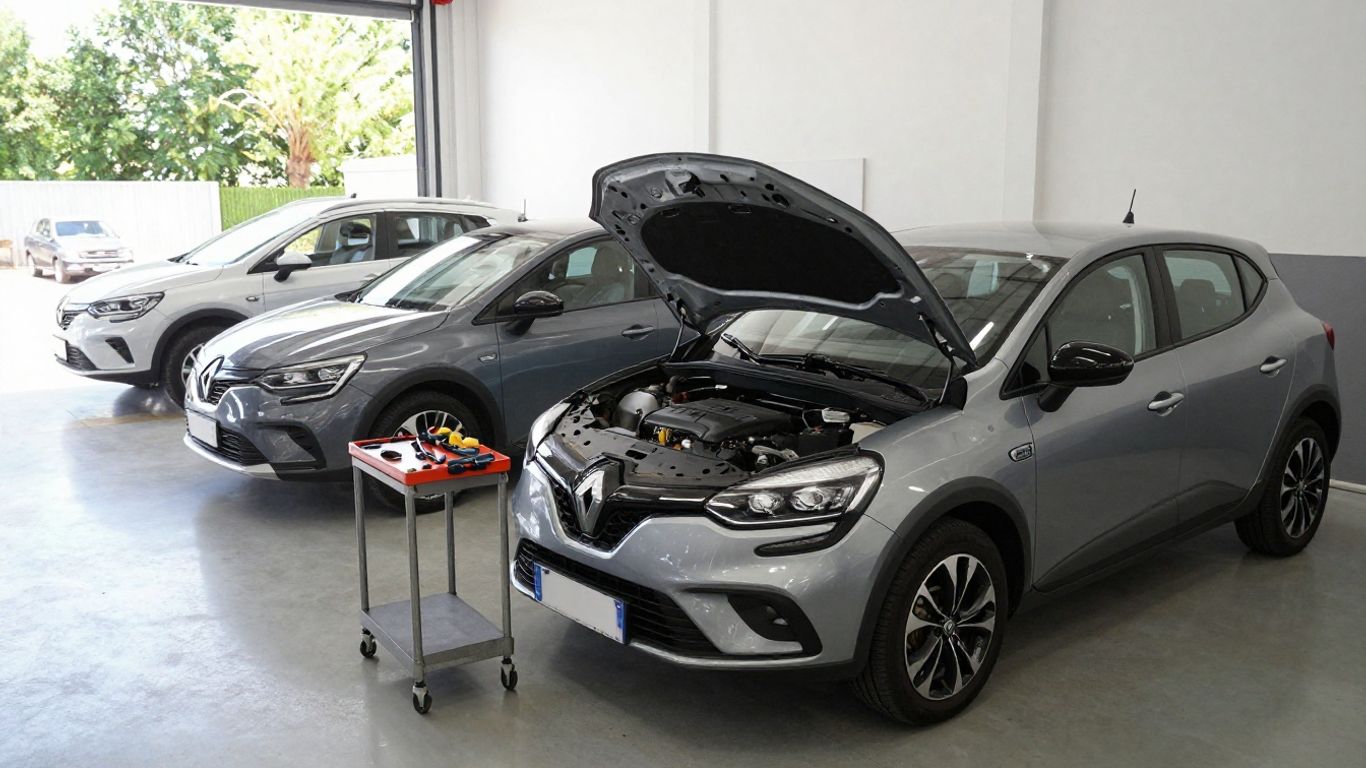
A Clio petrol engine should be assessed by generation, model year, and engine code rather than by the Clio badge alone. The correct schedule may differ between naturally aspirated and turbocharged engines, and the plug part number can change with the engine family. If the car’s history only says “service completed,” ask whether the spark plugs were actually replaced or merely inspected.
Look for the last plug change on the invoice and compare its mileage with the current odometer. If no record exists, a technician can remove and inspect a plug before deciding whether the full set should be renewed. Replacing all plugs together is generally easier to track and helps keep the ignition system consistent.
Renault Megane petrol engines
Megane petrol variants also require an engine-specific check. For example, a guide covering a 2020 1.3-liter petrol version lists spark plug changes at 30,000 km, but that figure should be treated as specific to that documented engine and schedule, not as a rule for every Megane. The Megane maintenance guide is useful when the vehicle matches those details.
A different year or engine may have another recommendation. Before ordering parts, confirm the model year, engine displacement, fuel type, and engine code. When the car is used mainly for short trips or has a history of ignition faults, condition may justify an earlier inspection than the routine schedule suggests.
Renault Captur and Kadjar petrol engines
Captur and Kadjar petrol vehicles should be checked against the schedule for their particular engine and market. Service packages can describe routine maintenance intervals without identifying every individual component, so the owner’s manual or a detailed service record remains the better source for plug replacement. This is especially relevant when a vehicle has crossed a model-year change.
Do not infer a plug interval from the vehicle’s general service interval. A car may be booked for annual maintenance while the plugs are due at a different mileage or service stage. Ask the garage to list spark plug replacement separately on the estimate so there is no confusion about what the quoted service includes.
Renault Twingo, Zoe, and other Renault models
Twingo petrol versions need the same careful engine-code check as the larger models. Zoe models are electric vehicles and do not have spark plugs in a combustion engine, so a petrol spark plug schedule does not apply to them. Other Renault models should likewise be separated by powertrain before any interval is selected.
The distinction is simple but valuable: a service reminder for an electric vehicle cannot be used to estimate petrol-engine plug replacement. For older vehicles, a network maintenance record such as older Renault servicing may help locate the relevant maintenance schedule and additional operations, but the final decision still belongs to the exact vehicle record.
Signs your Renault needs new spark plugs
A scheduled interval is useful, but symptoms can bring the inspection forward. Worn, fouled, cracked, or incorrectly specified plugs can affect ignition, although similar symptoms may also come from coils, injectors, sensors, vacuum leaks, or battery problems. Treat the signs as reasons for diagnosis rather than proof that the plugs alone are at fault.
Difficult starting and rough idling
A petrol engine that takes longer to start, turns over unevenly, or feels lumpy at idle may have an ignition problem. Spark plugs are one possible cause, particularly when the issue appears during cold starts or after a period of neglected maintenance. A technician should also check battery voltage, ignition coils, and air or fuel delivery before recommending parts.
If the engine starts but immediately runs unevenly, avoid repeatedly driving it in that condition. Continued misfiring can make the vehicle unpleasant to use and may place extra strain on emissions-control components. The sooner the underlying cause is identified, the less likely a small ignition issue is to become a wider repair.
Misfires, hesitation, and loss of power
Hesitation under acceleration, a brief stumble, or a noticeable loss of power can indicate that combustion is not occurring consistently. A worn electrode or damaged insulator may contribute, but so can a failing coil or a fuel-system fault. The pattern matters: whether the symptom occurs under load, at one engine speed, or across the entire rev range gives the technician useful clues.
Do not assume that installing new plugs will solve every misfire. If the old plugs show unusual deposits or one cylinder looks different from the others, that evidence can point toward another fault. A proper inspection compares all plugs and checks the ignition system rather than treating them as isolated consumables.
Reduced fuel economy and increased emissions
When ignition is weak, the engine may burn the mixture less efficiently. Drivers might notice a change in fuel economy, a stronger fuel smell, or an emissions test result that is worse than expected. These symptoms are not specific to plugs, so they should be considered alongside maintenance history and any warning light.
A useful diagnostic process checks for air, fuel, and ignition causes together. If the plugs are beyond their specified service point, changing them may be part of the repair, but the garage should still establish why the symptoms appeared. That avoids replacing a set of plugs while leaving an injector, coil, or sensor problem unresolved.
Warning lights and diagnostic trouble codes
A flashing or persistent engine warning light deserves attention, especially when it appears with shaking, hesitation, or reduced power. Diagnostic trouble codes can identify a misfire or cylinder-related issue, but a code usually describes the system behavior rather than naming the failed component with certainty.
Have the code read before clearing it if possible. The technician can combine stored data with a visual inspection, coil testing, and examination of the plugs. A generic spark plug maintenance reference can explain the role of plugs and common symptoms, but it should not override the schedule or diagnostic findings for a different vehicle.
How to check the correct replacement timing
Finding the right timing is mostly a matter of matching three records: the vehicle specification, the maintenance schedule, and the work already completed. Mileage is helpful, but it is only one part of the picture. A careful check prevents both premature replacement and the false economy of driving far beyond the recommended point.
Reviewing the owner’s manual and service history
The owner’s manual is usually the first place to look for scheduled maintenance. Check the section for the correct engine and market, then compare the listed operation with invoices or digital service entries. An invoice that says “inspection” may not mean the plugs were removed or replaced.
If the car has changed hands, ask the previous owner or servicing garage for supporting records. When information is missing, note the uncertainty rather than guessing. A garage can inspect the plugs and record their condition, giving you a clear starting point for future maintenance.
Confirming the engine code and spark plug specification
Before purchasing parts, confirm the engine code and the manufacturer’s required plug specification. Important details can include thread dimensions, reach, heat range, electrode design, and the approved tightening method. The correct part number should come from reliable vehicle data, not only from a general online catalog search.
Bring the old part number or a photograph of the plug markings to the garage if appropriate, but do not rely on appearance alone. A matching engine code gives the technician a stronger basis for selecting the full set. It also reduces the risk of mixing incompatible plugs during a rushed repair.
Considering mileage, age, and driving conditions
Mileage is an obvious reference point, yet time and usage also matter. Frequent short trips can prevent the engine from reaching stable operating temperature, while heavy traffic, repeated cold starts, dusty roads, or sustained high loads may make inspection more useful before the routine date. A lightly used car can still be old enough for its service history to need careful review.
Use the schedule as the baseline and adjust only with a reason. These factors are worth recording when deciding whether to ask for an early check:
- Mostly short journeys with frequent cold starts.
- Repeated misfires, hesitation, or difficult starting.
- Heavy loads, steep terrain, or prolonged high engine speeds.
- Unknown plug history after a change of ownership.
That list does not create a new official interval. It simply helps explain why two otherwise similar cars may deserve different inspection decisions. If the vehicle is used normally and the history is complete, following the documented schedule is usually the clearest plan.
Understanding when a technician should inspect the plugs early
An early inspection is sensible when symptoms appear, a warning light is active, or the maintenance record is incomplete. It is also reasonable when another repair has exposed the ignition system or when the engine is running differently after recent work. The aim is to identify the cause, not to replace parts on suspicion alone.
Ask for the findings in writing. A useful report can state whether the plugs were worn, fouled, damaged, or within specification, and whether the coils or plug wells showed related problems. That information makes the next replacement decision much easier.
What happens during a Renault spark plug replacement
A professional replacement is more than unscrewing old plugs and fitting new ones. The engine must be identified, the surrounding area kept clean, and the new parts installed without damaging the threads or ceramic insulators. The final checks matter because a newly fitted plug will not correct a separate ignition or fuel fault.
Inspecting ignition coils and related components
The technician normally looks at the ignition coils, electrical connectors, coil boots, and plug wells before or during removal. Oil or moisture in a plug well can indicate a seal or cover issue, while a damaged coil boot may create a misfire that resembles a worn plug. These observations help prevent a repeat failure.
The inspection may also include checking for brittle wiring, contamination, and evidence of overheating. If a coil is faulty, the garage should explain whether it needs replacement now or whether further testing is required. Clear diagnosis is preferable to replacing every ignition component at once.
Removing and examining the old spark plugs
The area around each plug is cleaned before removal so debris does not fall into the cylinder. The old plugs are then removed with the appropriate tool and examined for electrode wear, deposits, cracking, or signs of an incorrect mixture. Comparing the complete set can reveal whether the issue is uniform or isolated to one cylinder.
The appearance is informative but not definitive on its own. A plug with unusual deposits may reflect oil consumption, fueling, overheating, or an internal engine concern. The technician should connect the visual evidence with fault codes and the vehicle’s symptoms.
Installing and correctly tightening new plugs
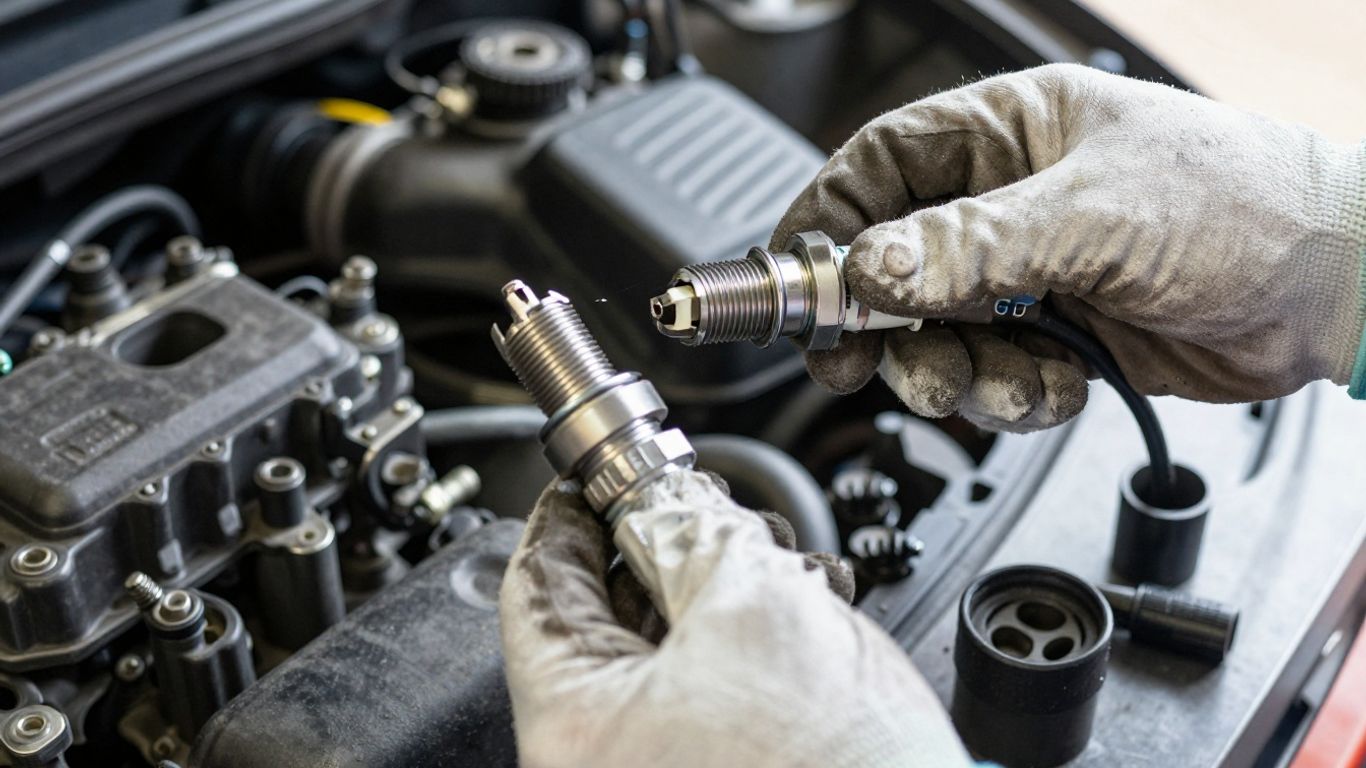
New plugs should match the verified specification and be handled carefully. The threads must start cleanly and by hand where possible, then be tightened using the required method and torque. Over-tightening can damage the plug or cylinder head; under-tightening can allow heat and combustion gases to escape.
The ignition coils and connectors are refitted securely after the plugs are installed. If the manufacturer specifies a particular installation procedure, the garage should follow it rather than applying a generic shortcut. A complete set of matching plugs also makes future service records easier to interpret.
Testing engine performance after replacement
After installation, the engine is started and checked for smooth idle, warning lights, and abnormal sounds. The technician may scan for stored or active faults and take a short road test when appropriate. Any continuing hesitation or misfire needs further diagnosis rather than being dismissed as normal after service.
A good handover includes the work completed, the part specification, and the mileage. Keep that information with the service history. It provides a reliable reference when the next spark plug replacement interval Renault documentation specifies eventually comes due.
Renault spark plug replacement cost and maintenance planning
The final bill depends on the number and type of plugs, access to the engine, labor rates, and whether diagnosis or related repairs are needed. Prices also vary by location and by the condition of the vehicle. A quote that separates parts, labor, diagnostic time, and additional components is easier to compare.
Typical parts and labor cost factors
Parts costs rise when the engine requires specialized plugs or when access is restricted. Labor can take longer if covers, intake components, or seized plugs make removal difficult. A diagnostic scan may be added when the job was prompted by a warning light rather than a routine service.
For a broader view of the factors that influence plug prices, see this spark plug cost guide. Its figures come from a different market and should not be treated as a local Renault quote, but the general cost categories—parts, cylinder count, plug material, and labor—are useful when reading an estimate.
Comparing dealership and independent garage pricing
A dealership may offer model-specific equipment and access to vehicle records, while an independent garage may provide a lower labor rate or more flexible appointment. The important comparison is not only the headline price. Check whether both quotes include the same plug specification, diagnostic checks, disposal, taxes, and any required inspection.
Ask whether the work is covered by a service package or warranty arrangement. You can also compare the garage’s written process and parts policy. This is a more useful form of planning than choosing solely on the cheapest initial number, much as a car key replacement guide explains why apparent price differences can reflect parts and technical complexity.
Choosing original-equipment or equivalent spark plugs
The replacement plug should meet the vehicle manufacturer’s specification and be supplied by a reputable source. Original-equipment parts are one option, while an equivalent plug may also be suitable if its dimensions, heat range, and performance requirements match the approved specification.
Do not substitute a plug because it has a higher price or a longer claimed life. Ask the garage to identify the exact part number on the estimate and to explain any alternative. The decision should be based on compatibility, quality, and the service requirement—not on branding alone.
Avoiding false savings from overdue replacement
Delaying a routine replacement can appear to save money, especially when the engine still starts and drives. However, worsening ignition performance can bring poor fuel economy, drivability complaints, diagnostic time, or additional component stress. It is not guaranteed that overdue plugs will cause secondary damage, but ignoring clear symptoms removes useful time for a simple inspection.
Plan the work alongside a scheduled service when the timing is close. If the car is already misfiring, arrange diagnosis promptly rather than waiting for a convenient annual appointment. A written quote also helps avoid the more expensive surprise of combining an overdue job with an emergency repair.
How to extend spark plug life in a Renault
Spark plugs last best when the engine is operated and maintained within its intended conditions. There is no reliable trick that makes an unsuitable plug last longer. The practical strategy is to use the correct parts, keep related systems healthy, and respond to changes before they become persistent faults.
Following the recommended service schedule
Use the vehicle-specific maintenance schedule as the foundation for planning. Keep service dates, mileage, plug part numbers, and technician observations together so the next decision is based on evidence. A schedule is especially valuable when the car is shared by several drivers or changes ownership.
Avoid resetting a reminder without confirming what work was completed. If the vehicle is older or the records are incomplete, the maintenance schedule can be reconstructed with a garage inspection. This provides a cleaner baseline than estimating from memory.
Using the correct fuel and engine oil
Use the fuel grade and engine oil specification stated for the vehicle. Incorrect fluids or unsuitable oil can contribute to deposits or operating problems that affect combustion, although spark plug condition should still be checked directly. Fuel quality concerns should be discussed with a technician rather than treated with unverified additives.
Oil level and condition also deserve routine attention. If oil is entering the plug wells or combustion chamber, replacing plugs without addressing the source may only provide a temporary improvement. The right fluid specification supports the engine, but it does not compensate for a mechanical leak or ignition fault.
Addressing ignition and fuel-system problems promptly
A persistent misfire, warning light, rough idle, or starting problem should be investigated early. Driving gently to a repair appointment may be reasonable in some circumstances, but a flashing warning light, severe shaking, or major power loss calls for prompt professional advice. Continuing to operate a vehicle with an unresolved fault can make diagnosis harder and the eventual repair more costly.
Do not replace coils, injectors, and plugs together without a reason. Testing can often narrow the problem to one area. Prompt attention protects the usefulness of the service schedule and helps ensure that new plugs are not immediately exposed to the same underlying fault.
Keeping records of future spark plug replacements
Write down the mileage, date, engine identification, plug brand and part number, and any related repairs. Include whether the plugs were replaced as part of a scheduled service or because symptoms appeared. These details are small, but they make the next interval far easier to verify.
A simple maintenance record can also support resale questions and warranty discussions. For unrelated long-term planning, some owners even keep broader household records alongside tools such as audio newsletters, estate planning advice, or an Urtopia Carbon Classic purchase file; the principle is the same—retain clear dates and specifications rather than relying on memory.
Conclusion
The best spark plug replacement interval Renault owners can follow is the one matched to the exact petrol engine, model year, service history, and driving conditions. Use the manual and verified vehicle data first, then bring the inspection forward when symptoms or warning lights appear. A clear quote, correctly specified parts, careful installation, and a recorded mileage turn a small maintenance job into a predictable part of owning the vehicle.
Frequently Asked Questions
How often should spark plugs be replaced?
The correct interval varies by engine, plug specification, model year, and manufacturer schedule. Check the owner’s manual and service history rather than relying on a universal mileage figure.
Can spark plugs last longer than the listed interval?
They may continue working beyond the listed point, but that does not mean they remain within the intended service condition. Follow the documented schedule and arrange an earlier inspection if symptoms develop.
Do electric vehicles use spark plugs?
No. Spark plugs are used in combustion engines to ignite the air-fuel mixture. Electric vehicles use a different propulsion system and therefore do not have petrol-engine spark plug replacement intervals.
What are the most common signs of worn spark plugs?
Difficult starting, rough idling, hesitation, misfires, reduced power, and poorer fuel economy can all be signs. These symptoms also have other possible causes, so diagnosis is needed before replacing parts.
Should all spark plugs be replaced together?
Replacing the complete set is usually easier to track and keeps the ignition service consistent, provided the plugs are due and the engine uses a matching set. A technician should confirm the specification first.
Can I replace spark plugs myself?
Some vehicles allow straightforward access, but incorrect torque, cross-threading, debris, or damaged ignition components can create expensive problems. Follow the repair information carefully or use a qualified technician.
What information should I keep after replacement?
Record the date, mileage, engine details, plug part number, and any related findings. Keep the invoice with the vehicle’s service history so the next replacement decision is based on a reliable record.