

Key Takeaways
Low-speed shudder can come from the transmission, clutch, mounts, wheels, or engine. A careful description of when it happens is often the quickest route to the right diagnosis.
- Note whether the vibration occurs during takeoff, light acceleration, shifting, or braking.
- Check the transmission type before assuming a torque converter or dual-clutch fault.
- Engine misfires and worn mounts can feel remarkably similar to transmission shudder.
- Use the correct fluid specification and confirm the service history before authorizing repairs.
- Stop driving if the vehicle slips badly, smells burnt, loses drive, or develops warning lights.
What Renault transmission shudder at low speed feels like
Renault transmission shudder at low speed is usually felt as a repeated vibration rather than one clean bump. It may travel through the seat, floor, or steering column, and it can be easy to confuse with a wheel or tire problem. The timing of the vibration matters more than its intensity alone. A symptom that appears only under light throttle points toward a different set of causes than a vibration that increases steadily with road speed.
Shuddering, juddering, and bucking compared
Shuddering is often a fine, rapid vibration, almost like driving over a very shallow rumble strip. Juddering tends to feel more cyclical and may occur as a clutch engages, while bucking is usually a sharper series of surges caused by uneven power delivery. These descriptions are not formal diagnoses, but they help a technician reproduce the complaint. A useful comparison guide can help separate transmission shudder from tire vibration before parts are replaced.
When the vibration happens during takeoff
A shudder immediately as the vehicle moves away from a stop can involve clutch engagement, a torque converter, an engine misfire, or a damaged mount. In a manual vehicle, an uneven clutch bite is a common possibility, especially if the symptom changes when the clutch pedal is released more slowly. In an automated manual or dual-clutch system, low-speed clutch modulation can create a similar sensation. Take note of whether reversing produces the same vibration.
How speed, engine load, and gear selection affect symptoms
A symptom that appears at one narrow speed while maintaining light throttle deserves a different investigation from one that occurs during every gear change. Hills, passengers, air-conditioning load, and gentle acceleration can all change how much torque the drivetrain must transmit. If selecting a lower gear makes the vibration disappear, record that detail. Likewise, if lifting off the accelerator stops it immediately, the load condition is a useful diagnostic clue.
Warning signs that indicate a serious transmission problem
Persistent slipping, delayed engagement, harsh gear changes, a burnt odor, fluid leakage, or a warning light raises the urgency. A vehicle that revs without accelerating may be slipping rather than merely shuddering; symptoms such as this are discussed in a guide to high engine revs during gear shifts. Loss of reverse or drive, loud mechanical noise, and rapidly worsening behavior are reasons to avoid further testing on public roads.
Common causes of low-speed transmission shudder
Low-speed vibration has several possible sources, so diagnosis should begin with the complete drivetrain rather than one favored component. Fluid condition, clutch control, mounts, ignition, and wheel condition can overlap in the way they feel from the driver’s seat. The vehicle’s transmission design narrows the possibilities, but it does not eliminate the need for basic checks. The image below shows the sort of under-vehicle inspection a technician may perform.
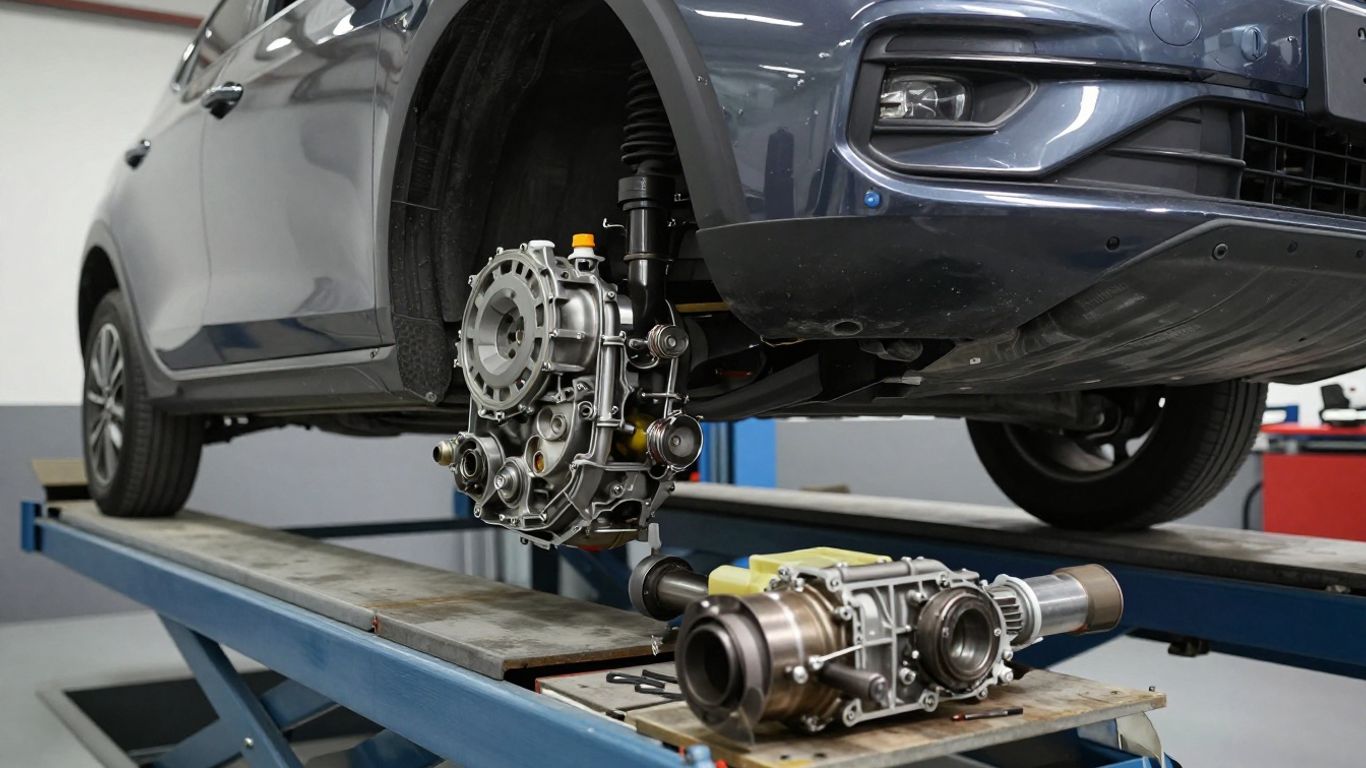
The most useful early distinction is whether the engine itself is running smoothly. A rough idle, flashing engine warning light, or hesitation under load can point away from the transmission. Conversely, a smooth engine combined with a vibration that follows gear engagement suggests closer attention to the drivetrain.
Worn or contaminated transmission fluid
Old, overheated, incorrect, or contaminated fluid can affect hydraulic control and clutch friction. It may also leave a dark appearance or unusual odor, although appearance alone cannot prove that the fluid is the cause. Some transmissions have specific service procedures and fluid requirements, so a generic fluid change is not automatically appropriate. A technician should confirm the correct specification and level-checking method for the exact transmission.
Torque converter clutch engagement problems
In an automatic transmission with a torque converter, the lock-up clutch may engage or release unevenly. That can feel like a light rumble during steady, gentle acceleration rather than a dramatic gear change. The symptom may disappear when the throttle is released or when the transmission selects a different operating condition. Understanding torque converter symptoms can help frame the discussion, but vehicle-specific testing is still needed.
Dual-clutch transmission clutch wear
A dual-clutch transmission uses clutch packs to control its gear sets, and low-speed maneuvering can expose wear or poor adaptation. Judder may be most obvious in traffic, during parking, or when moving off gradually. Heat, friction material, actuator operation, and learned clutch values may all matter. A scan and controlled road test are preferable to assuming that a complete clutch replacement is necessary.
Engine or transmission mount failure
Mounts isolate normal engine movement from the body and keep the powertrain positioned correctly. When rubber splits or a hydraulic mount leaks, a modest change in torque can produce a thump or vibration that feels like a shift problem. The symptom may be strongest when selecting drive or reverse, changing from acceleration to overrun, or starting the engine. Visual inspection should be combined with a safe load test.
Misfires and other engine issues that mimic transmission shudder
An ignition misfire, restricted fuel delivery, intake leak, or throttle problem can interrupt power in a way that resembles clutch or converter shudder. Engine faults may be more noticeable under load and may trigger a check-engine light, though not every fault does. A low-speed juddering guide also covers engine and transmission causes, which is a useful reminder to scan both systems. Repairing the transmission before ruling out the engine can create an expensive detour.
Renault transmission types and likely fault areas
The transmission layout changes what should be checked first. A conventional automatic, dual-clutch unit, and manual gearbox each transfers engine torque differently, so the same driver complaint can have separate causes. The vehicle identification number and transmission code are more reliable than assumptions based on the model name alone. This information should be recorded before ordering parts or fluid.
Automatic transmissions with torque converters
A conventional automatic may use a fluid coupling for takeoff and a lock-up clutch at suitable operating conditions. Shudder can therefore involve fluid condition, solenoid control, valve-body behavior, converter wear, or an unrelated engine issue. A technician may compare the symptom during light throttle, steady speed, and manual gear selection. The goal is to establish whether the vibration follows converter operation or a broader drivetrain load.
EDC dual-clutch transmissions
An EDC-style dual-clutch transmission can produce low-speed judder when one or both clutches are worn, overheated, contaminated, or poorly adapted. Actuator behavior and software calibration can also influence engagement quality. Because the system may deliberately slip a clutch during parking and takeoff, repeated stop-start use can make a marginal fault more apparent. Diagnostic data is particularly valuable before removing the gearbox.
Manual transmissions and clutch-related judder
In a manual vehicle, clutch judder commonly appears as the clutch takes up drive from rest. Possible causes include a worn friction disc, a distorted pressure plate, oil contamination, or an uneven flywheel surface. Engine mounts and driving technique can magnify the sensation. If the vibration changes when the clutch pedal is pressed or released, that observation should be included in the repair request.
How the transmission model changes the diagnosis
The model determines which fluid, scan functions, adaptation procedures, and service intervals apply. It also determines whether a torque converter, clutch actuator, or conventional clutch should be part of the initial inspection. A specialist should be able to explain the suspected failure path in plain language. Correct identification saves money because it reduces the risk of using an incompatible fluid or replacing unrelated parts.
How to diagnose the problem safely
Diagnosis should be structured, repeatable, and conservative. Start with observations that do not require aggressive acceleration or risky road behavior, then move to professional scanning and testing. A written symptom record can be more useful than a vague request to “check the transmission.” The aim is to reproduce the fault without creating another one.
Checking when and where the shudder occurs
Record the speed, engine temperature, selected gear, throttle position, road gradient, and whether the vehicle is moving forward or backward. Note whether the steering wheel, seat, floor, or entire body carries the vibration. Also compare cold and warm behavior, because fluid temperature and clutch control can change the symptom. These details help separate a load-related drivetrain fault from a speed-related wheel vibration.
Inspecting fluid condition and service history
Service records can show whether the fluid has been changed, whether the correct procedure was followed, and whether earlier repairs addressed the same symptom. A leak, low level, or burnt smell needs attention, but checking fluid on a hot transmission can be hazardous and must follow the manufacturer’s procedure. Do not crawl under a vehicle supported only by a jack. Let a qualified technician handle inspections that require access beneath the car.
Scanning for transmission and engine fault codes
A basic code reader may miss manufacturer-specific transmission data, clutch temperatures, adaptation values, or pending faults. A professional scan should cover both the engine and transmission modules, then compare codes with live data and the driver’s description. Codes identify a direction for testing; they do not automatically identify the failed part. Clearing them before diagnosis can remove useful evidence.
Road-testing under controlled conditions
A road test should use a safe, quiet route and a second person where possible, with the driver focused on traffic. The technician can reproduce gentle takeoffs, steady light-throttle operation, and changes in gear selection without forcing the vehicle. A short video or symptom log may help when the vibration is intermittent. The following observations are especially useful to bring to the appointment:
- Whether the shudder is worse cold, warm, or unchanged.
- Whether lifting off the accelerator stops the vibration.
- Whether reverse, first gear, or a higher gear is most affected.
- Whether warning lights, smells, or unusual noises occur at the same time.
These observations do not replace testing, but they make the test more targeted. Avoid deliberately provoking severe slipping or high temperatures just to capture a stronger symptom.
When to stop driving the vehicle
Stop and arrange assistance if the vehicle loses drive, slips heavily, makes grinding noises, leaks a significant amount of fluid, or develops a burning smell. A flashing engine warning light also deserves prompt attention because continued misfire can damage emissions components. If the vehicle can move safely but the shudder is worsening, keep journeys short and avoid towing, steep hills, and heavy traffic until it has been assessed.
A general video can help explain what technicians look for, but it cannot confirm the fault on a particular vehicle. Use it as background rather than as permission to continue driving a failing transmission.
Repairs that may resolve low-speed shudder
The correct repair depends on the confirmed cause, not simply the strongest sensation. Some faults respond to service or calibration, while others require removal of a clutch, converter, or gearbox. A reputable workshop should explain the evidence for each recommendation and separate essential work from optional maintenance. That makes the estimate easier to understand.
Transmission fluid and filter service
If the fluid is degraded or the service is overdue, the prescribed fluid and filter procedure may improve operation. The result depends on the transmission’s condition; servicing cannot restore friction material that is already badly damaged. A fluid exchange should never be used to conceal a leak or compensate for an incorrect level. Ask what fluid specification, quantity, and adaptation steps will be used.
Software updates and transmission adaptations
Some transmission control systems use learned values to manage clutch engagement and shift timing. An update or adaptation procedure may be appropriate when the hardware is sound and the diagnostic information supports it. Adaptations should be performed with the correct scan equipment and conditions. They are not a substitute for replacing a worn clutch or repairing a mechanical fault.
Engine and transmission mount replacement
A damaged mount can be a relatively contained repair compared with internal transmission work. The technician should confirm excessive movement, torn rubber, leakage, or contact marks before replacement. After installation, the vehicle should be checked for remaining vibration and correct alignment of related components. If the original symptom remains, the mount may have been an additional fault rather than the only cause.
Clutch or torque converter repairs
A worn clutch assembly may require replacement of friction components, a pressure plate, release parts, or a flywheel surface, depending on inspection results. A torque converter repair may involve the converter itself, related seals, fluid, or control components. The repair plan should explain whether contamination could have spread through the transmission. This is where a second opinion can be worthwhile if the diagnosis is uncertain.
Internal transmission repairs and rebuilds
Valve-body damage, bearing wear, gear damage, or extensive clutch failure can require major internal work. Before approving a rebuild, ask whether the unit will be inspected, measured, and tested afterward, and what warranty applies. In some cases, a replacement transmission may be considered, but compatibility and condition must be verified. The cheapest initial quote is not always the lowest total cost if the underlying cause is left unresolved.
Mistakes to avoid when troubleshooting
Low-speed shudder encourages guesswork because several faults feel alike. A methodical diagnosis protects both the vehicle and the repair budget. It also prevents a temporary improvement from being mistaken for a completed repair. The most common errors are simple, but they can have expensive consequences.
Assuming every vibration comes from the transmission
Wheel imbalance, uneven tire wear, a bent wheel, brake drag, and driveshaft or axle problems can all create vibration. A tire-related issue often changes with road speed and may be felt strongly through the steering wheel, while a load-related drivetrain issue follows throttle or gear selection. Inspect the whole vehicle rather than treating “shudder” as a transmission diagnosis.
Ignoring engine misfire and fuel system symptoms
Hesitation, rough idle, hard starting, poor fuel economy, or a check-engine light should be investigated alongside the transmission. Fuel and ignition faults can become more obvious when the engine is asked to pull away gently in a high gear. A scan of only the transmission module is incomplete. The engine must be capable of delivering smooth torque before clutch behavior can be judged accurately.
Using the wrong fluid specification
Fluids that look similar may have different friction properties and approval requirements. Using the wrong product can alter shift quality or damage components over time. Confirm the exact transmission and its required specification from reliable service information. Do not mix fluids simply because the container uses a familiar term such as automatic transmission fluid.
Replacing parts before confirming the fault
Parts swapping can turn a manageable diagnosis into a long list of expensive guesses. A mount, solenoid, clutch, or converter should be linked to a test result or a clearly observed failure. Ask the workshop what finding justifies the proposed repair and what other causes were ruled out. That conversation is often more valuable than a confident but unexplained estimate.
Continuing to drive after the symptoms worsen
A mild vibration can become a loss of drive, overheating, or widespread contamination if the vehicle is driven hard. Avoid towing, long trips, and repeated acceleration tests once the symptom is worsening. If there is slipping, burning odor, or a warning light, arrange professional help instead of waiting for the problem to disappear. Prompt attention does not guarantee a cheap repair, but delay can remove cheaper options.
Repair costs, urgency, and next steps
Repair pricing varies widely because “shudder” describes a symptom rather than a component. A fluid service and a transmission removal are very different jobs, even when the first complaint sounds identical. The best next step is a diagnosis that identifies the system, failed part, and reason for the failure. Get that information in writing where practical.
Factors that influence the repair price
Labor access, transmission design, parts availability, fluid quantity, diagnostic time, and the extent of contamination all affect the estimate. A clutch replacement may also require flywheel or actuator work, while internal damage may involve machining or additional seals. Ask whether the quote includes scanning, fluid, programming, road testing, and taxes. Unexpected findings should be discussed before extra work is approved.
Questions to ask a Renault specialist
A useful appointment includes clear questions rather than a request for a particular part. Ask which test reproduced the fault, whether engine and wheel causes were checked, and what evidence supports the proposed repair. Also ask what happens if the symptom remains after the first repair. A written explanation makes it easier to compare estimates without comparing only headline prices.
When a dealer diagnostic is worthwhile
A dealer or transmission specialist may be worthwhile when the vehicle has complex control software, an unusual transmission, active warning lights, or a history of previous repairs. Dealer-level equipment can access data that generic tools cannot, although independent specialists may also have suitable equipment. Choose based on relevant experience and the quality of the diagnostic explanation. The most valuable service is accurate testing, not a particular workshop name.
How service records can reveal the cause
Records may reveal overdue fluid service, a previous leak, an earlier clutch replacement, or a symptom that has slowly changed. Compare dates and mileage with when the vibration began. Receipts can also identify the fluid used and whether adaptations or software work were performed. Even incomplete records are useful if they establish what has already been replaced.
Preventive maintenance after the repair
After the repair, follow the specified service interval and investigate small leaks promptly. Use the correct fluid, avoid unnecessary towing, and allow the transmission to warm normally rather than repeatedly forcing cold takeoffs. Keep invoices and note any returning symptoms while they are still mild. Preventive care cannot prevent every mechanical failure, but it can make changes easier to detect and diagnose.
Conclusion
A low-speed transmission shudder is a clue, not a verdict. By recording the conditions, checking the engine and drivetrain together, confirming the transmission type, and insisting on evidence before parts are replaced, you can make the repair process safer and more predictable.
Frequently Asked Questions
What is the most common cause of low-speed transmission shudder?
There is no single universal cause. Possibilities include degraded fluid, clutch or torque converter problems, worn mounts, engine misfires, and wheel or tire faults, so the operating conditions must be considered.
Can bad engine mounts feel like transmission trouble?
Yes. A failed mount can allow excessive powertrain movement during takeoff, gear selection, or changes between acceleration and deceleration. Inspection is needed to distinguish it from an internal transmission fault.
Is it safe to drive with a shuddering transmission?
A mild, stable symptom may allow a short trip to a workshop, but worsening shudder, slipping, burning odor, fluid loss, warning lights, or loss of drive calls for stopping and arranging assistance.
Can changing the transmission fluid fix shudder?
It can help when the fluid is degraded and the transmission is otherwise healthy. It will not reliably repair worn clutch material, mechanical damage, or an engine misfire, and the correct specification and procedure are essential.
Why does the shudder happen only when the car is warm?
Fluid temperature changes viscosity and control behavior, while heat can expose clutch wear, converter problems, or electrical faults. Comparing cold and warm behavior gives the technician useful diagnostic information.
Can a misfire be mistaken for transmission shudder?
Yes. An engine that intermittently loses power under load may produce repeated surges or vibration that feel like a drivetrain fault. Engine codes, live data, and a controlled road test can help separate the two.
What information should I give the repair shop?
Provide the speed, temperature, gear, throttle position, road conditions, direction of travel, warning lights, smells, noises, and service history. A short record of when the symptom appears is often highly useful.