

Key Takeaways
A transmission fluid interval is not a single number for every vehicle. The right schedule depends on the gearbox, specification, driving conditions, and the maintenance history already recorded.
- Check the owner’s manual or service information for the exact gearbox and fluid specification.
- Manual, automatic, dual-clutch, automated manual, and CVT systems require different service approaches.
- Stop-start traffic, towing, heat, leaks, and high mileage can justify earlier inspection or service.
- Shifting changes, unusual noises, burnt-smelling fluid, and warning lights deserve prompt attention.
- A correct fluid change includes the right level, temperature, seals, filters, and post-service checks.
Understanding Renault transmission fluid change intervals
The phrase “Renault transmission fluid change interval” sounds precise, but it does not identify one universal schedule. Different gearboxes use different lubricants and operating methods, while model year and engine combinations can alter the recommended maintenance plan. Treat the published specification for the individual vehicle as the starting point, then adjust attention to how the car is used.
Why Renault intervals vary by transmission type
A manual gearbox generally uses gear oil, while an automatic transmission may rely on fluid for lubrication, cooling, hydraulic pressure, and clutch operation. A dual-clutch or automated manual system adds further concerns because the fluid may interact with clutch packs, hydraulic circuits, or electro-mechanical actuators. As a result, a mileage figure from one transmission cannot safely be transferred to another.
The interval can also depend on whether the manufacturer defines a replacement, inspection, or condition-based check. If the vehicle has a service schedule for severe use, that schedule may be more relevant than the normal-use line for a car that spends most of its time in traffic.
How model year and engine affect service timing
The engine does not determine the fluid by itself, but it forms part of the vehicle specification. Engine output, vehicle weight, calibration, cooling arrangement, and the gearbox paired with that engine can all affect the service information that applies. Even two vehicles with similar badges may have different transmission codes and different procedures.
Use the VIN, model year, engine designation, and transmission code when asking for advice. A generic online interval may be useful as a prompt for further checking, but it should not replace the schedule written for the specific vehicle.
Scheduled maintenance versus “lifetime” fluid claims
“Lifetime” fluid does not necessarily mean the lubricant can never be inspected or replaced. It may refer to an expected service life under defined operating conditions, and it says little about a vehicle that has suffered overheating, contamination, a leak, or unusually demanding use.
A sensible approach is to separate the planned interval from condition monitoring. If the service record is incomplete, the car has changed hands, or the fluid’s history is unknown, a qualified technician can assess the transmission before recommending work. Avoid choosing a flush or replacement solely because a broad mileage rule appears online.
Where to find the correct interval for your Renault
Start with the owner’s handbook and the manufacturer’s service schedule, then confirm the transmission code and any severe-use instructions. Service invoices may also reveal the fluid used, the mileage at the last replacement, and whether a filter or seal was changed. For practical background on inspection and replacement, this gear oil and filter guide is a useful companion, although the vehicle’s own specification takes priority.
If documentation is missing, ask a repairer to identify the gearbox before quoting an interval. The exact specification matters more than a convenient rule of thumb, particularly when the transmission has no conventional dipstick or requires a temperature-controlled filling procedure.
Renault transmission types and their fluid requirements
Transmission fluid is a working component, not merely a reservoir to top up. It must suit the friction materials, seals, bearings, hydraulic passages, and temperature range of the gearbox. The same-looking bottle of fluid may not be suitable for every transmission, so identification comes before purchasing supplies.
Manual transmissions and gear oil service
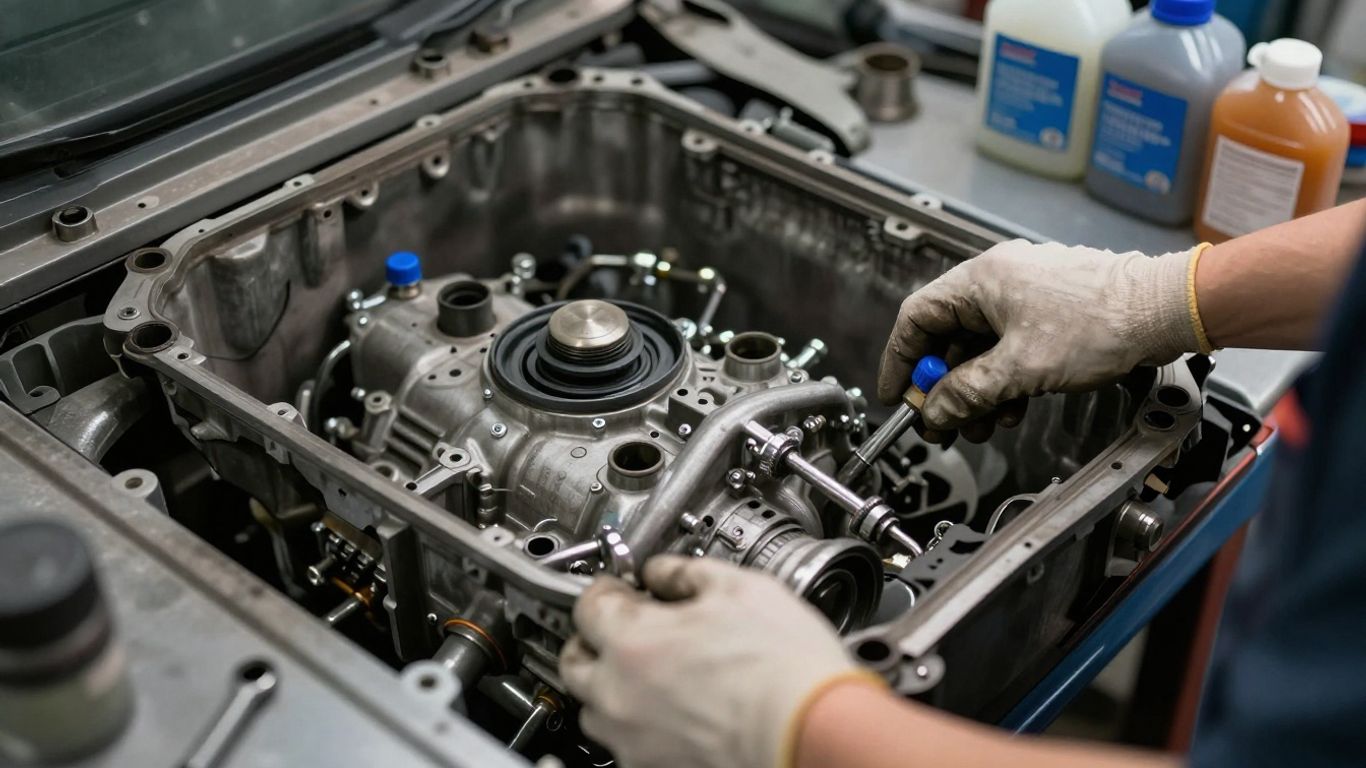
Manual gearboxes commonly use a dedicated gear oil that protects meshing gears, synchronizers, bearings, and other internal parts. The level is often checked through a fill or inspection opening, and the vehicle may need to be safely level for an accurate result. A leak can lower the level long before the driver notices a major shift problem.
During service, the technician may inspect the drain plug for abnormal metallic debris and check the condition of seals. The correct viscosity and approval are more important than simply matching the old fluid’s colour.
Automatic transmissions and fluid degradation
Automatic transmission fluid performs several jobs at once, including lubrication, heat transfer, pressure control, and friction management. Heat and repeated hydraulic activity gradually affect the fluid, while contamination can interfere with valves, clutch operation, or filter flow. A service decision should therefore consider the schedule and the transmission’s symptoms together.
There is no single automatic-transmission rule that fits every vehicle. This overview of automatic transmission fluid provides useful general context, but it should not override the specified fluid or procedure for the individual gearbox.
Dual-clutch transmissions and specialized service needs
Dual-clutch transmissions can contain separate fluid circuits or distinct maintenance requirements, depending on their design. The service may involve a particular fluid, a filter, a measured fill quantity, and electronic checks after the mechanical work. Incorrect fluid or an incorrect level can affect clutch control and shift quality.
Because access and calibration requirements vary, a technician should confirm the transmission identification before beginning. A routine-looking drain-and-fill may not cover every part of the required procedure.
Automated manual gearboxes and actuator considerations
An automated manual gearbox uses a conventional gearset but automates clutch and gear selection. Its fluid requirements may relate not only to gears and bearings but also to an actuator or hydraulic assembly. That means low fluid, air in a circuit, or a system fault can produce symptoms that resemble an ordinary shifting problem.
The service plan should distinguish gearbox oil from any separate actuator fluid or hydraulic reservoir. A scan for stored faults may be as useful as a visual fluid inspection when engagement is inconsistent.
CVT systems and approved fluid requirements
A continuously variable transmission uses a fluid designed for its belt-and-pulley or chain-and-pulley operating surfaces. That fluid has specific friction and wear characteristics, so a conventional automatic fluid or manual gear oil is not an acceptable substitute unless the vehicle documentation expressly permits it.
CVT filling often depends on a specified temperature range and level-check method. If the procedure is performed without those controls, the transmission may be overfilled or underfilled even when the measured quantity appears plausible.
Factors that can shorten the service interval
A normal-use schedule assumes a particular pattern of driving and a functioning, sealed transmission. Real vehicles often operate under harsher conditions than that baseline. The following factors do not automatically prove that a replacement is due, but they should prompt closer inspection and a more conservative conversation about timing.
Stop-and-go driving and frequent short trips
Repeated acceleration, braking, and low-speed shifting create more operating events than a steady motorway journey. Short trips can also prevent the transmission and its fluid from spending much time at stable operating temperature. This is especially relevant when the vehicle is used for dense urban commuting or frequent deliveries.
Keep records of the actual use rather than relying only on the odometer. A car with modest mileage can still have experienced a demanding number of heat cycles and gear changes.
Towing, heavy loads, and steep terrain
Towing and heavy cargo increase the work required to move the vehicle, while steep terrain can keep the transmission under load for longer periods. Higher load can mean more heat and more frequent ratio changes, particularly in slow climbing or descending traffic.
If the vehicle regularly carries heavy loads, ask whether the service schedule lists a severe-use interval. Cooling-system condition and leak checks matter too; fluid replacement alone cannot correct a transmission that is overheating for another reason.
Hot, cold, or dusty driving conditions
High ambient temperatures reduce the margin available for cooling, while very cold conditions can make fluid flow and engagement more demanding during warm-up. Dusty environments may also expose seals, breathers, and underbody components to greater contamination. These conditions are reasons to inspect surrounding components carefully.
The right response is not always an earlier fluid change. Sometimes it is a level check, a cooler inspection, a breather check, or a review of the vehicle’s operating pattern before selecting any work.
Fluid leaks and repeated low-fluid operation
A transmission leak is a fault to diagnose, not a service interval. Low fluid can reduce lubrication or hydraulic control and may accelerate wear, even if topping up temporarily makes the vehicle feel normal. The source may be a seal, pan, plug, cooler line, casing, or another connection.
After a leak is repaired, the technician should confirm the correct level using the required temperature and procedure. Continuing to drive while repeatedly adding fluid risks turning a relatively contained repair into internal transmission damage.
High mileage and previous maintenance history
Mileage is useful, but it is only one part of the decision. A high-mileage vehicle with complete records may be easier to assess than a lower-mileage vehicle with unknown fluid history, previous repairs, or long periods of low-fluid operation.
Before authorizing service, gather invoices and ask whether the transmission has had prior symptoms. A condition check can help distinguish overdue maintenance from a developing mechanical or electronic fault.
Signs your Renault transmission fluid needs attention
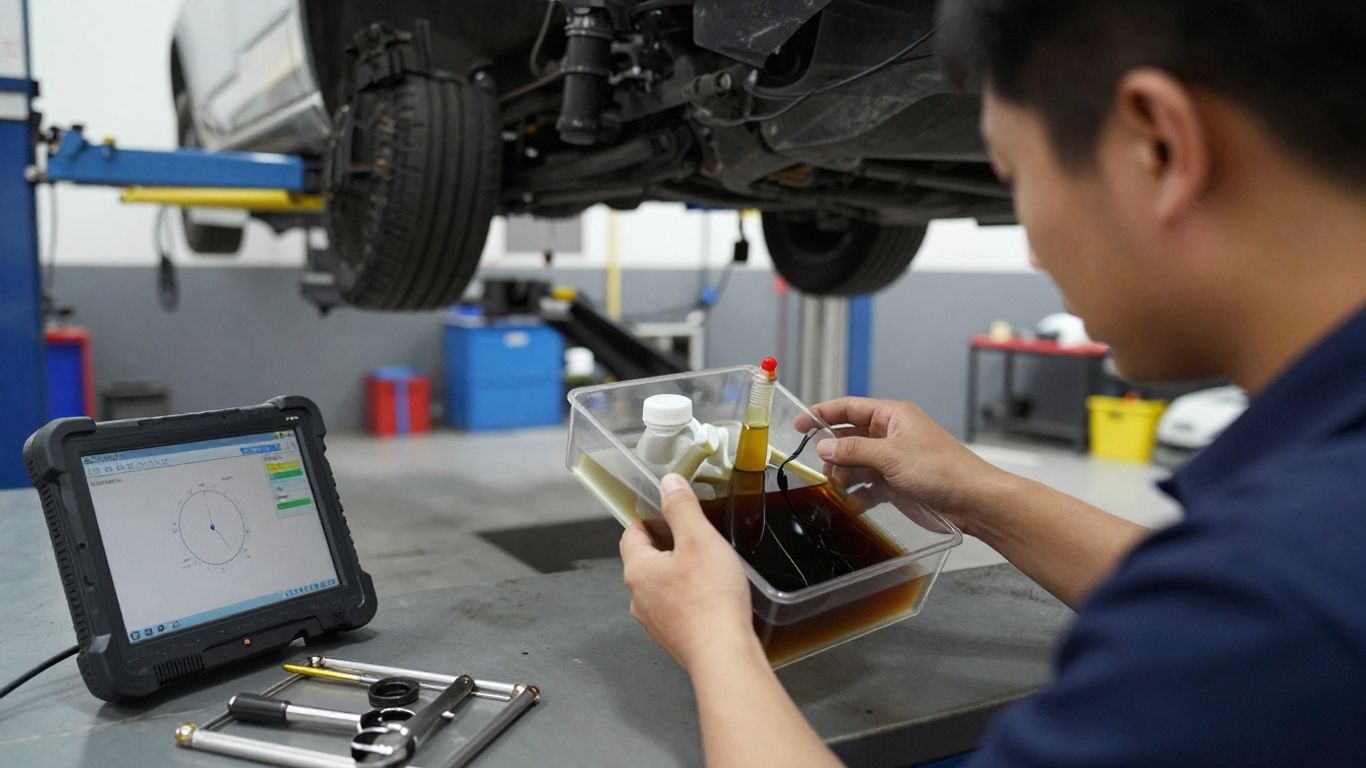
Fluid-related symptoms can overlap with worn clutches, damaged mounts, electrical faults, software issues, and internal mechanical wear. A symptom does not prove that changing the fluid will solve the problem. It does, however, provide a reason to stop guessing and arrange a proper inspection.
Delayed engagement or difficult shifting
A pause when selecting drive or reverse, resistance during gear selection, or a sudden change in shift effort may indicate a fluid, pressure, clutch, linkage, or control issue. Note whether the symptom occurs only when cold, after a long drive, or at every start.
Write down the conditions and any recent maintenance before visiting a repairer. That simple history can help separate a temperature-related behaviour from a persistent fault.
Grinding, slipping, or unusual transmission noises
Grinding deserves prompt attention because it may involve synchronizers, gears, bearings, or clutch operation rather than fluid alone. Slipping, flare between gears, whining, humming, and repeated clunks also warrant diagnosis, especially when they worsen under load.
Avoid continuing to test the symptom with aggressive acceleration. Additional heat and load can make an existing problem more expensive, and a fluid change should not be used to conceal a noise that needs mechanical investigation.
Shuddering, vibration, or harsh gear changes
Shuddering can occur during take-off, light acceleration, cruising, or a torque-converter event, depending on the transmission. Vibration may instead come from a mount, driveshaft, tyre, or engine issue. Harsh changes can likewise reflect adaptation, sensors, hydraulic control, or worn components.
A road test combined with diagnostic data and fluid inspection gives a better answer than judging the sensation in isolation. Ask the technician to record the conditions under which the vibration appears.
Burnt-smelling, dark, or contaminated fluid
Colour alone is not a reliable diagnosis, but a dark appearance, burnt odour, visible particles, or an unusual consistency can support the case for inspection. Fluid found on the vehicle should be sampled carefully and compared with the correct product, since different fluids do not all begin with the same colour.
A technician may also inspect the pan, magnet, filter, and drain plug where the design allows. The findings can influence whether a straightforward change, a deeper diagnosis, or no immediate fluid work is appropriate.
Warning lights and diagnostic trouble codes
A transmission warning light or stored diagnostic trouble code should be investigated before booking routine maintenance. The code may identify a sensor, solenoid, actuator, temperature, pressure, or communication issue, and changing fluid without addressing that fault may not improve operation.
Use the code as evidence, not as a complete diagnosis. A professional can combine scan data with level, condition, wiring, and road-test findings before recommending repairs.
Choosing the correct Renault transmission fluid
Selecting fluid by vehicle make alone is risky. The correct product depends on the transmission, production details, approval, and filling procedure. If the specification cannot be verified, pause the job rather than relying on a universal label or a guess based on colour.
Identifying the transmission code and vehicle specification
The VIN, model year, engine, transmission code, and build information help identify the applicable service data. The code may appear on documentation, a casing label, or electronic service information, although access varies by vehicle. A parts catalogue match is helpful only when the underlying vehicle details are accurate.
Give those details to the supplier or repair shop before buying fluid. This reduces the chance of mixing products or discovering during the job that the filter, seal, or fill tool is different from the expected part.
Renault-approved fluid standards and compatibility
A fluid should meet the approval or standard specified for that transmission, not merely claim broad compatibility. Product data sheets can contain several applications, but the technician still needs to confirm that the exact approval matches the vehicle’s service information.
Keep the invoice and the fluid container details with the maintenance records. If a later repair is needed, that information tells the next technician what was installed and when.
Why engine oil or universal fluid is not a substitute
Engine oil is formulated for a different environment and does not automatically provide the friction, pressure, or gear protection required by a transmission. “Universal” fluid is not a guarantee of compatibility either; a broad marketing description cannot replace a documented approval.
Using an incorrect product can change shift behaviour or accelerate wear. The safest choice is the specified fluid from a reputable source, installed without mixing products unless the documentation permits it.
Checking fluid level, temperature, and fill procedure
Many transmissions require the vehicle to be level and the fluid to fall within a defined temperature range during the level check. Some use an overflow arrangement rather than a dipstick, and the engine may need to run while the selector is moved through specified positions. These details make the procedure vehicle-specific.
A correct quantity measured into a container is not always the same as a correct final level. The technician should follow the documented method and check for leaks after the fill plug or pan is secured.
When a fluid change differs from a transmission flush
A drain-and-fill replaces the fluid that can be removed through the drain point, while a flush may exchange a larger proportion through additional equipment or circulation. The distinction matters when a transmission has high mileage, unknown history, severe contamination, or symptoms.
Discuss the reason for the proposed method before work begins. A flush is not automatically better, and neither method repairs worn clutches, damaged gears, failed solenoids, or an unresolved leak.
What happens during a Renault transmission fluid change
A sound service is more than opening a plug and pouring in a bottle. The technician first confirms the transmission and required fluid, then checks the vehicle for evidence that a routine service may not be appropriate. The work should finish with a verified level and a functional check.
Inspecting the transmission for leaks and damage
The inspection normally includes the casing, pan or cover, drain and fill plugs, cooler lines, driveshaft seals, wiring, connectors, and nearby components. Fresh or wet fluid can identify an active leak, while impact marks or damaged threads may affect the service plan.
If the transmission is already showing severe symptoms, ask for the inspection findings before approving a fluid change. Replacing fluid without understanding a major leak or mechanical fault can delay the necessary repair.
Draining the old fluid and replacing filters or seals
The old fluid is drained into a suitable container so its quantity and condition can be observed. Where the design calls for it, the technician may replace a filter, pan gasket, O-ring, crush washer, or other seal during the same service.
The removed fluid and debris can provide useful clues, but a small amount of material does not by itself establish a failure. The technician should explain what was found and whether it changes the recommended next step.
Refilling to the manufacturer’s specified level
Refilling uses the approved fluid and the specified access point, pump, adapter, or tool. The technician follows the required temperature and selector-position procedure, then checks that the level is neither low nor excessive.
This is one reason a quoted fluid quantity should not be treated as the entire procedure. The quantity, temperature, level, and leak check all need to agree before the vehicle leaves the workshop.
Adapting or resetting transmission control systems
Some transmissions use learned values for clutch engagement, pressure, or shift timing. After service, the manufacturer’s procedure may call for an adaptation, reset, or diagnostic check, while other transmissions may not require any electronic change.
The need depends on the gearbox and the work performed. A shop should explain whether a reset is required rather than applying one automatically to every vehicle.
Road-testing and verifying shift quality
A road test allows the technician to check engagement, acceleration shifts, downshifts, reverse selection, noises, leaks, and warning lights. The test should be suitable for the transmission and should compare the result with the complaint recorded before service.
A smooth initial drive is encouraging but not proof that every fault is resolved. The final invoice should identify the fluid, parts, mileage, and any observations that may matter at the next service.
Deciding between DIY service and professional maintenance
The choice depends on the gearbox, access, equipment, and your ability to follow the exact procedure safely. A basic manual-gearbox drain and fill may be manageable for an experienced home mechanic, while electronically controlled units can require special tools and diagnostic knowledge. The cost of a mistake can exceed the labour saved.
Tools and access required for a manual transmission
A manual service may require a level surface, secure lifting equipment, drain and fill tools, a fluid pump, a measured container, replacement seals, and a way to clean spills. The vehicle must remain safely supported while the fill level is checked, often from underneath.
Before starting, confirm the fill plug can be removed. Discovering a seized fill plug after draining the gearbox creates an avoidable problem, particularly if the vehicle cannot be driven safely afterward.
Why automatic and dual-clutch services can be complex
Automatic and dual-clutch units may require controlled fluid temperature, a scan tool, special adapters, filter access, adaptation procedures, and careful handling of contamination. Some also have several fluid circuits or a level check that cannot be completed with the car simply parked on a flat driveway.
For these systems, professional maintenance is often the more sensible option. A shop with relevant experience can identify the gearbox, follow the service data, and diagnose symptoms that a fluid change alone cannot resolve.
How to evaluate a repair shop’s transmission experience
Look for a repairer who can name the transmission type, explain the fluid specification, and describe the level-check method before quoting. Experience should include diagnosis as well as routine servicing, because symptoms often have several possible causes.
Ask whether the technician will record the old fluid condition, inspect for leaks, and road-test the vehicle. Clear answers are more valuable than a promise that every transmission problem can be fixed by changing fluid.
Questions to ask about fluid, parts, and warranty coverage
Before authorizing work, ask for the exact fluid approval, expected quantity, filter and seal requirements, and the checks included in the price. Also ask what happens if the inspection finds a leak, abnormal debris, or a fault code. Written answers make the scope easier to compare.
It is also reasonable to ask what warranty applies to the workmanship and supplied parts. For a convenient starting point, a Renault fluid replacement service can help compare local booking options, but confirm the quoted work against your vehicle’s transmission details.
Estimating service costs and avoiding unnecessary repairs
Price depends on fluid volume, access, filters, seals, diagnostic time, and whether an adaptation or leak repair is needed. A low headline price may cover only a drain-and-fill, while a higher quote may include inspection and required parts. Compare like with like rather than choosing from the number alone.
Request an itemized estimate and approval before additional work begins. If a shop recommends a flush, software reset, or major repair, ask what evidence supports it and whether the recommendation relates to a symptom, a service requirement, or a separate fault.
Conclusion
The right Renault transmission fluid change interval comes from matching the vehicle’s exact gearbox and specification with its actual use and maintenance history. Regular checks, correct fluid, careful level-setting, and prompt diagnosis of symptoms provide a more dependable plan than a universal mileage claim.
Frequently Asked Questions
How often should transmission fluid be changed?
There is no single interval for every vehicle. Follow the manufacturer’s schedule for the exact transmission, then consider earlier inspection when the vehicle sees heavy loads, severe traffic, high heat, leaks, or unknown maintenance history.
Is transmission fluid really lifetime fluid?
“Lifetime” generally describes an intended service life under stated conditions rather than a promise that the fluid never needs inspection. Leaks, overheating, contamination, and demanding use can change the maintenance decision.
Can old transmission fluid cause hard shifting?
Degraded or incorrect fluid can contribute to shift problems, but hard shifting may also come from worn mechanical parts, hydraulic faults, sensors, software, or a clutch issue. Diagnosis should come before assuming a fluid change will solve it.
What colour should transmission fluid be?
Colour varies by product and transmission, so it is not a dependable test by itself. Darkening, a burnt smell, particles, or an unusual texture are reasons to arrange an inspection alongside a review of service history.
Is a transmission flush better than a fluid change?
Neither method is universally better. The appropriate approach depends on the transmission design, service instructions, fluid condition, mileage, and symptoms. A flush cannot repair internal wear or an unresolved leak.
Can I use universal transmission fluid?
Only use a product that meets the transmission’s documented requirement. A universal label does not guarantee the friction, pressure, seal, and temperature characteristics required by a particular gearbox.
What should I do if the transmission warning light appears?
Drive cautiously and arrange a diagnostic inspection, especially if shifting, engagement, noise, or slipping has changed. A fault code can guide testing, but it should be interpreted with fluid level, wiring, mechanical condition, and road-test results.