

Key Takeaways
Difficulty selecting a gear is a symptom, not a diagnosis. The way the problem appears—with the engine running, when cold, or in only one gear—can help narrow the likely cause.
- A clutch that does not fully disengage can make several gears difficult to select.
- Grinding often points to incomplete clutch release or worn synchronizers.
- Fluid level, condition, and specification matter in a manual gearbox.
- Comparing selection with the engine on and off is a useful first clue.
- Persistent grinding, slipping, or loss of gear control calls for prompt inspection.
What manual gearbox difficulty engaging gears feels like
Manual gearbox difficulty engaging gears can be subtle at first. The lever may feel notchy, a familiar gear may resist, or the car may grind when reverse is selected. These sensations do not identify one failed part by themselves, but their timing and pattern provide useful diagnostic clues.
Trouble selecting gears when the engine is running
If the lever moves easily through the gates with the engine off but resists once the engine starts, the clutch may not be separating the engine from the gearbox completely. A low hydraulic fluid level, air in the clutch circuit, poor adjustment, or a worn clutch assembly can produce this pattern. It is especially noticeable when selecting first gear at a stop.
A driver may also feel the vehicle beginning to creep even though the clutch pedal is fully depressed. That is a sign not to keep forcing the lever; the underlying release problem needs examination.
Gears that engage only with extra force
A gear that selects only when the driver pushes harder can indicate wear or misalignment in the shift mechanism. Cables, bushings, mounts, and the lever itself all affect how accurately the selector reaches the gearbox. Extra force may temporarily overcome resistance, but it can bend or wear components further.
The specific gear matters. Resistance in one gate may suggest a selector or synchronizer issue, while resistance across several gears more often raises suspicion of clutch release, linkage, or fluid-related trouble.
Grinding, clunking, or resistance during shifts
Grinding means rotating parts are not matching speed smoothly before engagement. It can occur when the clutch continues to drive the gearbox input shaft, or when a synchronizer can no longer do its job effectively. A clunk may instead come from driveline movement, a worn mount, or selecting a gear too abruptly.
Pay attention to whether the noise happens during an upshift, downshift, or reverse selection. A manual gearbox symptoms guide can help organize observations, but unusual noise that appears repeatedly deserves a hands-on inspection.
Differences between cold-start and warmed-up behavior
Some manual gearboxes feel stiffer when cold because the lubricant is more viscous. If shifting becomes noticeably easier after several minutes, fluid specification or condition may be relevant, although temperature-sensitive linkage wear is also possible. A problem that worsens as the vehicle warms can point toward a hydraulic or clutch component changing with heat.
Record the conditions rather than relying on memory: outside temperature, time since startup, affected gears, and whether the vehicle was moving. That simple record gives a technician a more useful starting point.
Common causes of hard-to-engage gears
Hard-to-engage gears can originate outside the gearbox itself. The clutch, hydraulic circuit, shift mechanism, lubricant, and internal synchronizers all work together, so a fault in one area can feel like a transmission failure. A careful diagnosis avoids replacing an expensive internal part when an external adjustment or leak is responsible.
Low, contaminated, or incorrect transmission fluid
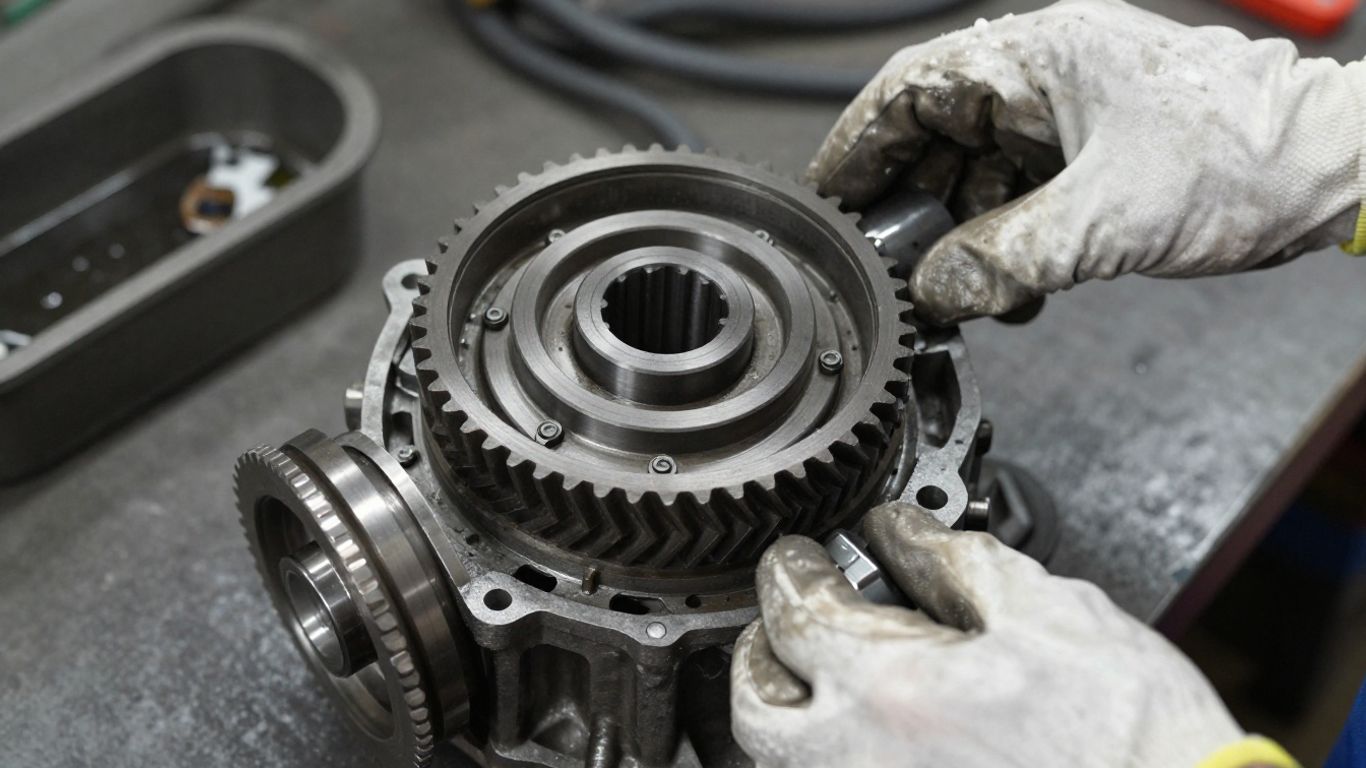
Manual transmission fluid lubricates gears, bearings, and synchronizer components. A low level can result from a leak, while contamination or the wrong specification may alter shift quality and accelerate wear. The correct checking procedure varies by vehicle, so the level should not be guessed from the appearance of the filler opening.
Fluid alone will not fix a damaged synchronizer or clutch. Still, checking for leaks and verifying the specified lubricant is a sensible early step before deeper work is approved.
Worn clutch components or clutch adjustment problems
A clutch that is worn, warped, or poorly adjusted may fail to release fully. The pressure plate, friction disc, release bearing, and related mechanism can all contribute to difficult engagement. Slipping under acceleration, a high or changing bite point, and an unusual pedal feel strengthen the case for clutch inspection.
The clutch and gearbox are closely related but are not the same repair. Testing release operation first can prevent an unnecessary gearbox rebuild.
Damaged synchronizers inside the gearbox
Synchronizers help bring gear speeds together during a shift. When one becomes worn, the matching gear may resist or grind, particularly during quick shifts or downshifts. This fault often affects one or two gears more clearly than the entire shift pattern.
Internal wear generally requires removal and disassembly of the gearbox for confirmation. Double-clutching may reduce symptoms in some cases, but it is a temporary driving technique, not a repair.
Faulty shift linkage, cables, or bushings
The shifter mechanism transfers hand movement to the selector on the gearbox. Stretched cables, loose bushings, seized pivots, or damaged mounts can leave the lever out of alignment. The result may be a vague gate, difficulty finding a gear, or several gears that feel displaced.
External parts are often easier to inspect than internal gearbox components. A technician should check movement at both ends of the mechanism before concluding that the gearbox itself is damaged.
Hydraulic problems in the clutch system
Hydraulic clutches depend on fluid pressure to move the release mechanism. Air, a leak, a failing master cylinder, or a failing slave cylinder can shorten the pedal’s effective travel. The clutch may then drag even though the pedal appears to be fully depressed.
Look for a soft or sinking pedal, dampness around hydraulic components, and a bite point that changes from one drive to the next. These clues are useful, but the system still needs a proper pressure and movement check.
How to identify the source of the problem
Diagnosis begins with patterns rather than guesses. Safe, simple comparisons can separate a clutch-release concern from a selector or internal gearbox concern. Do not conduct tests in traffic, and keep the vehicle secured whenever the engine is running while stationary.
Comparing gear selection with the engine on and off
With the vehicle stationary and safely secured, compare how the lever moves with the engine off and with the clutch fully depressed while the engine runs. Easy selection with the engine off but resistance with the engine on points toward clutch drag or a related release problem. Resistance in both conditions shifts attention toward linkage or internal gearbox components.
This is only an indicator, not a final diagnosis. A vehicle can have more than one fault, especially when wear has accumulated gradually.
Checking whether one gear or every gear is affected
Note the affected gears and whether the issue appears during selection from neutral, an upshift, or a downshift. One troublesome gear may point toward a particular synchronizer, selector fork, or cable position. Difficulty across the whole pattern is more consistent with clutch release, linkage, or fluid problems.
Write down the results in a compact sequence so the pattern remains clear:
- Test selection with the engine off.
- Repeat with the engine running and clutch fully depressed.
- Try first, second, and a higher gear without forcing the lever.
- Record any grinding, creeping, or change in pedal feel.
These observations help a repairer reproduce the complaint without treating every difficult shift as an internal failure.
Testing reverse gear for grinding or resistance
Reverse gear is a useful clue because many manual gearboxes do not synchronize it in the same way as forward gears. Grinding when reverse is selected after the clutch has been depressed can suggest that the input shaft is still turning. Waiting briefly in neutral, then trying again, may change the symptom but does not explain its cause.
Never force reverse into engagement. If the vehicle moves or the noise is severe, stop the test and arrange an inspection.
Looking for fluid leaks and clutch pedal changes
Inspect the ground and the visible areas around the gearbox and clutch hydraulic components for fresh fluid. The color and location can vary, so identification should be confirmed rather than assumed. A pedal that feels softer, sinks, or engages unusually close to the floor is equally worth recording.
A fluid leak can create a shifting problem before the reservoir looks empty. If the level is falling, topping it up without finding the leak is not a complete solution.
Noting noises, vibrations, and changes under load
Listen for humming, whining, rattling, or grinding, and note whether each noise follows engine speed, road speed, or clutch-pedal movement. Vibrations under acceleration may involve mounts or the clutch, while a noise that changes when the pedal is pressed may involve release components. Changes under load can help distinguish a shift-selection fault from a general driveline problem.
Use gradual, ordinary driving only if the vehicle remains safe to operate. A car that will not go into gear should be moved out of danger first, not repeatedly tested in a live lane.
Diagnostic checks to perform
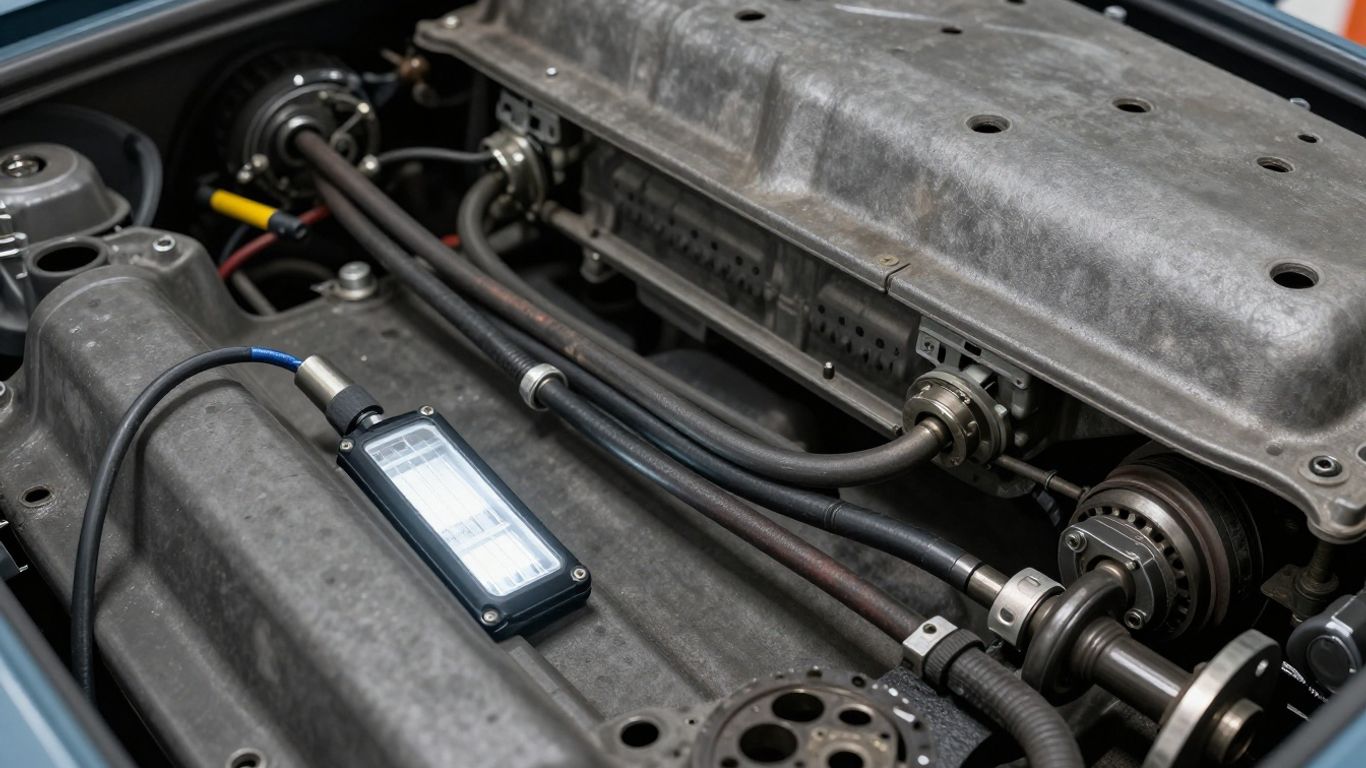
A proper inspection moves from the easiest external checks to more involved mechanical testing. The aim is to reproduce the symptom, verify the related system, and identify the failed part rather than simply naming a broad category. Vehicle-specific service information is important because adjustment points and fluid requirements differ.
Inspecting the clutch pedal and engagement point
A technician should check pedal free play, travel, return action, and the point at which the clutch begins to engage. A restricted pedal, obstructing floor mat, bent linkage, or incorrect adjustment can limit release travel. The engagement point should be assessed alongside slipping, chatter, and changes in pedal effort.
A single pedal symptom is rarely conclusive. Taken together, pedal travel and gear-selection behavior provide a stronger direction for testing.
Checking clutch fluid and hydraulic operation
Where the vehicle uses a hydraulic clutch, inspect the reservoir level, fluid condition, lines, master cylinder, slave cylinder, and visible seals. Bleeding may remove air, but a recurring soft pedal usually means the source of the problem remains. Hydraulic movement should be verified at the release mechanism rather than inferred from pedal feel alone.
Use only the fluid specified for the vehicle. Mixing products or repeatedly topping up a leaking system can create further complications.
Examining the shift mechanism for wear or misalignment
The linkage or cable system should be checked for looseness, binding, damaged bushings, and correct alignment. The technician can compare movement at the cabin lever with movement at the gearbox selector. Worn mounts may also allow the powertrain to shift enough to affect cable geometry.
External inspection is particularly valuable when the lever feels vague or several adjacent gears are difficult. It can reveal a relatively accessible repair before gearbox removal is considered.
Verifying the transmission fluid level and condition
Check the transmission at the manufacturer’s specified temperature and position, using the prescribed procedure. Look for a low level, metal debris, burnt odor, or fluid that is badly discolored, while remembering that appearance alone cannot grade internal wear. The correct fluid specification is as important as the quantity.
The findings should be interpreted with the symptoms. Fresh fluid may improve cold shifting, but it cannot restore a synchronizer or bearing that is mechanically damaged.
Using a professional scan and mechanical inspection when needed
A scan tool may identify related electronic or engine-management faults on vehicles that monitor clutch or transmission systems, but a scan does not replace mechanical inspection. A workshop may need to measure clutch travel, inspect linkage movement, test hydraulic pressure, or road-test the vehicle under controlled conditions.
Ask for the observed evidence and the proposed confirmation test. Clear diagnostic reasoning is more useful than a parts list assembled from symptoms alone.
Repairs for manual gearbox shifting problems
The appropriate repair depends on which system has failed and how much secondary damage has occurred. External adjustments and replacements are usually considered before gearbox disassembly, but the order can change when safety or severe wear is involved. A written estimate should separate diagnosis, parts, labor, fluid, and any follow-up adjustment.
Adjusting or replacing the clutch linkage
A mechanical clutch linkage may need adjustment if free play or release travel is incorrect. Bent, seized, or excessively worn components may need replacement instead. The final adjustment should be checked with the engine running and across several gears, not only by moving the lever in the workshop.
If adjustment does not restore complete release, continuing to tighten the mechanism can create new wear. The clutch assembly and release mechanism then deserve closer inspection.
Bleeding or repairing the clutch hydraulic system
Air can sometimes be removed by bleeding the hydraulic circuit according to the vehicle’s procedure. Leaking lines, seals, the master cylinder, or the slave cylinder require repair or replacement rather than repeated bleeding. Afterward, pedal travel and clutch release must be verified.
A successful repair should produce a consistent pedal and clean engagement. If the gearbox still grinds, another fault may be present.
Replacing worn shifter cables, bushings, or mounts
Worn bushings and cables can be replaced, then adjusted so the selector reaches each gate accurately. Damaged engine or transmission mounts may also need attention if movement is pulling the linkage out of alignment. The result should be assessed for both stationary selection and a controlled road test.
Replacing only the most visible loose part may not solve the problem if the cable ends and mounting points are worn together. A complete mechanism check is more reliable.
Servicing or rebuilding damaged synchronizers
Worn synchronizers require internal gearbox work when external causes have been ruled out. The gearbox may need removal, disassembly, measurement, and replacement of damaged rings, hubs, gears, bearings, or related parts. The exact scope depends on the inspection findings.
Because labor is significant, ask whether the estimate covers only the identified synchronizer or allows for additional wear found after opening the case. Reusing severely worn related parts can lead to a repeat repair.
Replacing the clutch, pressure plate, or release bearing
A clutch replacement may include the friction disc, pressure plate, and release bearing, depending on condition and the vehicle’s service design. The flywheel should be inspected for heat damage or distortion. If the gearbox is already removed, replacing accessible worn release components may avoid paying the same removal labor twice.
The repair should end with correct adjustment or hydraulic bleeding and a confirmation that gears engage cleanly. A new clutch will not correct a damaged synchronizer or misaligned shift mechanism by itself.
When difficulty engaging gears requires urgent attention
Some shifting complaints are inconvenient but manageable for a short distance; others can leave the driver unable to control speed or select a safe gear. The decision to continue depends on the severity, location, traffic, and whether the symptom is changing quickly. When in doubt, protect people first and the vehicle second.
Signs that make driving unsafe
Driving becomes unsafe when the vehicle will not reliably select a gear, creeps with the clutch fully down, slips badly under load, or becomes difficult to disengage from a gear. A lever that suddenly goes loose or a pedal that drops to the floor also deserves immediate attention. These faults can appear without much warning.
Hazard lights and a safe pull-over location are priorities if the issue begins on the road. Do not keep trying to force the vehicle forward simply because one gear still works.
Symptoms of severe clutch or gearbox damage
Severe warning signs include persistent grinding, a burning clutch odor, heavy vibration, oil loss, loud whining, metal-on-metal noise, or a gear that repeatedly jumps out. A rapidly worsening symptom is more concerning than a stable minor notchiness. Several signs together justify stopping rather than experimenting.
A vehicle can remain movable while damage is progressing. Mobility alone does not prove that continued driving is safe or economical.
How continued grinding can increase repair costs
Grinding removes material from components that should meet smoothly, and repeated forced shifts can damage selector parts as well. What begins as a clutch-release problem may create additional synchronizer or gear wear if ignored. The longer the vehicle is driven under those conditions, the harder it becomes to identify the original fault.
Early inspection does not guarantee a small bill, but it can prevent a limited repair from becoming a broader rebuild. Prompt diagnosis protects options when the symptoms are still specific.
When to stop driving and arrange a tow
Arrange recovery when no gear can be selected, the clutch pedal has failed, the gearbox is leaking heavily, or the vehicle cannot be moved without grinding or unsafe acceleration. Stop in a safe place, apply the parking brake, and follow roadside-safety procedures. Do not crawl beneath an unsupported vehicle to inspect a leak.
If a gear is stuck while driving, reduce risk by moving away from traffic only when it can be done safely. A tow is preferable to gambling on a short trip to a workshop.
Questions to ask a repair shop before approving work
A good repair discussion should connect the recommendation to an observed fault. Ask what was tested, which part failed, whether the gearbox must be removed, and what other wear could be found during disassembly. Also ask how the repair will be verified after completion.
Useful questions include:
- Can you reproduce the symptom and show what causes it?
- Which parts are confirmed worn, and which are only possibilities?
- Does the estimate include fluid, adjustment, bleeding, and testing?
- What safety risk comes from driving before the repair?
The answers should leave you with a clear distinction between confirmed work and contingency work. That makes the estimate easier to understand and compare.
Conclusion
Manual gearbox difficulty engaging gears can come from fluid, clutch release, hydraulic operation, shift linkage, or internal gearbox wear. Careful observation—especially comparing engine-on and engine-off behavior—helps narrow the cause, while grinding, slipping, or sudden loss of gear control should not be ignored. A timely inspection is usually the safest way to protect both the vehicle and the repair budget.
Frequently Asked Questions
Why is my manual gearbox hard to get into gear?
The clutch may not be releasing fully, the shift linkage may be worn or misaligned, the fluid may be low or incorrect, or an internal synchronizer may be worn. The pattern of affected gears helps distinguish these possibilities.
Why does the gearbox shift better with the engine off?
With the engine off, the gearbox input shaft is not being driven. If gears select easily then but resist with the engine running, clutch drag or a hydraulic release problem becomes more likely.
Why does reverse grind in a manual car?
Reverse may not have the same synchronizing arrangement as forward gears. Grinding can occur if the clutch has not stopped the input shaft, if the clutch is dragging, or if the selection mechanism has a fault.
Can low transmission fluid make gears difficult to engage?
Yes. A low, contaminated, or incorrect fluid can affect lubrication and synchronizer operation. The cause of a low level should still be found, since fluid loss usually indicates a leak.
Is it safe to drive with gears that are difficult to select?
It may not be safe, particularly if the vehicle creeps with the clutch depressed, slips, jumps out of gear, grinds repeatedly, or cannot select a suitable gear. Stop driving and arrange professional help when control or reliability is compromised.
Can changing the clutch fix difficult gear selection?
It can if the clutch is failing to release fully, but it will not repair worn synchronizers, damaged selector parts, or incorrect linkage adjustment. Diagnosis should identify the failed system before parts are replaced.
How can I prevent manual gearbox shifting problems?
Use the specified fluid, address leaks promptly, avoid forcing the lever, use the clutch fully, and have new noises or changing pedal feel checked early. Regular inspections can catch linkage and hydraulic wear before selection becomes unreliable.