

Key Takeaways
A drivetrain vibration is a symptom, not a diagnosis. The moment it appears, the sound that accompanies it, and whether it changes under load can narrow the search considerably.
- Acceleration shudder often points toward loaded drivetrain components or mounts.
- Speed-related vibration may come from imbalance, bent shafts, wheels, or tires.
- CV joints, boots, bearings, couplings, and mounts all deserve a careful inspection.
- A road test should be followed by checks of wheels, suspension, and driveline parts.
- Severe clunks, grinding, looseness, or worsening vibration can make driving unsafe.
What drivetrain vibration feels like and when it occurs
Renault drivetrain vibration causes are easier to separate when you describe exactly when the shake occurs. A tremor during acceleration suggests a different line of investigation from a steady buzz at one road speed. Note whether the vibration is felt through the steering wheel, seat, or floor, and whether it changes when you lift off the throttle.
Vibration during acceleration versus cruising
A shudder that appears as the vehicle pulls away or climbs a hill usually means a component is reacting to increased torque. Inner CV joints, worn mounts, driveshaft joints, and shaft angles can all behave this way. By contrast, a vibration that remains at a particular cruising speed may be related to rotating imbalance, wheel condition, or a propshaft problem.
The throttle test is useful but not conclusive. If the shake fades quickly when you ease off, the fault may be load-sensitive; if it continues with little change, look more closely at speed-related rotating parts.
Shaking under load, at specific speeds, or while turning
Record the conditions rather than relying on a general description such as “it shakes.” Does it happen below city speeds, above highway speeds, during a tight turn, or only when carrying passengers? A clicking noise on full lock can point toward an outer CV joint, while a low-speed judder under power may involve an inner joint or mount.
A vibration that began immediately after suspension work, a lift, wheel replacement, or driveline removal deserves extra attention to installation and geometry. Drive shaft vibration diagnosis also separates angle-related symptoms from dynamic, speed-related vibration, which is a useful framework for a road test.
Clunks, humming, grinding, and other related noises
Noise can reveal movement that vibration alone cannot. A single clunk when selecting drive or reverse may indicate excessive play in a mount or joint, while a hum that rises with road speed can come from a bearing, tire, or differential. Grinding, scraping, or a metallic rattle is more concerning because it may indicate contact, a failing bearing, or loose hardware.
Do not dismiss a new sound because the car still drives. A changing noise matters: a fault that becomes louder, more frequent, or easier to trigger is rarely improving by itself.
How steering-wheel and floor vibrations indicate different problems
Steering-wheel shake is often associated with front wheels, tires, hubs, brakes, or front suspension, although front axles can also transmit vibration through the steering system. A tremor through the seat or floor points more toward the rear wheels, propshaft, differential, exhaust contact, or body-mounted driveline components.
The distinction is only a starting point. Vibrations travel through the body shell, so a technician should confirm the source rather than replacing parts based on where the driver feels the shake.
The most common Renault drivetrain vibration causes
The drivetrain includes the parts that transfer engine torque to the driven wheels, along with the mounts and couplings that keep those parts correctly positioned. Wear in one area can load another, which is why a simple-looking vibration sometimes needs a systematic inspection. The Car Parts Supplier helps customers find quality used, genuine, and aftermarket parts, but the correct component still depends on the vehicle and confirmed fault.
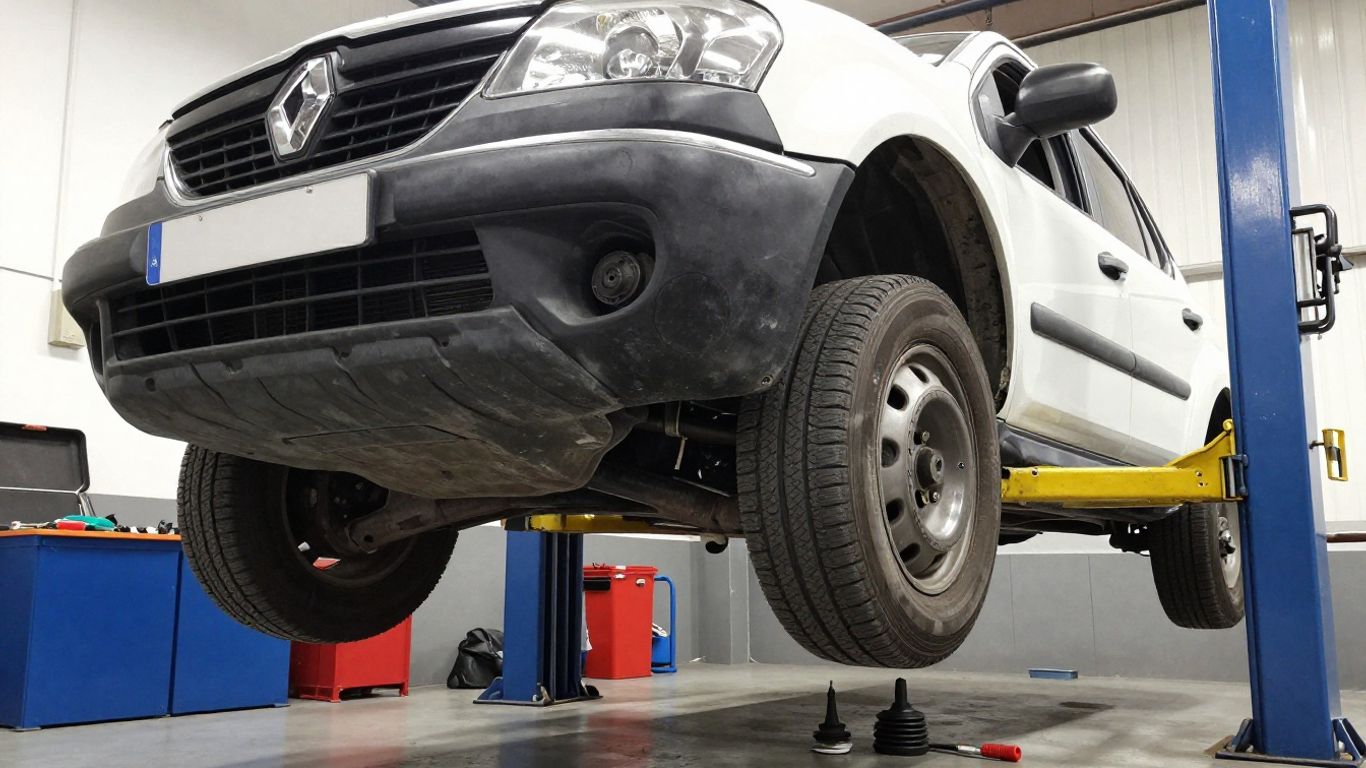
Worn or damaged driveshaft components
A driveshaft can vibrate when a joint develops play, a tube bends, a flange is damaged, or a balance weight is lost. Center support bearings and flexible couplings can also deteriorate, allowing the shaft to move outside its intended path. Look for rust, damaged rubber, displaced weights, and evidence of contact with nearby components.
The repair should address the reason for the movement, not just the most visible mark. A shaft that has been removed and refitted incorrectly may produce vibration even when its major parts appear intact.
Failing CV joints and damaged driveshaft boots
CV joints operate at changing angles while transmitting torque, so their condition is especially important on front-wheel-drive models. A torn boot allows grease to escape and dirt or water to enter, accelerating wear. Outer-joint wear often produces clicking on turns, while inner-joint wear can create a shudder under acceleration.
A boot replacement may be sensible when the joint is still clean and undamaged. Once there is pitting, looseness, or persistent noise, replacing the joint or complete axle is usually the more dependable decision.
Engine and transmission mounts that have collapsed
Mounts control powertrain movement and isolate normal engine pulses from the body. When rubber separates or collapses, the engine and transmission can shift during acceleration, causing a thump, judder, or vibration at idle. Excess movement may also place unusual angles on axles, hoses, exhaust parts, and linkages.
A visual check should be combined with a controlled load test. A mount can look acceptable at rest yet move too far when torque is applied.
Imbalanced, bent, or poorly installed propeller shafts
On vehicles with a propeller shaft, balance and alignment are central to smooth operation. A dented tube, worn universal joint, incorrect phasing, or misplaced center bearing can create a vibration that rises with road speed. Recent repairs are a valuable clue, particularly if the symptom began immediately afterward.
A shaft should be inspected in the vehicle configuration in which it operates. Removing parts without marking their original positions can make correct reassembly harder.
Wheel, tire, and brake issues that can mimic drivetrain faults
Not every shake comes from the drivetrain. Tire separation, uneven wear, a bent wheel, incorrect balance, a loose wheel, warped brake hardware, or a sticking caliper can all feel similar from the driver’s seat. Start with these comparatively accessible checks before assuming an axle or differential has failed.
A useful comparison is whether the vibration changes during braking. If it does, brake or hub inspection moves higher on the list; if it appears only under power, drivetrain components deserve closer attention.
How to diagnose the source of the vibration
Good diagnosis follows the symptom instead of guessing from the vehicle badge. Begin with a safe road test, then inspect simple external causes before dismantling expensive components. A written description of speed, throttle position, steering angle, and noise can save time and prevent unnecessary parts replacement.
Inspecting tires, wheels, and suspension before drivetrain parts
Check tire pressures, tread condition, wheel balance, rim runout, wheel-nut torque, and visible suspension damage. Look for cupping or a shifted belt, then inspect hubs and bearings for looseness. Brake discs, calipers, and backing plates should also be checked when the symptom occurs during braking or after heat builds up.
This first pass is not merely a shortcut. It establishes whether the vibration is tied to road speed, braking, or a particular corner of the car.
Checking driveshaft play, joints, bearings, and flexible couplings
With the vehicle safely supported, an experienced technician can inspect joints for excessive play and look for cracks, grease loss, torn rubber, or displaced hardware. A center bearing should be checked for sagging and deterioration, while couplings should be examined for cracking and distortion.
The shaft should not be forced or rotated carelessly. Some checks require manufacturer-specific procedures, correct support points, and an understanding of how the transmission and differential are secured.
Testing engine and transmission mounts under load
A mount test compares powertrain movement while the engine is loaded in forward and reverse directions. Excessive lift, rocking, or a sharp knock indicates that the mount system needs closer examination. The test should be controlled, with attention to fan blades, belts, exhaust parts, and other moving components.
Replacing a mount without checking the others can leave the powertrain misaligned. It can also hide a second worn mount that fails soon afterward.
Using road-speed and engine-speed patterns to narrow the fault
Road-speed vibration normally changes with vehicle speed, while engine-speed vibration follows revs and may appear while stationary. A careful test can compare acceleration, steady throttle, coast-down, neutral, and gentle turns. This distinction helps separate wheel and shaft problems from engine or mount issues.
The pattern is a guide, not proof. A drivetrain part can transmit an engine-speed pulse through a component whose vibration is most noticeable at a particular road speed.
When vibration measurements or diagnostic equipment are necessary
If visual checks and a road test do not isolate the fault, a workshop may use runout measurements, electronic vibration analysis, lift inspection, or manufacturer-specific scan data. These tools are most useful when several components show similar symptoms or when vibration is intermittent.
The broader lesson is familiar from Shopify performance analysis: a surface symptom can have a less obvious underlying cause. In a vehicle, measurement helps distinguish a suspected part from the part actually creating the vibration.
A practical diagnostic record can include:
- The speed and gear at which the vibration begins.
- Whether acceleration, braking, turning, or coasting changes it.
- Where the vibration is felt inside the cabin.
- Any recent tire, suspension, transmission, or driveshaft work.
This information gives the technician a repeatable starting point rather than a vague complaint.
Renault-specific areas to inspect
Different Renault models use different layouts, engines, transmissions, and driven-wheel arrangements. That changes which joints, shafts, bearings, and mounts are present and how they should be tested. Confirm the exact model, year, engine, transmission, and drivetrain before ordering parts.
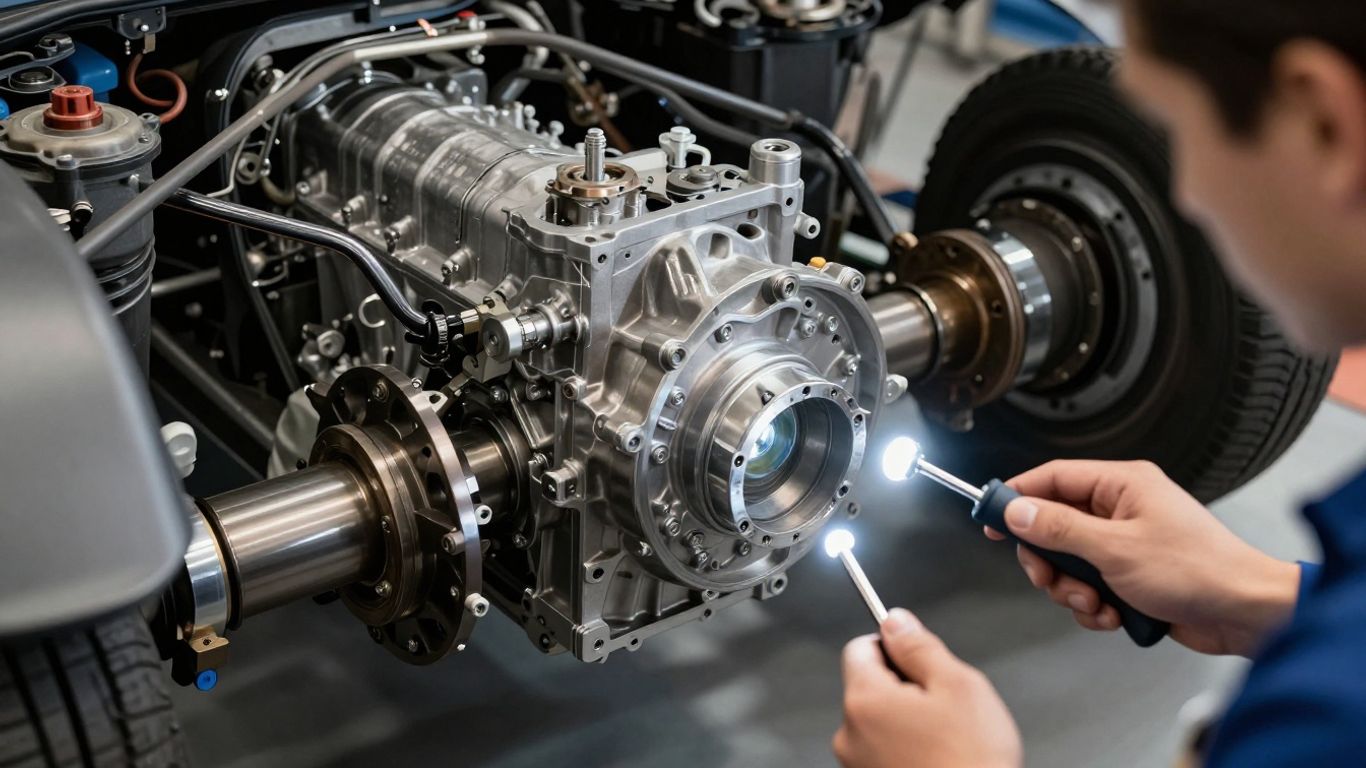
Front-wheel-drive Renault CV axles and inner joints
On front-wheel-drive vehicles, the inner and outer CV joints have different jobs and failure patterns. An inner joint can shudder under acceleration, while an outer joint may click during a tight turn. Torn boots, grease around the wheel or transmission side, and unusual axle movement are useful clues.
Do not assume both sides use identical parts. Shaft length, transmission fitment, and engine configuration can affect compatibility, even within one model range.
Rear-wheel-drive and four-wheel-drive propshaft components
Where a Renault platform uses a longer propshaft or additional driven components, inspect universal joints, center supports, couplings, flanges, and shaft alignment. A vibration that grows with speed is especially worth investigating for balance, runout, and bearing condition.
Parts should be supported correctly during removal. A shaft that is allowed to hang or is reassembled without preserving its indexed position may create a new vibration.
Transmission output shafts, differential mounts, and bearings
Wear at the transmission output or differential mounting points can change shaft angles and transmit noise into the body. Bearing rumble, oil leakage, mount movement, and metal dust are signs that inspection should go beyond the axle itself.
Because these components can be costly, diagnosis should confirm the source before replacement. A noisy bearing and a poorly balanced shaft may feel similar at one speed but require very different repairs.
Model and powertrain differences that affect diagnosis
A compact front-wheel-drive hatchback, an all-wheel-drive vehicle, and a van-based platform will not present the same driveline checks. Automatic and manual transmissions may also use different mounts, couplings, and output arrangements. Service information and the vehicle identification number help establish the correct parts and procedures.
This is where the Car Parts Supplier can support fast parts sourcing across Melbourne, Sydney, Brisbane, and nationwide, provided the requested part is matched to the vehicle rather than selected from a generic symptom.
How previous repairs or aftermarket modifications can contribute
A vibration that starts after a repair deserves a careful recheck of fasteners, shaft indexing, balance weights, mount position, wheel fitment, and clearance. Non-standard wheels, tires, suspension changes, spacers, or altered ride height can also change angles and loads.
Keep removed parts and invoices where possible. They provide useful evidence when tracing a fault that appeared after modification or earlier service.
Repair options and typical service decisions
The right repair depends on measured wear, available parts, and the condition of related components. A professional estimate should identify the suspected cause, the proposed remedy, and any inspection findings that could change the scope. The cheapest individual part is not always the least expensive repair overall.
When a component can be repaired versus replaced
A serviceable boot, coupling, or support bearing may be replaceable without changing the entire shaft. A bent tube, badly worn splines, damaged joint housing, or compromised bearing seat may make assembly replacement more sensible. The decision should account for labor, balancing, warranty, and the condition of neighboring parts.
Ask whether the proposed repair restores the original geometry and balance. A component that is technically reusable may not be economical if it requires repeated dismantling.
Replacing CV joints, driveshafts, mounts, or support bearings
CV joints and complete axle assemblies should be selected by exact application and quality. Mounts must match the engine and transmission arrangement, while support bearings and couplings need correct dimensions and orientation. Used, genuine, and aftermarket options can each be appropriate when their condition and compatibility are clear.
The Car Parts Supplier connects customers with quality used, genuine, and aftermarket parts, but parts quality should still be discussed with the repairer before work begins. Confirm what is included, such as boots, circlips, nuts, bearings, or balancing.
Correct alignment, balancing, and torque procedures
A repaired driveline depends on more than fitting a new component. Shafts may need balancing, flanges must sit cleanly, mounts should not be tightened while the powertrain is hanging at an incorrect angle, and fasteners must be torqued to the applicable specification. Wheel alignment and balancing may also be needed when the original symptom involved tires or suspension.
After installation, check clearances and inspect for leaks or contact. A quiet stationary test does not replace a road test through the speed and load range that originally triggered the vibration.
Why replacing only one worn part may not solve the vibration
A failed mount may have stressed a joint, or a worn bearing may have allowed a shaft to run at an incorrect angle. Replacing the most obvious part can reduce the symptom while leaving the original cause or a related worn component in place. This is why a complete inspection matters.
The goal is not to replace everything. It is to understand how the components interact and repair the fault chain in a sensible order.
How to compare repair estimates and parts quality
Compare estimates by the diagnosis, not just the total price. Check whether labor, balancing, alignment, fluid replacement, new fasteners, taxes, and road testing are included. Also ask whether the part is new, remanufactured, used, genuine, or aftermarket, and what warranty applies.
A clear quote should explain what has been found and what remains uncertain. Guides about reducing cart abandonment may concern a different industry, but the same practical principle applies here: clarity reduces unpleasant surprises before a decision is made.
When Renault drivetrain vibration needs urgent attention
Some vibrations are inconvenient; others indicate a part that could separate, seize, or damage connected components. A worsening symptom, fresh fluid leak, or new metallic noise should be treated more seriously than a mild, stable tremor. If control, braking, or steering is affected, stop treating the issue as a comfort problem.
Warning signs of an unsafe or failing driveshaft
Stop and arrange an inspection if there is heavy underbody knocking, visible shaft damage, severe vibration, a loose support bearing, or a sound that suddenly becomes much louder. A shaft or joint with significant play can damage nearby components if it breaks or moves out of position.
Do not crawl beneath an unsupported vehicle to investigate. A workshop inspection or recovery service is safer than trying to confirm a suspected driveshaft fault at the roadside.
Symptoms that can damage the transmission or differential
Persistent clunks, binding, grinding, fluid leaks, and vibration under load may place extra stress on transmission and differential bearings. A failing joint can also create shock loads that affect flanges, seals, and output components. Continued driving can turn a contained repair into a larger one.
The drive shaft noise and vibration guide reinforces why universal joints and carrier bearings should not be ignored when noise and vibration appear together.
Situations where driving should be avoided
Avoid driving when the vehicle has severe shaking, steering instability, grinding, a burning smell, a loose wheel, visible fluid loss, or a vibration that appeared suddenly after impact or repair. Do not continue at highway speed simply because the car still moves under its own power.
When symptoms are mild and stable, a short low-speed trip to a workshop may be reasonable only after a basic safety check. If there is doubt, recovery is the safer choice.
What to check after a drivetrain repair
After repair, confirm that fasteners are secure, boots and seals are intact, fluids are at the correct level, and no component contacts the body or exhaust. The road test should cover gentle acceleration, steady cruising, coasting, and turns without reproducing the original symptom.
Recheck for leaks, new noises, and changes in steering feel after the first drive. A repair is not complete until the original condition has been addressed and the surrounding parts remain secure.
Preventive maintenance to reduce recurring vibration
Inspect boots, tires, mounts, and driveline components during routine servicing, especially after harsh impacts or water exposure. Correct tire pressures and prompt attention to torn boots can prevent small defects from becoming larger failures. Keep records of parts fitted and any modifications made.
Regular checks are most useful when they are paired with accurate symptom reporting. Catching a new clunk or vibration early usually gives the technician more repair options.
Conclusion
Drivetrain vibration is best solved by matching its timing, location, noise, and load response to a careful inspection. Start with tires, wheels, brakes, and suspension, then move through axles, joints, mounts, shafts, bearings, and couplings without assuming the first suspected part is guilty. Prompt attention to severe or worsening symptoms protects both safety and the wider drivetrain.
Frequently Asked Questions
What is the most common reason a car vibrates during acceleration?
Common possibilities include a worn inner CV joint, damaged engine or transmission mount, driveshaft issue, or a tire and wheel problem. The exact cause depends on whether the vibration changes with engine speed, road speed, or throttle load.
Can a bad CV joint cause shaking but no clicking?
Yes. Inner CV-joint wear can produce a shudder under acceleration without the clicking commonly associated with an outer joint during turns. Inspection is needed to distinguish it from mounts, tires, and other rotating components.
Why does vibration appear only at highway speed?
High-speed vibration is often related to wheel balance, tire condition, wheel runout, shaft imbalance, or a bent rotating component. It may become more noticeable as rotational speed increases.
Can engine mounts cause drivetrain vibration?
Yes. Collapsed or separated mounts allow excessive powertrain movement and can transmit vibration or clunks into the body. They may also alter axle or shaft angles under load.
Is it safe to drive with a drivetrain vibration?
It depends on severity and cause, but severe, worsening, or noisy vibration should not be driven. Visible damage, leaks, steering changes, grinding, or heavy knocking warrant stopping and arranging professional inspection.
How can a technician find the source of an intermittent vibration?
A technician can compare the symptom during acceleration, cruising, coasting, braking, and turning, then inspect components for play, runout, damage, and incorrect alignment. Measurements or vibration-analysis equipment may help when a visual inspection is inconclusive.
Why can a vibration remain after replacing one part?
The replaced part may not have been the root cause, or another worn component may have been damaged or misaligned at the same time. A complete post-repair inspection and road test can reveal whether related parts also need attention.