

Key Takeaways
A differential whine is a clue, not a diagnosis. Track when it happens, check for leaks or changes in handling, and have a technician confirm the source before approving repairs.
- Note whether the noise follows road speed, engine RPM, acceleration, or turning.
- Compare the sound with tyre, wheel-bearing, gearbox, and engine noises.
- Check for fluid leaks, but use the vehicle’s specifications for any fluid checks or service.
- Ask a technician to confirm the cause; sound alone cannot identify a failed part.
- Stop driving and arrange help if the noise worsens quickly or the drivetrain feels unstable.
Identify when and where the whine occurs
A whine is easier to investigate when you can describe precisely when it appears. Pay attention to whether it changes with speed, load, or vehicle movement, rather than trying to name the faulty part from the sound alone. Make observations from normal, safe driving and avoid maneuvers that distract you from the road. A short, consistent record can help a technician reproduce the symptom.
Note whether the sound changes with vehicle speed or engine RPM
Notice whether the pitch rises as the vehicle gains speed, or instead follows engine RPM when you change gears. A sound tied to road speed can point toward a wheel, tyre, or driveline component, while a sound that tracks engine RPM may have another source. These are clues, not proof: several components can produce similar noises. Record what you actually hear without deciding in advance that the differential is responsible.
Compare the noise under acceleration, steady cruising, and deceleration
The same vehicle can sound different when power is applied, held steady, or released. Make a note of when the whine is loudest and whether it fades during steady cruising or deceleration. This comparison helps a technician understand how the sound relates to load, but it cannot confirm a gear or bearing fault by itself. A simple comparison can make those observations easier to organize:
| Driving condition | What to note | Useful detail |
|---|---|---|
| Acceleration | Whether the whine begins or grows | Speed and engine RPM |
| Steady cruising | Whether the sound settles or continues | Road surface and approximate speed |
| Deceleration | Whether the pitch or volume changes | Whether the sound persists as speed drops |
Use the notes to describe the pattern, not to diagnose a particular component. If you can reproduce the sound safely and consistently, that information may make a workshop inspection more useful.
Check whether turning or changing gears affects the sound
Notice whether the whine changes during an ordinary turn or when you shift gears in normal driving. A change while turning can help distinguish a wheel-area noise from a sound that remains steady, while a change with gear selection may suggest the need to check other drivetrain components. Do not weave, make sharp turns, or shift in a way that is unsafe just to test the noise. Let a technician carry out any controlled checks that require more than routine driving.
Record the vehicle model, year, mileage, and driving conditions
Write down the model, year, mileage, and circumstances when the noise occurs. Include whether the vehicle was cold or warm, the approximate speed, the road surface, and whether you were accelerating or coasting. If you are researching a Renault differential whine solution, these details will help keep the conversation focused on your actual vehicle rather than a generic description. Mention any recent repairs or fluid service as well, since that history may guide the inspection.
Distinguish differential whine from other noises
Several parts of a vehicle can make a whine, hum, or rumble, and they can be difficult to tell apart from the cabin. Compare how the sound changes with road speed, engine RPM, turning, and road surface before assuming it comes from the differential. A technician may need to inspect the vehicle and reproduce the noise to narrow it down. The differential noise guide also describes why fluid condition and careful listening can be useful starting points.
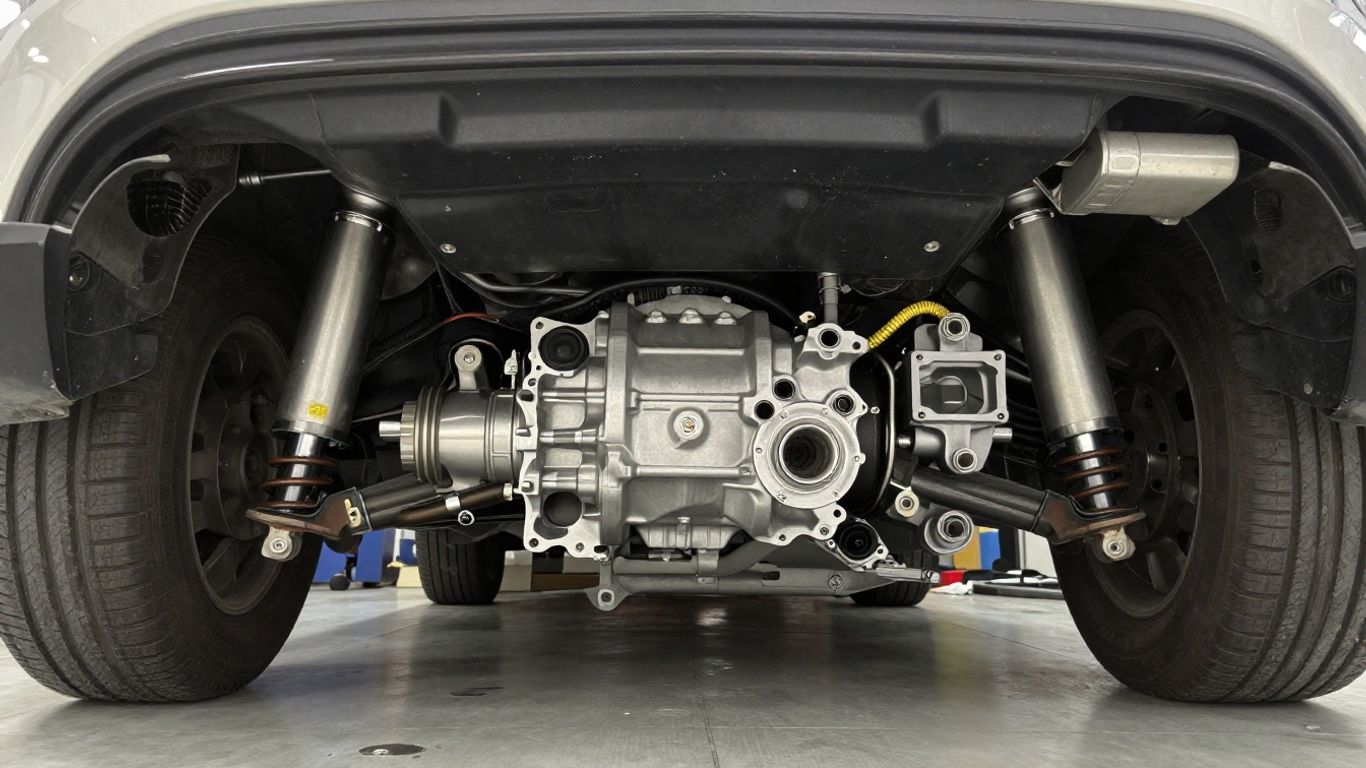
Compare differential noise with gearbox and wheel-bearing sounds
A noise from the gearbox may change with gear selection, while a wheel-bearing or tyre sound may vary with vehicle speed or turning. Those patterns can overlap, so they should not be treated as a reliable diagnosis on their own. Describe where the sound seems loudest and what changes it, then let an inspection check the relevant components. Owners can also read Clio whine discussions for examples of how a reported symptom can prompt questions, rather than a confirmed diagnosis.
Check for tyre noise that changes with road surface or rotation
Tyre noise may change noticeably on different pavement or as the wheels rotate, making it easy to mistake for a drivetrain whine. Listen for whether the sound becomes rougher on certain surfaces or remains much the same across them. Check the tyres for visible irregularities only when the vehicle is parked safely. A change in sound with the road surface is useful context, but it does not rule out another fault.
Listen for engine or accessory whine linked to RPM
If the sound follows engine RPM, consider that it may come from the engine or an accessory rather than a differential. Notice whether it changes when the engine speed changes without a matching change in road speed, but do not rev the engine in an unsafe setting to test it. A technician can compare the sound under controlled conditions. Include this clue in your notes so the inspection does not focus on one suspected component too early.
Consider how Renault drivetrain layouts affect the likely source
The vehicle’s drivetrain layout affects which components transmit power to the wheels and where a noise might originate. The correct inspection points depend on the specific model and configuration; do not assume that every Renault uses the same arrangement. A technician can use the vehicle details to identify the relevant components and service information. This is one reason a sound description should be paired with an inspection rather than treated as a diagnosis.
Understand common causes of differential whine
A differential whine can have several possible causes, and the sound alone does not reveal which one is present. Fluid level and condition, bearing wear, gear contact, and signs of leakage are all matters an inspection may consider. The right next step depends on what the technician finds, not simply on how loud the noise seems. For another overview of common differential noise causes, focus on symptoms as clues rather than certainty.
Low, incorrect, or degraded differential oil
Low or degraded oil can reduce the protection available to internal parts, while fluid that does not meet the vehicle’s specification may be unsuitable. A low level can also point to a leak that needs attention. Do not assume that adding fluid will solve a whine, especially if the sound continues or the fluid appears contaminated. Check the owner’s information or ask a technician to confirm the correct fluid and service procedure for the specific vehicle.
Worn bearings or damaged ring-and-pinion gears
Wear or damage in bearings and gears can contribute to whining, humming, or other drivetrain noise. The pattern may vary with load and speed, but those changes cannot identify the failed part with certainty. Diagnosis may require an inspection of the differential and related components. Avoid authorizing parts replacement based only on a general description of a familiar sound.
Incorrect gear contact after previous repairs
If work has previously been carried out on the differential, incorrect gear contact or setup is one possibility a technician may consider. The repair history matters, particularly if the noise began or changed after service. Keep invoices or notes about what was done and when the sound first appeared. The parts and setup should be checked against the vehicle’s service information rather than adjusted by guesswork.
Leaks, contamination, or debris inside the differential
A leak can lower the fluid level, and contamination or debris may indicate that further inspection is needed. If you see a fluid spot where the vehicle is parked, note its location and whether it appears to be growing; do not touch hot components or crawl under an unsupported vehicle. A technician can inspect for leaks and assess the fluid safely. Finding the reason for a low level is just as important as restoring it.
Diagnose the problem safely
A sound is a starting point for diagnosis, not a substitute for a physical inspection. Begin with details you can gather while the vehicle is parked and use a qualified technician for checks that require lifting or road testing. Avoid working underneath a vehicle supported only by a jack. A careful process can help prevent unnecessary repairs and identify whether the noise is actually coming from the differential.
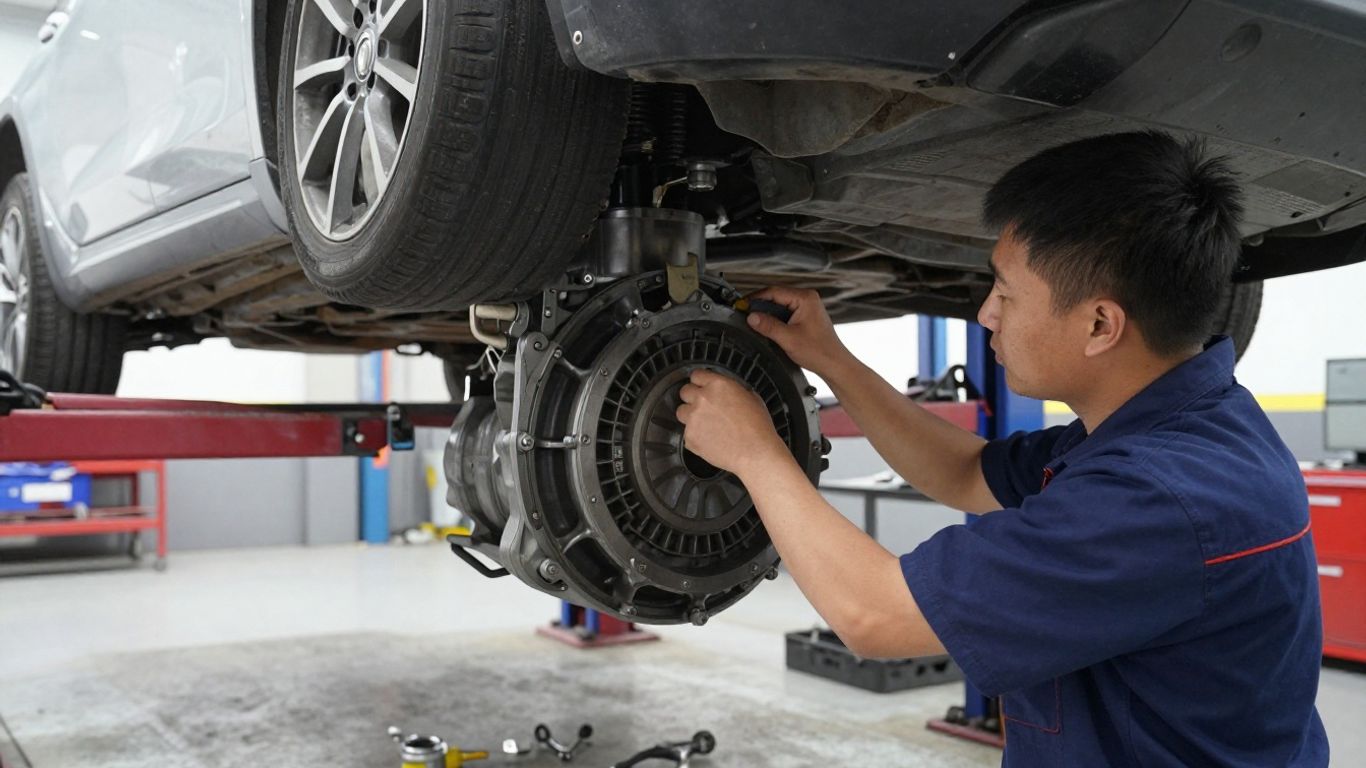
Inspect for oil leaks and check the fluid level and condition
Look for visible leaks around the relevant drivetrain area while the vehicle is parked on a level surface, but do not crawl underneath it without proper equipment. Fluid-level and condition checks should follow the procedure and specification for that vehicle; access and methods can differ. If the fluid is low, dark, or appears to contain debris, share that observation with a technician rather than treating it as a complete diagnosis. A leak should be traced to its source before the vehicle is returned to normal use.
Have a technician listen during a controlled road test
A controlled road test can help a technician compare the noise under different driving conditions and assess whether the sound follows speed, load, or gear selection. Share your notes beforehand so the technician knows when the symptom is most noticeable. A useful test is one that can be repeated safely; it is not a reason to drive faster or make abrupt maneuvers. A repair decision should follow the road test and any further inspection that the findings call for.
Check for play, roughness, or noise at the wheels and drivetrain
A technician can inspect relevant wheels and drivetrain components for play, roughness, or noise using suitable equipment and safe lifting procedures. These checks help distinguish a differential concern from issues elsewhere in the driveline. A matching sound is not a confirmed fault until the inspection supports it. If the vehicle feels unstable or has new vibration, mention that immediately rather than continuing to test it yourself.
Avoid relying on sound alone to identify the failed component
A whine can be described in useful detail, but similar sounds can have different causes. Online search results may also lead far from vehicle diagnosis, into wine tasting dinners, blood pressure medication, CoolTone, vacation rental management, or vehicle import requirements; those topics do not establish what is wrong with a differential. Keep the focus on the vehicle’s symptoms, inspection findings, and service information. If noise and vibration occur together, a differential diagnosis overview can offer general background, but it cannot replace an in-person assessment.
Choose the right Renault differential whine solution
The right repair depends on the cause confirmed during diagnosis. A fluid issue may call for a different response than internal wear, a leak, or a problem in a related gearbox or driveline component. Ask the technician to explain what evidence supports the recommendation and whether other components were checked. For anyone considering a Renault differential whine solution, a diagnosis tied to the vehicle’s specification is more useful than a one-size-fits-all repair suggestion.
Correct the fluid level or use the specification listed for the vehicle
If the inspection identifies a fluid-level or fluid-condition issue, use the fluid specification and procedure listed for the particular vehicle. Correcting the level may not resolve noise caused by wear or damage, so the technician should also investigate why the level was low. Do not substitute a fluid based only on a general online recommendation. Ask what was found and whether the source of any leak has been addressed.
Replace worn bearings, seals, or damaged gears
If inspection confirms worn bearings, failed seals, or damaged gears, the technician can explain which parts need replacement and why. The appropriate repair depends on the affected component and the extent of the damage. Request that the diagnosis distinguish observed faults from suspected ones. That gives you a clearer basis for reviewing the proposed work.
Rebuild or replace the differential when internal damage is extensive
When internal damage is extensive, a rebuild or replacement may be considered. The decision should account for the inspection findings, repair scope, and parts required for the specific vehicle. Ask what the proposed option includes and whether related parts will be checked during the work. A clear explanation makes it easier to compare the repair plan with the symptoms and evidence already discussed.
Recheck related gearbox and driveline components before authorizing repairs
Before authorizing differential work, ask whether the gearbox and other relevant driveline components have been considered. This is especially helpful when the sound changes with gear selection, turning, or engine RPM, since those clues may point beyond the differential. The technician should explain what was ruled out and what remains uncertain. A repair plan based on a complete inspection is less likely to address only the noise’s apparent location.
Decide when to stop driving and arrange repairs
A mild, stable noise still deserves attention, but some changes call for a more cautious response. Grinding, vibration, clunking, a rapid increase in noise, a significant leak, or unstable handling should not be ignored. If you are unsure whether the vehicle is safe to drive, stop somewhere safe and seek professional advice rather than trying to reproduce the sound. The vehicle’s behavior matters as much as the noise itself.
Watch for grinding, vibration, clunking, or rapidly worsening noise
Pay attention if a whine becomes much louder or is joined by grinding, vibration, or clunking. New symptoms may indicate that the issue has changed, and the vehicle should be assessed promptly. Avoid repeated drives to see whether the sound will go away. Explain when the change began and whether it happened suddenly or gradually.
Stop driving if a leak is severe or the drivetrain feels unstable
If a leak appears substantial or the drivetrain feels unstable, stop driving when it is safe to do so and arrange professional help. Continuing may increase risk or cause further damage, particularly if the source of the leak is unknown. Do not go under the vehicle to investigate beside a road or while it is unsupported. Tell the repairer what you observed and where the vehicle is located.
Ask for a written diagnosis and itemized repair estimate
Ask for a written explanation of the suspected or confirmed fault, the work proposed, and an itemized estimate. The estimate should make clear which parts and labor are included, along with any further inspection that may be needed. If the diagnosis is still uncertain, ask what evidence is missing and how it will be checked. Taking time to understand the plan is reasonable before authorizing repairs.
Confirm the repair with a follow-up noise check and leak inspection
After repairs, ask the technician to confirm whether the original noise is gone under the conditions that previously produced it. A follow-up inspection for leaks can also help verify that the repaired area remains dry. If the sound continues, describe how it differs from before and arrange a further assessment rather than assuming the work has failed. Clear before-and-after notes can make that conversation more useful.
Conclusion
Differential whine is worth investigating, but sound alone cannot pinpoint the cause. Record when it happens, watch for leaks or changes in handling, and ask a technician to check the differential alongside related drivetrain components. A careful diagnosis helps make the repair decision clearer and lets you respond promptly if the symptoms worsen.
Frequently Asked Questions
What does a differential whine sound like?
It is often described as a high-pitched whine or howl that may change with vehicle speed or load. Other parts can make similar sounds, so the description is a clue rather than a diagnosis.
Can low differential fluid cause a whine?
Low or degraded fluid may contribute to drivetrain noise, but the cause of the low level should also be found. Check the vehicle’s service information or ask a technician to confirm the correct fluid and procedure.
Does a whine that changes with speed mean the differential is faulty?
Not necessarily. Tyres, wheel bearings, and other drivetrain parts can also make speed-related noise, so inspection is needed to identify the source.
Is it safe to keep driving with a differential whine?
It depends on the severity and other symptoms. Stop driving and arrange professional help if the noise worsens quickly, a substantial leak appears, or the vehicle feels unstable.
Can I diagnose a differential problem by listening while turning?
Listening during normal, safe driving may reveal a useful pattern, but turning noise does not confirm a differential fault. Share what you noticed with a technician and avoid risky maneuvers to test it.
Should I add fluid if I hear a whine?
Do not add fluid without checking the vehicle’s specification and the correct procedure. A low level may be caused by a leak, and adding fluid alone may not address wear or damage.
What information should I give the repair shop?
Provide the vehicle’s model, year, and mileage, when the sound occurs, how it changes with speed or driving conditions, and any recent repairs or visible leaks. Notes about vibration or clunking are useful too.