

Key Takeaways
Renault clutch judder usually appears during clutch engagement, especially when moving off or reversing. The right repair depends on separating clutch friction problems from mounts, hydraulics, leaks, and drivetrain faults.
- Judder is most noticeable at low speed while the clutch is engaging.
- Common causes include contamination, heat damage, warped surfaces, and worn mounts.
- A controlled road test helps distinguish clutch judder from slipping or drivetrain vibration.
- Repairs may require a complete clutch kit, flywheel work, mount replacement, or leak repair.
- Persistent judder, burning smells, or difficulty selecting gears should be assessed promptly.
What Renault clutch judder feels like and when it happens
Renault clutch judder is a repeated shudder or grabbing sensation as the clutch takes up drive. It can travel through the seat, floor, steering wheel, or pedal, and it often disappears once the clutch is fully engaged. The phrase clutch judder when pulling away describes the most familiar version of the problem, although the same fault can appear while reversing or maneuvering slowly.
Shaking when pulling away from a stop
The typical pattern is a vibration in first gear as the clutch pedal rises. The engine may sound normal, but the vehicle seems to grip and release several times instead of moving away smoothly. A cold clutch may behave worse than a warm one, or the judder may be present on every start. Pay attention to whether the symptom changes with throttle input, because technique can expose a marginal clutch without being the underlying cause.
Judder during reverse or low-speed maneuvering
Reverse often makes judder easier to feel because the driver uses very little speed and spends longer at the engagement point. It may also show up while parking, climbing a small incline, or moving through congested traffic. If the vibration happens only while the pedal is being released and fades once the clutch is locked, clutch-related causes move higher on the diagnostic list.
How clutch judder differs from clutch slipping
Judder is a grab-release vibration; slipping is a loss of drive. With slipping, engine speed rises without a matching increase in road speed, often under acceleration or uphill. A practical guide to clutch slipping or judder can help frame the distinction, but a workshop should still inspect the vehicle if both symptoms occur together.
Symptoms that suggest an engine or transmission problem
A vibration that continues at cruising speed, changes with road speed rather than pedal position, or appears during gear changes may not be clutch judder. Driveshafts, differential components, wheel assemblies, and engine or gearbox mounts can all create sensations that overlap. Clunks when taking up drive, a strong movement from the engine bay, or difficulty selecting gears deserves a broader inspection.
The most common Renault clutch judder causes
There is rarely a reliable fix based on the symptom alone. A clutch can judder because its friction surfaces are uneven, because the flywheel or pressure plate is damaged, or because the powertrain is moving on weak mounts. Oil contamination is especially significant because replacing a disc without correcting the leak can bring the problem straight back.
Worn or contaminated clutch friction surfaces
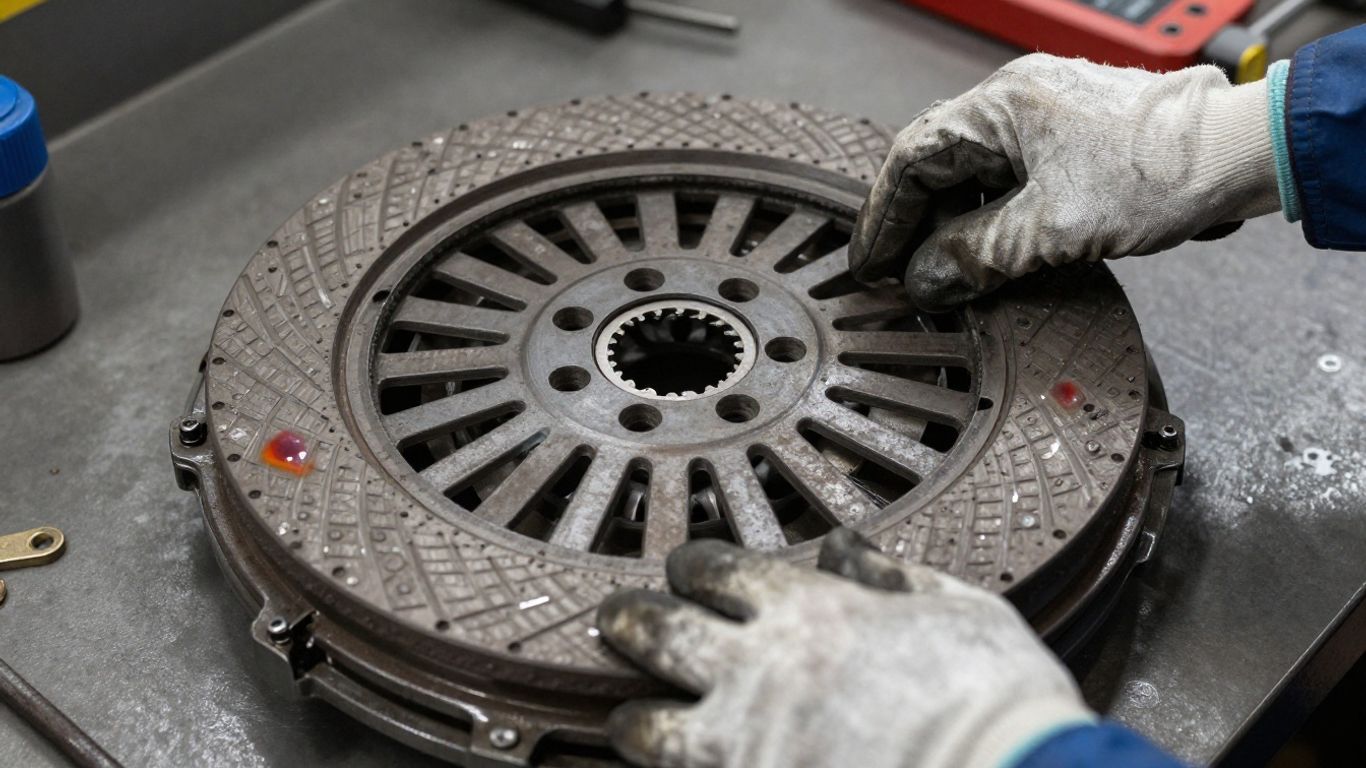
A worn disc may no longer engage evenly across its contact area. Oil, grease, or other contamination can make the friction material alternately grip and release, producing a pulsing take-up. Heat from repeated slipping can also glaze the surfaces, so a vehicle used heavily in traffic may develop judder even when the clutch still has usable lining remaining.
A warped pressure plate or flywheel
The clutch needs two reasonably flat surfaces to clamp the disc consistently. A flywheel with heat spots, cracks, or uneven wear can create vibration, as can a pressure plate whose clamping action is no longer uniform. This is why a new disc alone may not cure judder if the mating surfaces are left unchecked.
Weak or damaged engine and gearbox mounts
Mounts control the movement of the engine and transmission as torque is applied. If one is split, collapsed, or loose, the powertrain can rock sharply during take-up and imitate a clutch fault. A useful Renault 4 judder discussion also illustrates why mountings and clutch components should be considered together rather than treating every vibration as a worn disc.
Hydraulic clutch faults and uneven engagement
Air, a sticking cylinder, restricted movement, or a problem in the release mechanism can make pedal travel inconsistent. The clutch may then engage too abruptly or fail to release fully. Hydraulic symptoms often include a changing pedal feel, difficulty selecting first or reverse, or a pedal that does not return normally.
Oil leaks from the engine or transmission
An engine rear seal, transmission input seal, or another leak can place fluid on the friction surfaces inside the bellhousing. The leak may be small and difficult to see from underneath, yet enough contamination can cause severe judder. Correct diagnosis therefore includes finding the source of the oil, not simply fitting a replacement clutch.
How to diagnose the source of the judder
Diagnosis should reproduce the fault without creating unnecessary clutch heat. A technician will usually combine a controlled road test with inspection of the pedal, mounts, bellhousing area, and drivetrain. The aim is to identify when the vibration starts, what changes it, and whether a second fault is contributing.
Checks to perform during a controlled road test
Begin in a safe area with a fully warmed vehicle, then compare gentle pull-aways, reverse, a mild incline, and normal acceleration. Note whether the judder is cold-only, present in every gear, or limited to the engagement point. Do not repeatedly hold the car on the clutch to reproduce the symptom; that can add heat and make the evidence less useful.
Inspecting the clutch, flywheel, and bellhousing
If external checks point toward the clutch, removal of the transmission may be necessary. The disc should be checked for uneven wear and contamination, while the pressure plate and flywheel need inspection for heat marks, cracks, scoring, and runout. The bellhousing can also reveal traces of oil or dust that support a contamination diagnosis.
Testing engine and transmission mounts
A mount inspection includes looking for torn rubber, separation, fluid leakage from hydraulic mounts, loose fasteners, and excessive movement under controlled load. A technician may observe the engine while selecting drive or applying gentle torque, using safe workshop procedures. Excessive rocking can explain a take-up shudder even when the clutch itself is serviceable.
Identifying related gearbox and drivetrain faults
The gearbox should be assessed for gear-selection problems, noisy bearings, and signs that the clutch is not releasing fully. Driveshaft joints and differential components may need attention if vibration continues after clutch engagement. These checks prevent an expensive clutch repair from being used to treat a fault located elsewhere.
When diagnostic scan data can help
Scan data is more useful when judder occurs alongside warning lights, inconsistent engine speed, misfires, or transmission-control faults. It may help identify an engine-management or automated-transmission issue, but it cannot directly show whether a manual clutch disc is glazed or contaminated. Mechanical inspection remains essential when the symptom is physical and engagement-specific.
Renault clutch judder fixes and repair options
The repair should follow the confirmed cause rather than the most obvious symptom. Sometimes the answer is a complete clutch replacement; in other cases, a mount, hydraulic component, flywheel, or oil seal is the main fault. Ask for the inspection findings and a clear explanation of which parts are damaged before approving work.
Cleaning or replacing contaminated clutch components
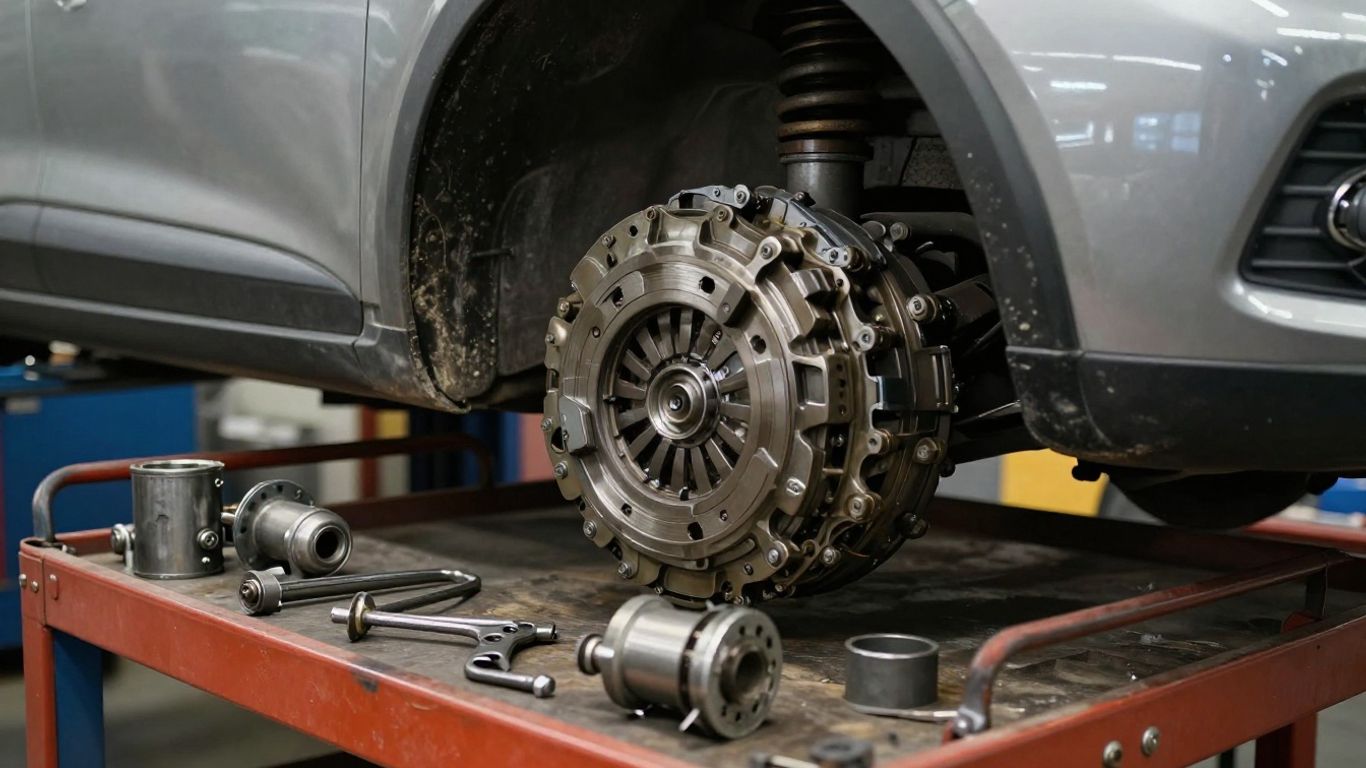
Light contamination on accessible metal surfaces may be cleaned during a proper repair, but friction material that has absorbed oil generally cannot be made dependable by surface cleaning alone. The leak must be repaired and the affected clutch parts assessed. If contamination is extensive, replacement is normally more predictable than attempting to save the old disc.
Replacing the clutch kit and release bearing
A clutch kit commonly includes the friction disc, pressure plate, and release bearing. Replacing related wear parts together reduces the chance that an old release component or uneven pressure plate will compromise the new disc. The correct parts must match the vehicle’s engine, transmission, and specification rather than relying on model name alone.
Resurfacing or replacing the flywheel
A flywheel may be resurfaced when its condition and design allow it, provided the finished surface remains within the required specification. Deep scoring, cracks, excessive heat damage, or an unsuitable dual-mass design may call for replacement. The technician should explain why the chosen option is appropriate for that vehicle.
Repairing mounts, hydraulics, or oil leaks
A split mount should be replaced and its fasteners checked. Hydraulic faults may require bleeding, cylinder replacement, or correction of a damaged line. Where oil is present, the repair is incomplete until the leak source is addressed. The parts route can then include a quality used, genuine, or aftermarket component where appropriate, provided fitment and condition are verified.
Why replacing only one clutch component may fail
A new friction disc cannot compensate for a warped flywheel, weak pressure plate, or oil-soaked bellhousing. Similarly, a clutch replacement will not stop the engine from rocking on a broken mount. The complete repair matters because clutch engagement depends on several parts working together under load.
How repair decisions vary by Renault model and drivetrain
The model badge is only a starting point. Engine output, transmission design, clutch actuation, flywheel type, and previous repairs all affect diagnosis and parts selection. This matters across small hatchbacks, compact crossovers, and larger family vehicles.
Manual transmission versus dual-clutch systems
A manual clutch is operated directly by the driver through a pedal and release system. A dual-clutch transmission uses electronically or hydraulically managed clutch assemblies and may produce jerky take-up for control, calibration, or mechanical reasons. Scan data and manufacturer-specific procedures become more important when the vehicle is not a conventional manual.
Common considerations for Clio, Megane, Captur, and Scenic models
Clio, Megane, Captur, and Scenic vehicles can differ substantially by year, engine, and transmission. A Captur with a transmission warning or jerky automated shifting may require a broader assessment than a basic manual clutch inspection; background on Renault Captur problems shows why model-specific symptoms should not be treated as interchangeable. Always confirm the VIN, engine code, transmission, and production details before ordering parts.
The effect of diesel torque and stop-start driving
Diesel engines can place considerable torque through the clutch at low engine speed. Frequent short trips, hill starts, heavy traffic, and stop-start use can also increase time spent at the engagement point. That does not prove misuse, but it can accelerate heat and wear when combined with an already marginal component.
Why vehicle history and previous repairs matter
A clutch that began juddering immediately after replacement raises different questions from one that deteriorated gradually. The workshop should check whether the flywheel was inspected, whether the correct kit was installed, whether seals were disturbed, and whether mounts were reused despite damage. Invoices and prior inspection notes can save time and prevent repeated parts replacement.
Repair costs, urgency, and driving safety
Repair pricing depends on diagnosis, access, parts selection, and whether the flywheel or leak adds work. A clutch replacement may involve substantial labor because the transmission has to be removed, while a mount or hydraulic repair may be less invasive. Compare estimates by their scope, not just by the headline price.
Factors that influence clutch repair pricing
The main variables are labor time, clutch kit specification, flywheel condition, seals, hydraulics, mounts, fluid, and any diagnostic or road-test charge. Used, genuine, and aftermarket parts can each have a place, but the quote should state what is being supplied and what warranty applies. A low estimate that excludes a damaged flywheel may not remain low after disassembly.
Signs the car should stop being driven
Stop driving and arrange professional assistance if the clutch will not disengage, gears cannot be selected, the pedal drops to the floor, or a burning smell and smoke appear. Severe judder that makes the vehicle difficult to control also warrants caution. Continuing to drive can turn a manageable repair into damage involving the flywheel, gearbox, or drivetrain.
When a temporary adjustment may be reasonable
Mild judder that appears only when cold and does not worsen may allow a short, gentle trip to a repair shop, provided the vehicle remains controllable. Avoid towing, steep hills, heavy traffic, and deliberate clutch slipping while waiting. This is a temporary risk decision, not a repair, and a changing symptom should move the appointment forward.
Questions to ask a repair shop before authorizing work
A good estimate should explain what was tested and what was found. Ask the shop to clarify the following points:
- Does the evidence point to the clutch, mounts, hydraulics, flywheel, or a leak?
- Will the flywheel be measured or inspected once the transmission is removed?
- Which parts are included, and are they new, used, genuine, or aftermarket?
- What warranty covers the parts and the installation?
These questions make it easier to compare like-for-like repairs. They also reduce the chance of approving a clutch kit when the actual source of the vibration has not been established.
How to prevent clutch judder from returning
Prevention is mostly about reducing unnecessary heat and finding related faults early. No driving technique can correct a warped flywheel or leaking seal, but good habits can limit additional wear. Routine servicing is also a chance to notice changes before the car becomes difficult to drive.
Using smooth clutch and throttle technique
Bring the clutch up progressively while applying enough throttle for the situation. Avoid abrupt pedal release, but do not hold the clutch halfway engaged longer than needed. On an incline, use the brake or parking brake rather than balancing the car on the friction point.
Avoiding excessive clutch slipping and load
Repeatedly slipping the clutch in traffic, during parking, or while towing creates heat. Select the appropriate gear, leave space so the vehicle can move steadily, and avoid using clutch slip to control speed for long periods. If the pedal feels unusual, do not compensate by holding it at the engagement point.
Checking for leaks during routine servicing
Ask for the area around the engine-transmission joint to be checked when servicing or inspecting underneath the vehicle. Oil traces, a changing fluid level, or a new smell should be investigated before contamination reaches the clutch. A small external leak can become a much larger repair if ignored.
Replacing related parts during clutch repairs
When the transmission is already out, the technician can assess the release mechanism, seals, mounts, and flywheel more easily. Replacing a clearly worn related part at that stage may prevent duplicated labor later. The decision should still be based on condition and evidence, not on automatically replacing every nearby component.
Bedding in a new clutch correctly
For the initial period after installation, use gentle starts and avoid heavy loads, racing starts, and prolonged slipping. Give the friction surfaces time to mate under normal conditions, following the repairer’s specific instructions. If strong judder begins immediately after the work, return to the workshop rather than assuming it will disappear.
Conclusion
Renault clutch judder causes and fix decisions become clearer when the symptom is reproduced carefully and the clutch is considered alongside mounts, hydraulics, leaks, flywheel condition, and drivetrain components. Prompt diagnosis helps avoid unnecessary parts replacement and reduces the chance of being stranded by a fault that has been allowed to worsen.
Frequently Asked Questions
Is clutch judder always caused by a worn clutch?
No. Contamination, a damaged flywheel, an uneven pressure plate, weak mounts, hydraulic faults, and drivetrain problems can all create similar sensations. Inspection is needed before choosing parts.
Can clutch judder disappear when the car warms up?
It can become less noticeable as components warm, but that does not prove the fault is harmless. Cold-only judder may still indicate uneven friction, contamination, or a developing mechanical problem.
Is clutch judder the same as clutch slipping?
No. Judder is a repeated grab-and-release vibration during engagement, while slipping usually causes engine speed to rise without a matching increase in road speed. Both can occur together.
Can worn engine mounts feel like clutch judder?
Yes. A damaged mount can allow the engine or transmission to move sharply as torque is applied. This may feel like a clutch problem, particularly during first-gear starts or reversing.
Does a new clutch always require flywheel replacement?
Not always. The flywheel should be inspected and measured, then resurfaced or replaced only when its condition and design make that appropriate. Ignoring serious damage can cause the new clutch to judder.
Is it safe to keep driving with mild judder?
A short trip to a repair shop may be reasonable if the vehicle remains controllable and there are no warning signs. Avoid heavy loads and traffic, and stop driving if the pedal fails, gears cannot be selected, or burning or smoke appears.
How can clutch judder be prevented?
Use smooth engagement, avoid prolonged clutch slipping, address leaks quickly, and have related components inspected during clutch repairs. Correct bedding-in after replacement also helps the new friction surfaces settle properly.