

Key Takeaways
Choosing the right oil for a Renault starts with the exact engine, model year, and factory specification—not simply a familiar viscosity grade.
- Confirm the required RN specification in the owner’s manual or service records.
- Choose viscosity according to the approved range and local temperatures.
- Use low-SAPS oil where a diesel particulate filter requires it.
- Prefer the oil quality and approval listed for the specific engine.
- Adjust checks and service planning for short trips, heavy loads, and climate.
Start with your Renault’s exact oil requirements
An engine oil type recommendation Renault owners can trust has to begin with vehicle identification. Two cars with the same badge may use different engines, emissions equipment, or powertrains, so a bottle that works for one may not be correct for another. Treat the manual and service record as the starting point rather than relying on color, price, or a friend’s recommendation.
Oil does more than reduce friction. It also helps carry heat away, suspend contaminants, and support emissions equipment, which is why the specification matters as much as the viscosity. A careful match can prevent an otherwise avoidable service mistake.
Identify the model year, engine, and powertrain
Record the model, model year, engine size, fuel type, and whether the vehicle is turbocharged, hybrid, or LPG-equipped. The engine code is especially useful because it removes ambiguity when several engines were offered in one model range. Also note whether the vehicle has a diesel particulate filter or another emissions-control system.
A registration document may provide only part of this information. The VIN, maintenance invoice, or manufacturer service portal can help confirm the rest. This small check is worthwhile before buying oil in bulk.
Check the owner’s manual and service documentation
The owner’s manual normally states the approved oil quality, viscosity range, and sometimes the required quantity. Service documentation may show what was used previously, but it should support—not replace—the current manual, particularly if the engine or emissions system has been repaired. An online Clio 5 oil guide can also illustrate the practical level-checking procedure, while the handbook remains the authority for the exact vehicle.
Look for wording such as “meets,” “approved,” or a named RN specification. If the documentation is missing, ask a qualified service center to identify the requirement from the VIN rather than guessing from the engine’s age.
Understand Renault RN specifications
RN specifications are manufacturer requirements that define performance characteristics beyond a simple SAE grade. They can relate to oxidation control, deposit management, fuel economy, after-treatment compatibility, and the engine’s design. The code on the bottle should match the requirement in your documentation, not merely resemble it.
Different RN numbers are not interchangeable by default. A 5W-30 oil can still be unsuitable if it lacks the required approval. Conversely, a different viscosity may be acceptable only when the manual lists it for that engine and climate.
Distinguish gasoline, diesel, hybrid, and LPG requirements
Fuel type changes the oil decision, but it is not the only factor. Diesel engines with particulate filters commonly need low-ash, low-SAPS formulations, while turbocharged gasoline engines can place greater thermal stress on the lubricant. Hybrids may have frequent starts and stops, and LPG engines still require the specification assigned to their particular power unit.
Do not infer a specification from fuel alone. Compare the powertrain, emissions hardware, and service documentation together before selecting a product.
Choose the correct oil viscosity
Viscosity describes how readily oil flows at different temperatures; it does not by itself certify the oil for a particular engine. Grades such as 0W-20 and 5W-30 are often discussed as if one were universally superior, but the correct choice is the grade and approval combination listed for the vehicle. Climate and usage matter only within that approved range.
A bottle’s first number relates to low-temperature flow, while the second describes viscosity at operating temperature. That makes the label useful, but incomplete. The specification panel still deserves equal attention.
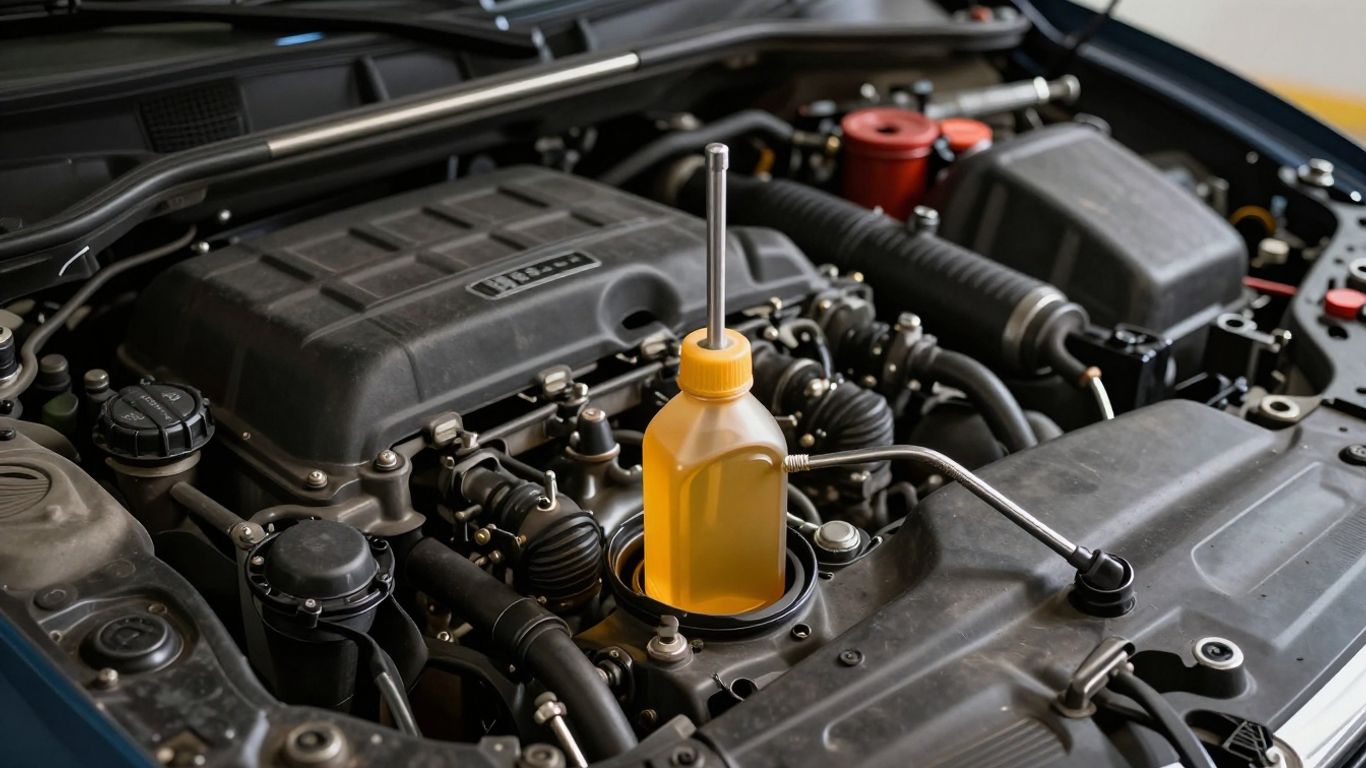
What viscosity grades such as 0W-20 and 5W-30 mean
The “W” means winter, and the number before it indicates how the oil behaves during cold starting. A lower first number generally flows more readily in cold conditions. The second number describes the oil at high operating temperature, with a higher number generally indicating a thicker film at that test temperature.
These grades are not a direct measure of oil quality. A 0W-20 oil with the wrong approval remains wrong for an engine that requires another specification, even if it promises easy starting or lower friction.
Match viscosity to temperature and driving conditions
Start with the grades permitted in the manual, then consider the temperatures the vehicle regularly experiences. A car used in cold winters may benefit from the lower cold-flow grade within that approved list, while sustained heat or demanding use may make the high-temperature grade more relevant. The decision should reflect the whole year, not a single unusually cold morning.
The following comparison explains the practical reading of common grades without turning it into a universal prescription:
| Grade | Cold-start behavior | Operating-temperature meaning | Selection reminder |
|---|---|---|---|
| 0W-20 | Strong low-temperature flow | Relatively light high-temperature viscosity | Use only when approved |
| 5W-30 | Good cold-weather flow | Moderate high-temperature viscosity | Check RN approval carefully |
| 5W-40 | Good cold-weather flow | Thicker high-temperature viscosity | Choose only within the manual’s range |
| 10W-40 | Less suited to severe cold | Thicker high-temperature viscosity | More climate-sensitive choice |
The table helps decode labels, but it does not override the manufacturer’s specification. If the manual permits more than one grade, local temperature and driving pattern can guide the final choice.
When a lower-viscosity oil improves cold starts and efficiency
A lower-viscosity oil can circulate more easily during a cold start, reducing the effort required to move lubricant through the engine. In an engine designed for that grade, it may also support the fuel-economy target used during development. Those benefits depend on the correct approval and a sound engine.
Using a thinner oil than allowed is not a shortcut to efficiency. It can reduce the intended protection if the engine needs a different viscosity or additive performance, so stay inside the documented range.
Why thicker oil is not always better for older engines
Older engines sometimes develop leaks or consume oil, which can tempt owners to move immediately to a thicker grade. That may change noise or consumption in some cases, but it can also slow circulation, affect hydraulic components, or fall outside the approved range. Age alone is not a technical justification.
First check for leaks, worn seals, incorrect level, or a maintenance issue. If a different grade is being considered, obtain advice based on the engine code and condition rather than treating thickness as a repair.
Match the oil to Renault engine technology
Modern engine hardware makes oil selection more specific. Turbochargers, particulate filters, stop-start systems, and hybrid operating cycles all influence the lubricant’s job. The safest approach is to match the oil’s documented performance to the hardware installed in the vehicle.
This is also where broad internet advice can become misleading. A recommendation that is sensible for a naturally aspirated gasoline engine may not suit a diesel after-treatment system or a small turbocharged unit.
Low-SAPS oil for diesel particulate filters
Low-SAPS formulations limit certain ash-forming elements that can accumulate in emissions-control equipment. A diesel particulate filter is particularly sensitive to the oil’s ash contribution, so using the specified low-SAPS product helps preserve compatibility with the system. The exact requirement still comes from the manual or RN specification.
Do not assume every “diesel oil” is suitable for a particulate filter. Read the approval and emissions-system guidance together, and avoid substituting a generic heavy-duty lubricant.
Oil requirements for turbocharged gasoline engines
A turbocharger operates at high speed and temperature, making clean, stable oil important for its bearings and surrounding engine components. The correct formulation can help resist deposits and maintain lubrication under heat, but it cannot compensate for extended intervals or a low oil level. The approval matters more than marketing language.
Use the specified grade and quality, allow the engine to reach normal conditions through ordinary driving, and follow the service interval. If the vehicle has symptoms such as unusual turbo noise or smoke, investigate the mechanical cause instead of changing viscosity at random.
Lubrication considerations for hybrid powertrains
Hybrid engines may stop and restart frequently, spend more time at low load, and operate under a different temperature pattern from a conventional vehicle. Those cycles can make the manual’s oil specification especially important. The electric motor does not eliminate the need to service the internal-combustion engine when one is fitted.
Check whether the vehicle has a dedicated hybrid service schedule. Do not assume that a familiar gasoline-engine oil is suitable simply because the fuel tank and engine appear conventional.
Special considerations for high-mileage Renault engines
High mileage calls for observation, not an automatic change to a thicker oil. Check consumption, leaks, startup noise, smoke, and the condition of the service history. A high-mileage formulation may be considered only if it meets the required specification and the change is appropriate for the engine.
When consumption is rising quickly, find the cause. Topping up can maintain the level temporarily, but it does not diagnose worn components, a leak, or a ventilation problem.
Compare synthetic, semi-synthetic, and conventional oils
Base-oil labels describe part of the product, while approvals describe whether it meets the engine’s performance needs. Full synthetic oils are commonly selected for modern engines because they can offer stable performance across temperature changes, but “synthetic” alone is not a guarantee of compatibility. The specification printed on the bottle remains decisive.
Price can be a useful comparison point, but not the first one. A less expensive oil that lacks the required approval may create more risk than a suitable product from a recognized lubricant range.
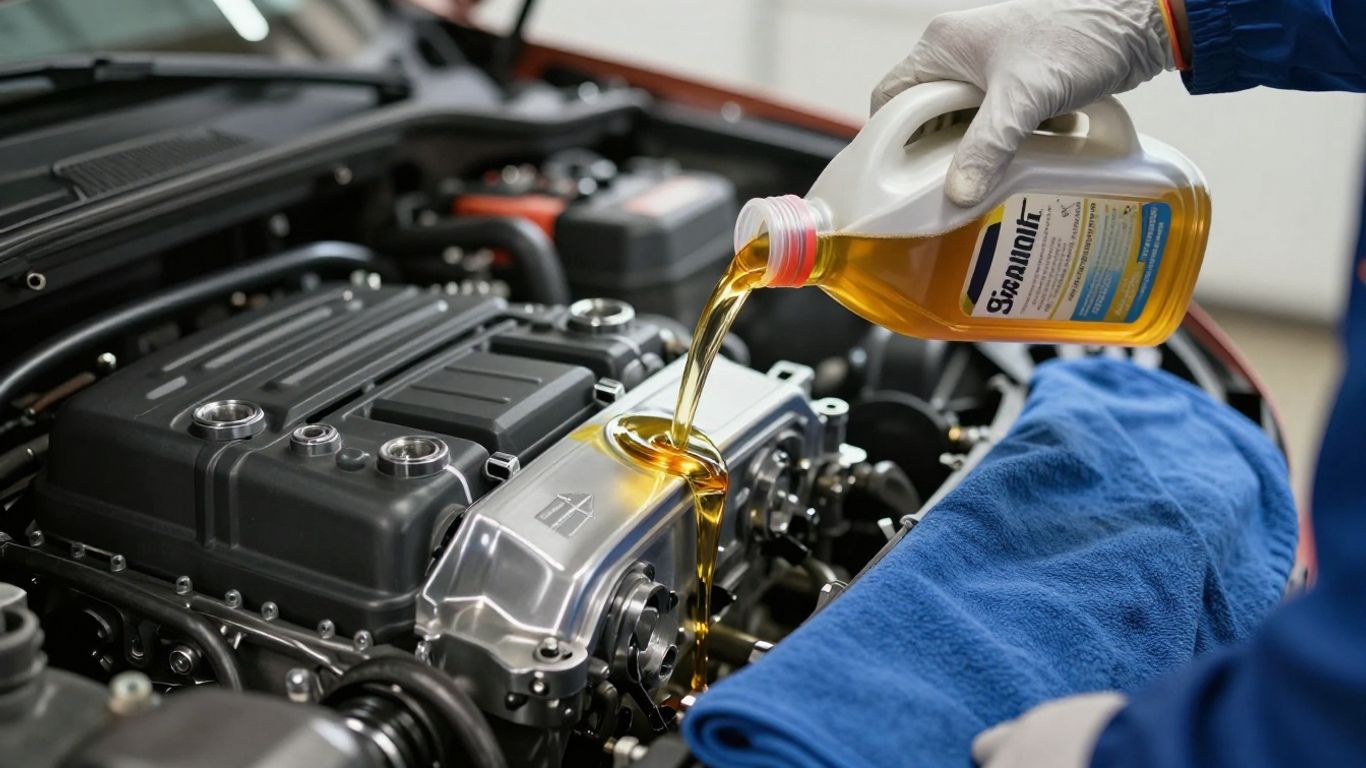
Why full synthetic oil is commonly recommended
Full synthetic oil is commonly recommended for engines with tight tolerances, turbocharging, stop-start use, or demanding temperature control. Its formulation may provide useful resistance to oxidation and deposits over the approved service interval. That does not mean every synthetic oil suits every engine.
Choose the documented grade and RN requirement first, then compare synthetic options that meet it. A Renault oil selection guide can provide additional product-finder context, but the vehicle’s own documentation should settle the specification.
How oil quality affects turbocharger protection
Oil quality affects a turbocharged engine through its resistance to heat, deposits, and breakdown under shear. Clean oil also supports the small oil passages that lubricate the turbocharger. Correct level and timely replacement matter just as much as the base-oil category.
After severe use, follow the vehicle’s normal operating and shutdown guidance rather than relying on an internet ritual. Persistent noise, blue smoke, or oil loss needs mechanical inspection.
Choosing between manufacturer-approved and generic oils
A generic oil can be suitable when it explicitly meets the required specification and viscosity. A product described only as “for European cars” or “for diesel engines” is not enough evidence. Manufacturer-approved wording, a stated RN specification, and a reputable supply chain make the selection easier to verify.
Some newer lubricant ranges use re-refined base oils, and a Renault Castrol range is described as beginning with RN17 5W-30 alongside other specifications. That information may be useful when comparing approved products, but the correct choice still depends on the individual vehicle.
Reading the bottle for specifications and approvals
Read the front label for viscosity, then turn the bottle around for the performance claims and approvals. Confirm that the RN code, fuel-system compatibility, and any particulate-filter wording match the manual. Also check the seal, batch information, and whether the retailer is trustworthy.
For a practical second opinion on viscosity questions, a Koleos oil discussion may show why owners ask about several grades, but forum suggestions are not a substitute for factory documentation. Use such material to frame questions, not to authorize a change.
Adapt the recommendation to driving conditions
The same oil can experience very different duty depending on how a vehicle is driven. Short urban trips may leave the engine below its ideal temperature, while long highway journeys create sustained heat and stable operating conditions. Neither pattern automatically changes the required oil, but each affects checking and service discipline.
Describe the actual use pattern when asking for service advice. A vehicle used for school runs, mountain roads, towing, or long summer trips may need more frequent attention than its mileage alone suggests.
City driving, short trips, and frequent cold starts
Short trips create repeated cold starts and may allow moisture and fuel dilution to accumulate before the oil fully warms. Stop-start traffic also keeps the engine working while airflow and road speed vary. Follow the severe-use guidance if the manual provides one, and avoid stretching the interval simply because annual mileage is low.
Regular level checks and a properly sealed filler cap are simple safeguards. If the engine rarely reaches full temperature, a service professional may recommend a schedule based on time and usage as well as distance.
Highway driving and extended high-temperature use
Long highway journeys usually give the oil more time to reach operating temperature, but sustained speed, high ambient heat, and long climbs still increase thermal demand. Keep the level near the specified range without exceeding the maximum. A correct oil can degrade if it is left in service too long.
Before a long trip, inspect the level on level ground and look for leaks. This is a better preparation step than adding a different oil “just in case.”
Towing, heavy loads, and demanding conditions
Towing and heavy loads raise engine load and can increase heat, especially on grades or in traffic. Use only a viscosity and specification approved for the vehicle, then check whether the manual lists shorter intervals for demanding service. Cooling-system condition, tire pressure, and transmission maintenance matter alongside engine oil.
Plan ahead with a short checklist:
- Confirm the oil level before loading the vehicle.
- Check the approved service interval for heavy use.
- Inspect for leaks around the sump and filter.
- Carry only a matching top-up oil when traveling.
That preparation reduces the temptation to use an unverified substitute on the road. It also gives a technician useful information if the vehicle develops a problem during the trip.
Hot and cold climate considerations
Cold climates make startup flow more significant, while hot climates can increase the importance of high-temperature stability. Select from the grades approved for the vehicle’s region and season. Storage matters too: keep the container sealed and protected from contamination or extreme heat.
Climate is one input, not the entire recommendation. The engine design and RN requirement remain the fixed points around which seasonal decisions are made.
Plan oil changes and avoid common mistakes
Oil maintenance is a routine that protects the value of the earlier selection. Even a high-quality product cannot work properly when the level is wrong, the interval is excessive, or the specification has been mixed carelessly. Keep receipts and record the product, grade, approval, date, and mileage.
A consistent record helps reveal rising consumption and prevents uncertainty at the next service. It also makes it easier to verify whether the correct oil was used.
Follow the correct service interval for your Renault
Use the owner’s manual or service schedule for the interval, including any shorter schedule for severe conditions. Do not extend the interval because the bottle says “long life” unless the vehicle documentation permits it. Time can matter as well as mileage, especially for cars that cover few miles in repeated short trips.
If the vehicle has a service reminder, treat it as a useful prompt rather than the only source of information. Check the oil level periodically and before a long journey.
Check the oil level and top up safely
Park on level ground, switch off the engine, and wait for the period specified in the manual before measuring. Wipe and reinsert the dipstick, then read the level between the minimum and maximum marks. A dipstick oil-level guide explains this process clearly; use a funnel when topping up and keep oil away from hot components.
Add small amounts, pause, and recheck. Never exceed the maximum mark, because overfilling can damage the engine or emissions equipment. If the level is far above maximum, do not drive until the excess has been assessed.
Avoid mixing incompatible oils and specifications
A small emergency top-up is different from routinely combining products with unknown approvals. When mixing cannot be avoided, use the closest documented match and arrange a proper correction soon. Do not mix a low-SAPS requirement with an unsuitable high-ash product simply because both bottles share the same viscosity.
Keep a spare container of the approved oil in the vehicle if long-distance travel or remote driving is common. The label and specification should be visible when you buy it.
Recognize warning signs of unsuitable or degraded oil
Warning signs include a low level that returns quickly, unusual valvetrain or turbo noise, smoke, a persistent oil-pressure warning, or oil that appears contaminated. A dark color alone does not prove that oil has failed, since detergents can suspend deposits. Symptoms should be considered with mileage, time, and the service history.
Stop safely if an oil-pressure warning appears and follow the manual’s instructions. A new oil grade may not solve a mechanical fault, and continuing to drive can turn a manageable issue into major damage.
Conclusion
The right oil is the one that matches the engine, RN specification, approved viscosity, emissions hardware, and actual service conditions. Verify those details before purchase, keep the level within range, and follow the documented interval; that practical process is more dependable than choosing by brand name or viscosity alone.
Frequently Asked Questions
Is 5W-30 suitable for every Renault engine?
No. 5W-30 is suitable only when the vehicle documentation allows that viscosity and the oil carries the required specification. The same grade can be correct for one engine and unsuitable for another.
Can I use 0W-20 instead of 5W-30?
Only if the manual or service documentation approves 0W-20 for that specific engine. Lower viscosity may aid cold flow, but it is not a universal upgrade or substitute.
Does a diesel particulate filter change the oil choice?
Yes. Engines with particulate filters commonly require a low-SAPS formulation to limit ash accumulation. Confirm the exact requirement before buying oil.
Is full synthetic oil always better?
Full synthetic oil is often a strong choice for modern or heavily loaded engines, but the label alone does not establish compatibility. The required specification and viscosity come first.
Should older engines always use thicker oil?
No. A thicker oil may not be approved and may mask rather than repair a leak or wear problem. Base any change on the manual and a qualified inspection.
How often should engine oil be changed?
Follow the vehicle’s time-and-mileage schedule, including any severe-use guidance. Short trips, heavy loads, and extreme temperatures may call for closer attention.
What should I do if I overfill the engine oil?
Do not continue driving with the level above maximum. Have the excess removed safely, because overfilling can harm the engine and emissions-control system.