

Key Takeaways
Transmission slipping is a symptom, not a diagnosis. Early checks can prevent a manageable fault from becoming extensive internal damage.
- Notice delayed engagement, rising engine speed, harsh shifts, warning lights, smells, or unusual noises.
- Check the specified fluid level and condition, but do not assume a fluid change will cure worn parts.
- Use fault-code scans, live data, road tests, and pressure testing to separate electrical, hydraulic, and mechanical causes.
- Repair decisions depend on the transmission type, the extent of wear, and the vehicle’s overall condition.
- Drive gently and arrange professional diagnosis promptly if slipping becomes frequent or severe.
Recognize the signs of transmission slipping
A slipping transmission does not always fail dramatically at first. The vehicle may still move, but the engine and road speed no longer feel properly connected. Symptoms can appear only when the vehicle is cold, climbing a hill, carrying passengers, or accelerating firmly. Pay attention to when the behavior occurs, because that detail often helps narrow the diagnosis.
Delayed engagement when selecting drive or reverse
A pause between selecting Drive or Reverse and the vehicle beginning to move can point to a pressure, fluid, control, or internal wear problem. A brief, occasional delay may have a simple explanation, but a growing pause followed by a jolt deserves attention. Do not keep shifting repeatedly between Drive and Reverse to force engagement; that can add unnecessary load while the cause remains unknown.
Engine revving without matching acceleration
The clearest classic sign is a rise in engine speed without a similar increase in vehicle speed. It may feel as if the transmission briefly loses its grip, then catches again. This can happen during an upshift, while overtaking, or under a hill-climbing load. If you are investigating automatic transmission slipping Renault symptoms, record the gear, road speed, throttle position, and whether the engine was cold or warm.
Harsh, hesitant, or unexpected gear changes
Slipping and harsh shifting can occur together. A transmission that hesitates may then engage abruptly, while an electronic control issue can command an unexpected shift or hold one gear too long. Shaking, flaring engine speed, or a repeated bump during a particular shift is more useful than a general description such as “it feels strange.” A short video or written log can help a technician reproduce the complaint.
Warning lights, burning smells, and transmission noises
A warning light means the vehicle has detected a condition worth checking, even if the car still drives normally. A burnt odor may indicate overheated or degraded fluid, though oil leaking onto a hot exhaust component can smell similar. Whining, grinding, humming, or clicking noises add another clue, especially when they change with engine speed or vehicle speed. Guidance on transmission warning symptoms can help you decide whether the car should be driven to a shop or transported.
Understand the common causes
Several faults can produce the same apparent slipping symptom. Fluid problems can affect hydraulic pressure, while worn friction components may fail only under load. Solenoids, sensors, wiring, and control modules can also alter shift timing without a major mechanical failure. The safest approach is to treat the symptom as a starting point rather than guessing at a repair.
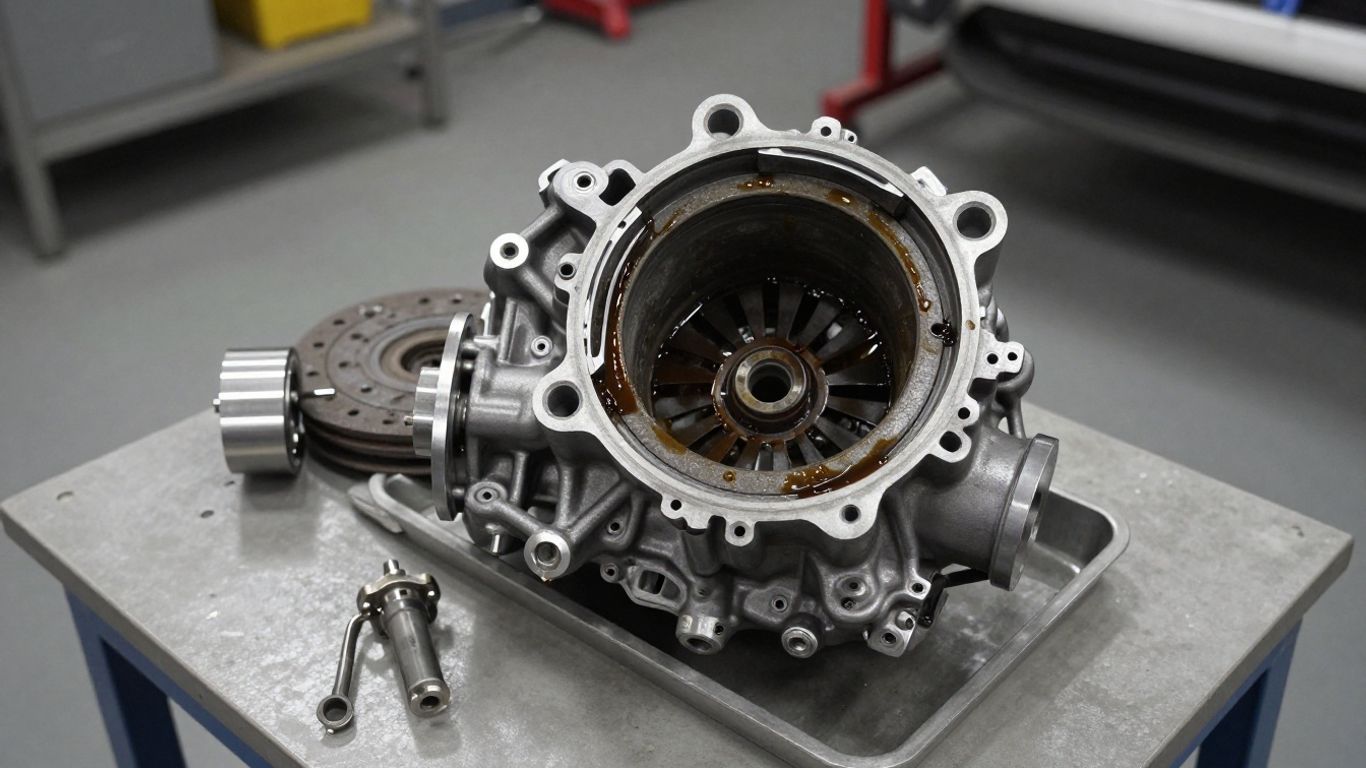
Low, contaminated, or incorrect transmission fluid
Fluid carries hydraulic pressure, lubricates moving parts, and helps control temperature. A low level can allow aeration and inconsistent pressure; contaminated or overheated fluid may no longer support normal operation. Using the wrong specification can create its own shifting problems, so a fluid check should begin with the exact transmission identification and service requirement.
Worn clutch packs, bands, or internal components
Friction elements gradually lose material and clamping ability. The result may be a flare during one shift, slipping in a particular gear, or poor movement once the transmission becomes hot. Metal or friction debris in the fluid can support the suspicion of internal wear, but only a complete diagnostic process can establish how much damage exists.
Faulty solenoids and valve body problems
Solenoids regulate fluid flow, and the valve body directs that flow through small passages and valves. A sticking valve, restricted passage, or failed solenoid can produce delayed engagement, harsh changes, or a gear that slips intermittently. These faults may be repairable without replacing the entire transmission, but testing is needed before parts are selected.
Sensor, wiring, and electronic control faults
Input and output speed sensors help the control system compare what the engine is doing with how quickly the vehicle is moving. Damaged wiring, poor connections, or implausible sensor readings can lead to incorrect shift commands and protective operating modes. A fault code is useful evidence, not automatic proof that the named sensor itself needs replacement.
Check fluid and basic transmission condition
Basic inspection is worthwhile, but it must be done carefully. Different transmissions have different procedures, including different temperature ranges, plugs, dipsticks, and fluid specifications. A level that looks acceptable under the wrong procedure may still be incorrect. These checks can preserve evidence for diagnosis rather than replacing diagnosis altogether.
Finding the correct fluid specification for your Renault
Start with the owner’s manual, the transmission identification, or reliable service information for the exact vehicle. Do not choose fluid by color alone, and do not assume that a fluid suitable for one automatic unit is suitable for another. If the specification or checking procedure is unclear, pause before topping up; an incorrect fluid or overfill can complicate the problem.
Inspecting fluid level, color, smell, and leaks
Look for a level that matches the specified checking procedure and note whether the fluid is unusually dark, cloudy, or burnt-smelling. Fresh fluid color varies, so color by itself is not a pass-or-fail test. A small sample, the vehicle’s recent service history, and the presence of debris together provide a more useful picture.
A practical inspection sequence keeps the first visit focused:
- Confirm the transmission type and required fluid specification.
- Check the level at the prescribed temperature and position.
- Inspect the fluid for contamination, overheating odor, or visible debris.
- Look beneath the vehicle for fresh fluid and trace its path upward.
This sequence helps prevent a common mistake: treating a top-up as a repair. If the level is low, the leak still needs to be found, and the transmission may already have suffered from running without enough fluid.
Identifying leaks around seals, lines, and the transmission pan
Fluid can escape from axle seals, cooler lines, case joints, electrical connectors, or the transmission pan. Wind and splash can spread it, making the visible wet area appear far from the source. Clean inspection followed by a short, controlled recheck is often more informative than relying on a single mark on the driveway.
Understanding why fluid changes may not fix mechanical wear
A fluid service can improve operation when degraded fluid or a modest level problem is the main cause. It cannot restore friction material that has worn away, repair a damaged gearset, or replace a failed hydraulic component. If the transmission is already slipping badly, aggressive driving after a service may expose existing wear rather than create a new fault.
Diagnose automatic transmission slipping accurately
Good diagnosis connects the driver’s description with test results. A scan alone can miss a mechanical problem, while a teardown based only on a symptom can be unnecessarily expensive. The technician should establish what the transmission was commanded to do, what it actually did, and under which conditions the difference appeared. That is particularly relevant when investigating automatic transmission slipping Renault complaints across different vehicles.
Scanning for diagnostic trouble codes
A scan can reveal codes stored in the engine or transmission control systems, including records that are pending or intermittent. The code should be read alongside freeze-frame information, service history, and the actual symptom. Clearing codes before recording them removes useful evidence and does not correct the underlying issue.
Reviewing live data from speed and pressure sensors
Live data can show whether input and output speeds agree with the selected gear and whether sensor readings are plausible. Some systems also provide commanded gear, shift status, temperature, or pressure-related information. Data that changes only when the transmission is hot or heavily loaded may explain why a brief workshop drive fails to reproduce the complaint.
Performing road tests under different load conditions
A controlled road test should cover gentle acceleration, moderate throttle, a hill or other load where safe, and normal deceleration. The technician can compare cold and warm behavior without creating unnecessary stress. Note whether the symptom follows engine speed, vehicle speed, a particular gear, or a specific shift; those distinctions separate transmission behavior from tires, brakes, engine output, or driveline vibration.
Using hydraulic pressure and professional transmission tests
Pressure testing can reveal whether the hydraulic system is producing and maintaining the pressure needed to apply internal components. A shop may combine that test with stall-speed checks, temperature monitoring, adaptation data, and a physical inspection. The testing method should match the transmission design, and any high-load procedure should be performed by someone equipped to do it safely.
For additional background on linking fluid condition, live data, and fault codes, see this slipping transmission diagnostic guide. It is also sensible to request the test results and a written explanation before authorizing major work.
Consider Renault-specific repair decisions
The word “automatic” covers several transmission designs, and two vehicles with similar symptoms may need very different repairs. Model year, engine, gearbox code, software strategy, and maintenance history all matter. A repair estimate is more meaningful when it states what was tested, what failed, and what remains uncertain.
Comparing symptoms across Renault models and transmissions
Do not assume that a behavior reported by one owner applies to every vehicle in the range. Automated manual systems, conventional torque-converter automatics, and dual-clutch designs use different actuators, clutches, controls, and service procedures. Community reports can suggest questions to ask, such as this Renault Master transmission discussion, but they are not a substitute for testing the vehicle in front of you.
Distinguishing engine or drivetrain faults from transmission faults
A misfiring engine can feel like a shift problem, while a worn mount or driveshaft can cause a jolt that seems transmission-related. Brake drag, a failing differential, and inaccurate speed information can also confuse the picture. Checking engine performance and the rest of the driveline alongside the transmission avoids replacing an expensive unit for a fault elsewhere.
Deciding between servicing, rebuilding, and replacing the transmission
Servicing is generally considered when fluid condition, a leak, or an accessible control component explains the symptom. Rebuilding may make sense when the case and major hard parts are serviceable but friction elements or seals are worn. Replacement can be considered when damage is extensive, parts availability is poor, or the total cost and expected service life favor another unit. Ask whether the quoted work includes programming, fluid, seals, testing, and a warranty.
Evaluating specialist diagnostics versus general repair shops
Choose a shop that can identify the transmission, access relevant control data, perform the necessary pressure or adaptation tests, and explain its findings plainly. A general repair facility may be perfectly capable of basic inspection, but complicated intermittent faults often call for equipment and experience specific to transmission diagnosis. Obtain a written estimate rather than approving a large repair from a verbal symptom description.
Prevent further damage and repair costs
Once slipping is confirmed or strongly suspected, driving style matters. Continued flare-ups create heat and friction, and a small control or fluid issue can become a larger mechanical repair. The right response is not panic, but reducing load and arranging a diagnosis while the evidence is still clear.
Driving techniques that reduce transmission stress
Use gentle acceleration, avoid towing or steep climbs until the cause is known, and allow extra space rather than forcing rapid kickdowns. Come to a complete stop before selecting the opposite direction, and do not hold the vehicle on a hill with the accelerator. These habits cannot repair a failing transmission, but they can limit heat and repeated clutch stress while you arrange help.
Following fluid service and inspection intervals
Use the service interval and procedure specified for the exact transmission, including any required filter, gasket, level check, or adaptation step. Inspecting for leaks at routine service is valuable because a falling level may be the first visible clue. Keep receipts and record the fluid specification; that history can prevent duplicate work and help a warranty decision later.
Responding safely when slipping becomes severe
Stop driving if the vehicle will not reliably engage, loses drive in traffic, produces smoke, makes severe grinding noises, or shows a rapidly worsening warning condition. Move to a safe location, switch on hazard lights, and arrange appropriate roadside assistance. Continuing a short distance may turn a repairable fault into a damaged transmission and can leave you without predictable acceleration.
Estimating repair urgency, cost, and warranty considerations
Urgency rises when slipping is frequent, temperature-related, accompanied by debris or a burning odor, or paired with a warning light. Ask for separate costs for diagnosis, service, control repairs, rebuilding, and replacement, along with the assumptions behind each option. Keep in mind that a warranty may depend on documented maintenance, approved fluid, and evidence that the underlying leak or fault was addressed.
Repair planning can also involve household budgeting, so keep the automotive decision separate from unrelated services such as personal credit repair. Likewise, pages about post-operative dental care, free browser games, or African safari planning are not transmission resources; they should not be used to decide whether a vehicle is safe to drive. The useful automotive principle is simple: pay for evidence first, then choose the repair that fits the confirmed fault and the vehicle’s remaining value.
Conclusion
Automatic transmission slipping Renault symptoms deserve a measured response: document the behavior, check the correct fluid procedure, and obtain diagnosis before authorizing major work. Early attention may limit damage, while careful testing prevents fluid, sensors, or unrelated drivetrain faults from being confused with internal failure.
Frequently Asked Questions
Is transmission slipping safe to drive with?
It may become unsafe when acceleration is unpredictable, the vehicle loses drive, or severe heat, smoke, noise, or warning lights appear. Limit driving and arrange professional assessment rather than relying on the vehicle to improve.
Can low transmission fluid cause slipping?
Yes. A low level can interfere with hydraulic pressure and cooling, but the leak causing the low level must also be found. Correct level and fluid specification are essential before drawing conclusions.
Will changing the transmission fluid fix slipping?
It can help when degraded or insufficient fluid is the primary issue. It will not restore worn friction material or repair damaged internal parts, so persistent symptoms require further diagnosis.
Why does slipping happen only when the transmission is warm?
Heat changes fluid viscosity, clearances, pressure behavior, and the performance of worn components. A warm-only symptom should be reported clearly and reproduced with a controlled road test where possible.
Can a sensor fault feel like mechanical slipping?
Yes. Incorrect speed or temperature information can cause poor shift commands or protective operation. Scan results and live data should be compared with the actual behavior before replacing a sensor.
How can I tell whether a leak is from the transmission?
Fluid location, color, smell, and the path from the wet area toward the source can provide clues, but fluids can spread across the underside. Cleaning and a careful recheck are safer than guessing from one driveway spot.
When is transmission replacement better than rebuilding?
Replacement may be preferable when internal damage is extensive, a suitable unit is available, and the total cost or expected reliability is better. A written comparison should include labor, programming, fluid, ancillary parts, testing, and warranty terms.