Key Takeaways
Maintaining the fuel system is essential for engine health, and professional Renault fuel injector cleaning can restore lost performance. Use these points as your guide to long-term vehicle care:
- Precise atomization improves combustion efficiency and overall power output.
- Common signs like rough idling often indicate the need for injector maintenance.
- Fuel quality is a major factor in preventing premature sediment buildup.
- Chemical additives can be a useful, low-cost maintenance strategy for many owners.
- Professional assessment is required when physical seals fail or performance does not improve.
Understanding the role of fuel injectors in Renault engines
Fuel injectors serve as the critical bridge between your fuel tank and the combustion chamber, ensuring that the engine receives exactly the right amount of fuel in a finely misted state. For Renault owners, knowing how this system operates allows for better preventative care compared to other vehicles like the systems found as Discover Cars services often highlight when discussing rental maintenance. When these components function correctly, the engine cycles through combustion phases reliably, maintaining smooth operation.
Importance of precise fuel atomization
Precise fuel atomization is what allows your engine to burn fuel cleanly and effectively. By converting pressurized liquid fuel into a tiny, uniform spray pattern, injectors allow the engine’s electronic control unit to optimize the fuel-to-air ratio. When this pattern is disrupted by microscopic buildup, the inefficiency results in a noticeable drop in power delivery.
Impact of carbon buildup on performance
Carbon deposits act as a physical barrier that restricts the fine nozzles of your injectors. Over time, these stubborn residues can lead to poor fuel distribution, which affects the spark timing and engine cycle consistency. Left unchecked, this buildup forces the engine to compensate in ways that may accelerate wear across related sensors and exhaust components.
Variations across Renault gasoline and diesel models
Renault engines utilize different injection pressures and designs depending on their fuel type, with diesel systems working under notably higher strain. While gasoline engines mostly fight carbon, diesel units may deal with complex soot layers from exhaust gas recirculation. Regardless of the engine type, the overall system reliability depends on clear passage at every injector nozzle.
How fuel quality affects system longevity
Low-quality fuel often lacks necessary additives, leading to a faster accumulation of impurities within the direct injection paths. By prioritizing reputable fueling sources, you essentially provide your vehicle with a constant, mild cleaning cycle. Fuel quality is rarely considered by drivers, yet it remains the primary driver of internal engine cleanliness over the life of your vehicle.
Common symptoms of clogged Renault fuel injectors
If your engine begins to feel less responsive than it was from the factory, take notice of how it behaves at stoplights or during wide-open throttle maneuvers. Addressing these warnings early often prevents more expensive mechanical failures later on. Many engine issues, as Synergy Oviedo Chiropractic health tips might suggest regarding preventative care in other contexts, are much easier to handle if caught during the initial onset.

Rough engine idling and stalling
When one or more injectors become partially blocked, the engine receives uneven fuel distribution between the various cylinders. This manifest as a shaky idle, where the engine vibrates more than expected, or even stalling while the vehicle is sitting at a complete stop.
Reduced fuel economy and efficiency
Clogged injectors significantly hamper your engine’s ability to maximize power from every drop of fuel. You may notice that you are filling up the tank more frequently despite maintaining your typical driving habits.
Misfires during acceleration
Engine stuttering during acceleration typically signals that the fuel supply is failing during peak demand. The following table identifies potential hazards and symptoms associated with these injectors:
| Issue Category | Common Symptom | Potential Impact |
|---|---|---|
| Fluid Flow | Stuttering Start | Low Power |
| Pressure Drop | Erratic Idle | Stalling Case |
| Deposit Build | Misfire Event | Increased Heat |
These symptoms highlight how performance degrades when fuel delivery is inconsistent under load.
Persistent engine warning lights
Modern engine management systems constantly monitor fuel trims, and a persistent notification on your dash is their way of alerting you to a malfunction. While these lights sometimes indicate other issues, they frequently trigger when fuel injector performance falls outside of programmed parameters.
Professional versus DIY cleaning methods
Taking charge of your engine performance can be satisfying, but knowing when to use a simple additive versus when you need an expert mechanic is vital. Consider how Bundled leverages partnerships to reduce operational complexity when you evaluate the effort vs reward of your own maintenance strategy.
Chemical additive treatments
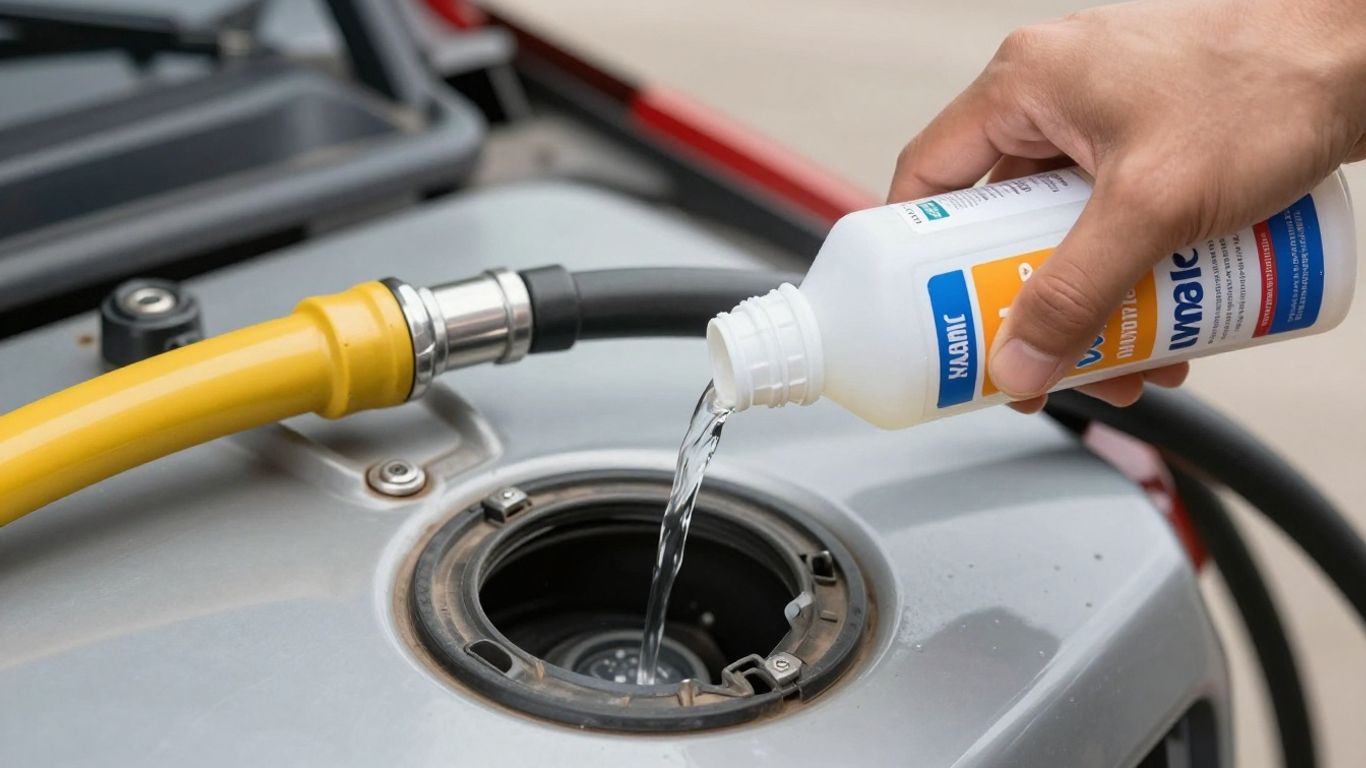
Most owners find that a simple chemical additive is an effective first line of defense against light deposits. These solutions are formulated to break down minor carbon buildup during your daily driving cycle, preventing the progression toward a total blockage.
Ultrasonic cleaning kits
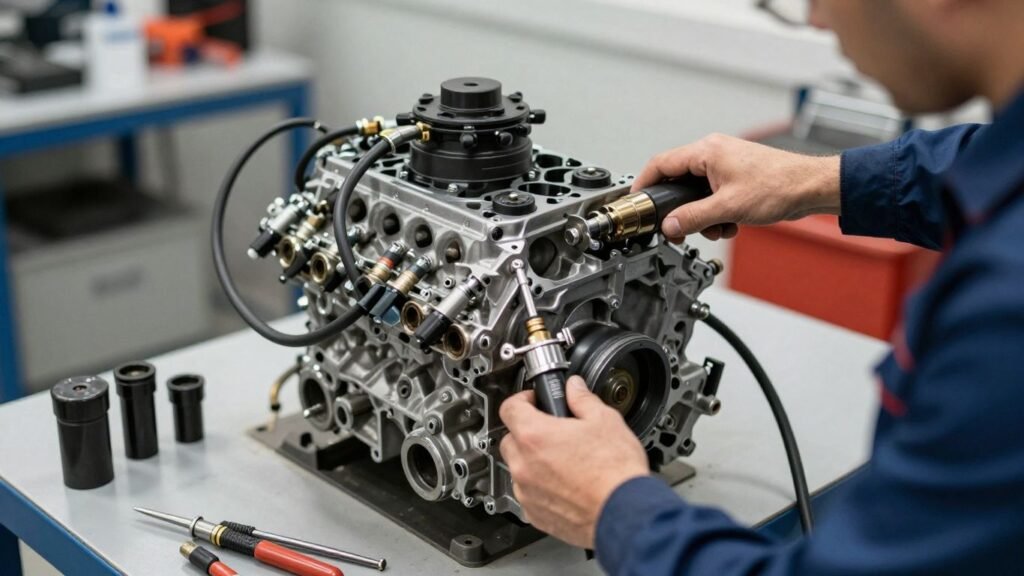
For those who prefer a hands-on approach with removed parts, ultrasonic cleaning baths can be effective in vibrating away stubborn deposits. This method is meticulous and requires a steady hand, ensuring that every internal passage is cleared without physical scraping or abrasive damage.
Bench testing and professional flow testing
When DIY methods fail to resolve a misfire, a professional bench test becomes necessary. These facilities measure the spray volume and pattern accuracy of each injector, confirming whether they can be salvaged or if they have suffered terminal degradation that demands a replacement.
Risks of improper manual cleaning
Manually scrubbing injectors with abrasive tools is a common mistake that often destroys the delicate spray nozzles. Improper handling can strip away internal coatings or introduce foreign particulates into the system, essentially ruining the injector permanently rather than fixing it.
Step-by-step guide to using fuel system additives
Once you have determined that your car needs a mild intervention, you can perform a treatment yourself to see if the symptoms improve. We recommend following a routine that ensures the solvent works as intended without causing further contamination. As Vera4Beauty style tips often mention for maintaining hair, treating your equipment with care and patience pays off in long-term results.
Choosing the right additive for your specific engine
Always select a product that is compatible with your engine configuration. Whether your car is gasoline or diesel, using the wrong formulation may fail to remove target deposits or, in worst-case scenarios, interact poorly with sensitive sensors in the exhaust.
Optimal fuel tank levels for maximum efficacy
For the best results, add your chosen cleaner when the tank is at approximately one-quarter capacity. This ensures that the concentrations are sufficiently high to treat the injectors effectively before you dilute the mixture by refueling to full capacity.
Timing the treatment with your driving cycle
Ideally, apply the additive just before a long highway drive. This allows the cleaning agent to circulate through the system continuously at ideal operating temperatures, rather than allowing the chemical to sit idle in the lines overnight.
Safety precautions and handling guidelines
Always wear gloves and eye protection when pouring fuel additives into your tank to avoid accidental spills on your skin. If you splash concentrated solvents on your paint, wash them away immediately to prevent potential etching, as these agents are designed to break down tough carbon and can affect wax or finish.
When to seek professional cleaning services
Sometimes the problem exceeds what can be addressed by simple maintenance or store-bought chemicals. Mechanical wear is a reality for any high-mileage vehicle, and you should recognize when the damage has reached a point of no return.
Identifying irreversible nozzle damage
If physical inspection shows cracks or severely eroded nozzle tips, professional cleaning will not suffice. The structural integrity of the metal is compromised, meaning no amount of chemical washing will return the spray pattern to its factory specification.
Signs of severe internal seal failure
Internal leaking often manifests as a fuel pressure drop immediately after the engine is shut off. If the injectors cannot hold pressure, the car will struggle to start, as the fuel lines drain back into the tank or flood the cylinder with raw fuel.
Diagnostic codes that signal injector failures
When your mechanic uses a diagnostic scanner, they look for specific codes that isolate the injector function from broader issues. These codes usually tell us that the electrical signal is reaching the component, yet the fuel delivery volume remains deficient, confirming a hardware failure.
Cost-benefit analysis of cleaning versus replacement
Consult your service center on whether a Renault fuel injector cleaning service, which is often a fixed-price job, is truly the better route than a full part replacement. For newer vehicles, a professional deep clean is often enough, but for very high-mileage cars, moving straight to a replacement part may save time and money by preventing repeated trips to the shop.
Preventative maintenance to extend injector life
Staying proactive keeps your vehicle running reliably for years, keeping costs low and performance high. Consistent habits are the foundation of car ownership, and neglecting them is the most common reason for early injector failure.
Importance of regular fuel filter changes
Think of the fuel filter as the gatekeeper for your injectors; if it fails, contaminants travel directly into your engine. By adhering to the recommended replacement schedule, you stop debris from even reaching the high-pressure system, which is a surprisingly easy way to add years of life to your equipment.
Selecting high-quality, detergent-rich fuels
Using high-grade fuels typically involves higher concentrations of cleaning agents that help prevent deposit buildup at the source. It is essentially like performing a mini-cleaning service every single time you visit the pump, providing an ongoing safety net for your direct injection system.
Monitoring engine performance shifts over time
Paying attention to how your engine sounds during a cold start or how it reacts at high RPMs provides early clues. If the engine takes half a second longer to fire up than normal, keep an eye on it, as that could be a subtle early symptom of an injector starting to stick.
Driving habits that discourage deposit formation
Occasional spirited driving in a safe environment can help keep the combustion chambers hot enough to burn off light, soft deposits. Furthermore, avoiding many short trips where the engine never reaches full operating temperature prevents the damp environment where sludge often begins to accumulate.
Conclusion
Maintaining the fuel injectors in your Renault is a straightforward aspect of vehicle care that pays significant dividends in long-term reliability and engine performance. By following consistent maintenance schedules and paying attention to early symptoms of build-up, you can effectively avoid the inconvenience of roadside stalls or expensive emergency repairs. Whether you perform simple additive treatments yourself or rely on professional service centers for a deep clean using quality products like TEC 2000 Diesel Injector Cleaner, your commitment to this minor effort ensures your engine continues to perform at its peak for many years to come.
Frequently Asked Questions
Can bad fuel injectors cause my car to fail an emissions test?
Yes, restricted or leaking injectors often result in incomplete combustion, which leads to higher levels of unburnt hydrocarbons and carbon monoxide in your exhaust, likely causing an emissions test failure.
How often should I use a fuel injector cleaner additive?
For most passenger vehicles, adding a high-quality fuel system cleaner every 3,000 to 5,000 miles is sufficient to maintain cleanliness without the need for excessive use.
Will a fuel injector cleaner fix a completely dead injector?
No, if an injector has a burnt electronic coil or a seized mechanical plunger, chemical cleaners cannot repair it, and the component will need to be replaced by a qualified technician.
What is the difference between a professional cleaning and an additive?
An additive is a preventative measure that helps keep clean components functional, whereas professional cleaning uses specialized machinery or ultrasonic baths to remove heavy, hardened deposits that additives may miss.
Does using premium fuel eliminate the need for injector cleaning?
While premium fuel with high detergent content significantly slows the accumulation of carbon, it does not guarantee that injectors will remain perfectly clean over the life of the engine, especially under harsh driving conditions.
Can a clogged injector cause damage to the engine catalyst?
Yes, raw or unburnt fuel passing into the exhaust stream due to a misfiring injector can overheat the catalytic converter, leading to internal damage and a much higher repair bill than the cost of a simple clean.
How long does a professional fuel injector cleaning session usually take?
Service times vary by vehicle, but most professional cleaning services can be completed within a few hours, often as part of a standard maintenance interval performed at an authorized service center.