

Key Takeaways
A battery that is flat after sitting overnight needs a little detective work: the battery itself, the charging system, and something drawing power while the car is parked can all be responsible.
- Note how long the car sits and what changes when you try to start it.
- Check the battery’s condition and charging system before assuming there is a parasitic drain.
- Look for lights, accessories, or recent electrical work that could be using power.
- Measure current draw only with the correct equipment and safe procedure.
- If the fault is not obvious, ask an auto electrician to trace it rather than replacing parts at random.
How to tell whether the battery is losing charge overnight
A car that starts reliably after a short stop but struggles after sitting overnight may have a battery or electrical problem worth investigating. One weak start is not enough to identify the cause, so look for a repeatable pattern and note what the vehicle does. The phrase Renault battery draining overnight cause can describe several different faults, not just a battery that needs replacing.
Note how long the Renault sits before it struggles to start
Write down how long the car was parked before the slow start, and whether it had been driven long enough beforehand to recharge the battery. If the problem appears after an overnight rest but not after a few hours, that timing can help distinguish a gradual power loss from a battery that is simply undercharged. Record the weather and any recent short trips too; patterns are more useful than a single guess.
A Renault Scenic owner’s account describes repeated flat-battery episodes alongside other symptoms, but an individual report is not a diagnosis for another car. It can still be a reminder to record all the symptoms and recent work, as in this Scenic battery account.
Check for dim lights, slow cranking, or warning messages
Notice whether the cabin or exterior lights seem dim, whether the starter turns the engine slowly, or whether the dashboard displays a warning. These signs can point to low battery voltage, but they do not establish why it is low. If a warning appears, note its wording and when it shows up rather than relying on memory later.
Avoid repeatedly trying to start the engine if the battery is nearly flat. Repeated attempts can leave less charge for another start, and a warning or unusual electrical behavior may call for a proper diagnostic check.
Rule out a weak or aging battery
A battery that cannot hold a charge can look like an overnight drain even when the parked vehicle is not using excessive power. Ask for a battery condition test and a check of its charge level before tracing every circuit. The results help separate a worn or undercharged battery from a current draw that continues while the car is switched off.
The readings are easier to interpret when considered together, rather than treating one symptom as proof. A technician can compare the battery’s condition with its ability to deliver starting power and check whether it is being charged adequately.
| What you notice | Possible direction to investigate | Useful next check |
|---|---|---|
| Slow cranking after a long park | Low charge or battery wear | Battery condition and charge test |
| Battery repeatedly needs charging | Parked draw or charging issue | Current-draw and charging checks |
| Starts normally after a charge, then fades | Battery may not hold charge | Battery load or condition test |
| Trouble begins after electrical work | Connection or circuit disturbance | Review the repair and inspect connections |
Use the table to organize observations, not to diagnose the car from symptoms alone. For instance, a battery that tests poorly may need attention even if a separate electrical draw is also present.
Look for signs of a charging-system problem
A battery may be discharged because it is not being replenished properly while the engine runs. A workshop can test the charging system, including the alternator, and inspect relevant connections. If the battery warning light appears while driving, or electrical behavior changes as the engine runs, arrange a prompt check rather than relying on repeated jump-starts.
Common causes of overnight battery drain
A parked car still uses some electrical power, but an unexplained loss of starting power deserves investigation. The fault may be as simple as a light left on or may involve a component that continues drawing power after the vehicle is shut down. The exact cause depends on the vehicle and its equipment, so start with what changed and what can be observed safely.
A light or accessory staying on
A boot, glovebox, or interior light that remains on can draw power while the car sits. A door or tailgate that does not close fully, or a switch that does not register that it is shut, may keep a lamp active. Check the vehicle after closing it, but do not put yourself in a position where you could become locked inside or interfere with a powered mechanism.
Light-related electrical problems vary by setting; for example, sauna LED lights concern a different environment and installation, not a car circuit. For a Renault, use the owner’s manual and inspect only the vehicle’s own lamps and switches.
Faulty wiring, relays, or electrical components
Damaged wiring, a sticking relay, or a failing electrical component can allow power to continue flowing when it should not. A loose or corroded connection can also create symptoms that come and go. A technician can check for visible damage and use measurements to narrow down the affected circuit rather than replacing parts based on a hunch.
An aftermarket alarm, stereo, or dash camera
Equipment added after the car was built is worth reviewing, particularly if the battery trouble began after it was installed or adjusted. A camera, alarm, audio system, or charging adapter may draw power while parked, or its wiring may have been connected incorrectly. Disconnecting equipment should be done according to its instructions; avoid cutting wires or pulling unfamiliar fuses.
A solar battery losing charge is a different problem from a car’s 12-volt starting battery, but the basic reminder is useful: identify the system and its intended charging setup before deciding what a falling charge means. Keep the investigation focused on the car’s own equipment and wiring.
A control module that fails to enter sleep mode
Some vehicle electronics remain active briefly after the engine is switched off, then reduce their activity. If a component does not settle as intended, it may continue to use power while the car is parked. Establishing whether this is happening requires measurements and the correct information for the exact vehicle; normal draw and sleep timing can vary.
Drivers sometimes call this kind of parked power loss “vampire drain.” One multimeter drain example describes tracking a problem with current measurements and fuse checks, but another vehicle may need a different diagnostic process.
Check for simple problems before testing
A quick visual check can find an obvious source of power loss and may save time before any electrical measurements. Start with items that are easy to inspect without disturbing wiring or removing components. If the car has a fault warning, damaged cable, or a battery that is hot, swollen, or leaking, stop and get professional help.
Make sure doors, the trunk, and the hood are fully closed
Check that all doors and the trunk latch properly, and look for an interior or boot light that remains on. Make sure the hood is closed as well, especially if the vehicle has a switch or alarm linked to it. A warning on the dashboard or a light that stays illuminated can offer a clue, but some lamps may be difficult to see once the vehicle is locked.
Inspect the battery terminals for looseness or corrosion
With the vehicle switched off, look for obvious corrosion or a terminal that appears loose. Do not bridge the terminals with a tool, and do not disconnect the battery unless you know the vehicle’s procedure; doing so can create new problems or erase settings. If a connection needs cleaning or tightening, ask a qualified person to do it safely.
Unplug accessories from the 12-volt socket and USB ports
Remove removable chargers and accessories before leaving the vehicle parked, then see whether the pattern changes. A device can stay powered after the ignition is off depending on the vehicle and outlet, so do not assume every socket switches off with the engine. Change one thing at a time and note the result.
A short, controlled check is more useful than unplugging everything at once. Consider these simple steps:
- Remove phone chargers, adapters, and other plug-in devices.
- Check that portable cameras or accessories are fully switched off.
- Park the vehicle for a comparable period before checking the start again.
- Record whether the symptom improved or stayed the same.
If the battery still loses charge, put the accessories back only if they are needed and safe to use, then continue with a battery and current-draw test. The steps are a first screen, not proof that an accessory is or is not responsible.
Review recent repairs or changes to the vehicle
Think back to work done shortly before the fault appeared: a battery replacement, stereo installation, alarm repair, or other electrical work can help narrow the search. Keep receipts or notes so a technician can see what was changed. A recent repair is a useful lead, not proof that the repair caused the drain.
How to test for parasitic battery drain
A parasitic-draw test checks how much current the vehicle uses while it is parked and its systems have settled. The procedure can be easy to get wrong: opening a door or waking the vehicle can change the reading, and a meter connected incorrectly can be damaged. If you are unsure about the equipment or the battery connections, have an auto electrician perform the test.
Prepare the vehicle and meter safely
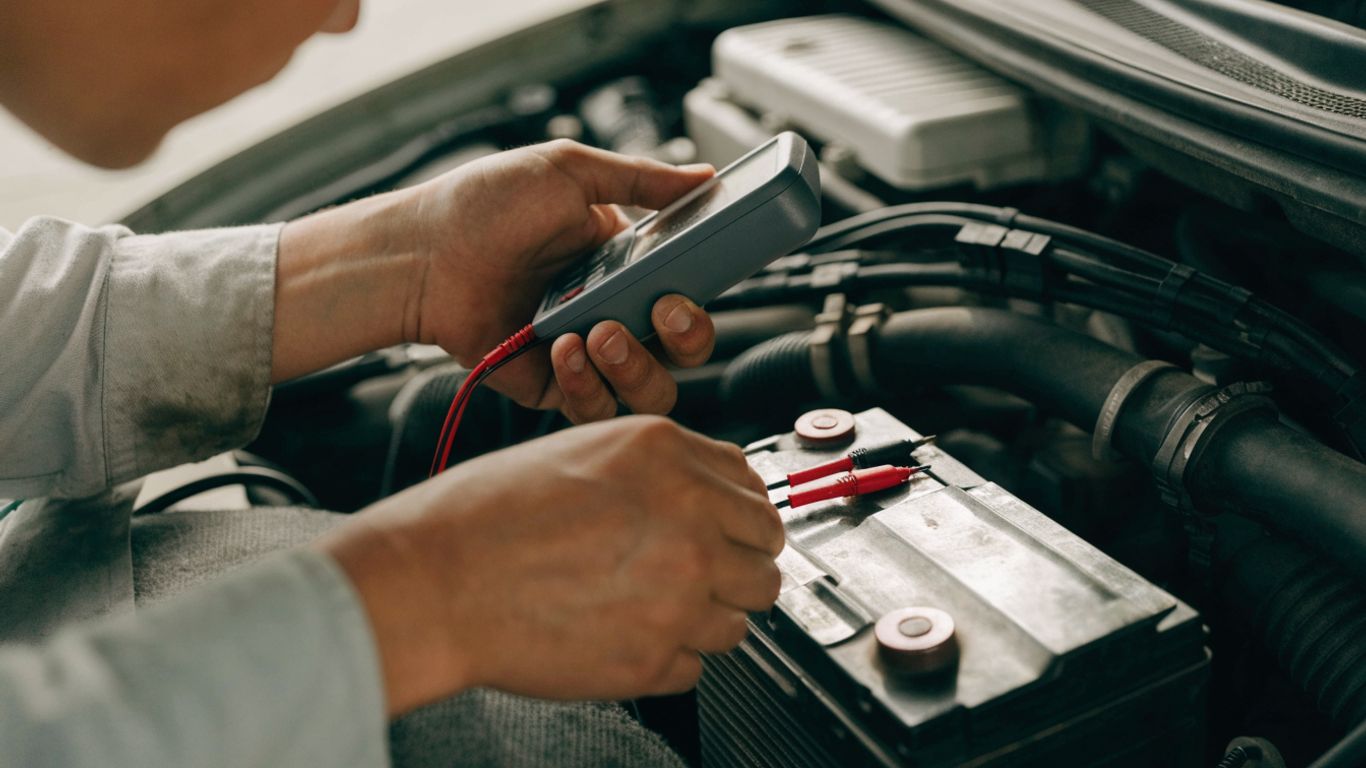
Use the owner’s manual and the meter instructions before starting. Park in a safe, well-ventilated place, switch off the ignition, remove the key or key card from the immediate area, and keep metal tools away from the battery terminals. Do not attempt a current measurement if you are not confident about the meter’s range, lead sockets, or connection method; an incorrect setup can damage the meter or vehicle.
The car must remain undisturbed during the test. Plan how to close doors and access the fuse panel without repeatedly waking the vehicle, and do not work around a running engine or exposed moving parts.
Measure current draw with a multimeter
A multimeter can measure current, but measuring in series with a battery is not a casual task. The meter must be set to the correct current range and connected as its manufacturer directs; never try to start the engine while the meter is in the current-measuring circuit. If the reading is unexpectedly high or the meter’s fuse blows, stop and seek help instead of repeating the connection.
The correct resting-current figure depends on the car and its equipment. Avoid applying a number from a forum post or another model as a universal pass/fail limit. A technician can compare the reading with service information for the specific vehicle and take account of the time needed for its systems to settle.
Allow time for Renault modules to go into sleep mode
After switching off, some electronics may remain active for a period before settling. Wait for the vehicle to reach its resting state before judging a reading, and do not open doors, operate the remote, or switch on accessories during that interval. The required wait and expected draw are not identical for every Renault, so consult the model-specific service information.
If a reading changes after the vehicle is disturbed, let it settle again rather than treating the earlier value as final. That patience helps avoid mistaking normal brief activity for a persistent drain.
Isolate the circuit causing the excess draw
Once an excessive resting draw has been confirmed, a technician can use the vehicle’s fuse information to identify the circuit involved. Pulling fuses at random can wake systems, interrupt settings, or make the measurement harder to interpret. The Renault 4 battery guide also discusses fuse checks as part of tracing a drain, but its advice should not replace the correct fuse layout and procedure for your own model.
When a circuit changes the current reading, that points to an area for further diagnosis rather than naming the failed component by itself. Follow-up checks may be needed to identify whether the issue is wiring, an accessory, a relay, or a module.
Renault-specific areas to investigate
Renault models differ in equipment, fuse layouts, and electrical behavior, so avoid assuming a procedure or reading from another model applies to yours. Start with the documentation for the exact model and year, then tell the technician about any symptoms and recent work. Good notes can make the investigation faster without guessing at a Renault-wide fault.
Check the model’s fuse layout and owner’s manual
Use the owner’s manual to locate the correct fuse information and learn what each circuit serves. Fuse positions can differ between models and equipment levels; do not rely on an online diagram unless it clearly matches the exact vehicle. If the manual does not explain a procedure, ask a workshop before removing fuses or disconnecting components.
Inspect the boot and interior lighting circuits
If the battery drains while parked, check whether an interior or boot light remains on and whether the relevant latch closes properly. A lamp may be hidden from view when the vehicle is shut, so ask someone to help observe it or have a technician inspect the switch and circuit. Keep hands clear of latches and powered parts.
Consider keyless entry, alarms, and connected features
If the vehicle has keyless entry, an alarm, or connected equipment, note any unusual behavior and mention it during diagnosis. Keep keys and remotes away from the vehicle while it sits, as a practical way to reduce avoidable activity during a test. Do not assume a feature is faulty simply because the battery went flat.
Check for module or software issues after recent repairs
If the problem started after electrical or software-related work, ask the workshop to review what was changed and whether further checks are appropriate. A module may need testing or a repair procedure, but the symptoms alone do not identify which one. Diagnosis should follow the correct service information for the car rather than a generic reset or update.
Fix the drain and prevent it from returning
Once the cause has been identified, the repair should address that fault rather than repeatedly charging or replacing the battery. Ask for the test results and a plain explanation of what was found. When a component does need replacement, Australia’s trusted Car Parts Supplier connects customers with quality used, genuine, and aftermarket parts through a car parts network; confirm that any replacement is suitable for the exact vehicle before buying.
Repair or replace the faulty component
A loose connection, damaged wire, lamp switch, accessory, or other failed component may need repair or replacement, depending on what testing finds. Avoid swapping parts based only on a guess, because more than one fault can produce similar symptoms. When discussing a replacement, compare repair and replacement costs carefully; that page concerns inherited property rather than vehicle repairs, so use a vehicle-specific quote for this decision.
A parts supplier may offer quality used parts, genuine parts, and aftermarket parts, but the correct choice depends on fitment and the condition of the part. Australia’s trusted Car Parts Supplier connects customers with quality options through its network; ask for the exact part details and confirm compatibility before ordering.
Have the alternator and battery tested
Ask for a battery test and a charging-system check if either has not already been done. Replacing a battery without checking why it went flat may leave the underlying problem untouched. If the battery fails a proper condition test, the technician can advise whether replacement is appropriate and check the charging system afterward.
Use a battery maintainer if the car sits for long periods
If the vehicle is parked for extended periods, ask the owner’s manual or a qualified technician whether a compatible battery maintainer is suitable. Use a device intended for the battery type and follow its instructions, including safe connection and ventilation guidance. A maintainer can help preserve charge during storage, but it does not fix an electrical fault that is actively draining the battery.
Know when to seek help from an auto electrician
Get professional help if the battery repeatedly goes flat, a fuse or wiring appears damaged, the test equipment is unfamiliar, or a warning light accompanies the problem. An auto electrician can confirm the resting draw, identify the affected circuit, and recommend a repair based on the readings. When parts are needed, Australia’s trusted Car Parts Supplier serves customers across Melbourne, Sydney, Brisbane, and nationwide; an auto electrician can still confirm which component is actually required.
Conclusion
An overnight flat battery is a symptom, not a diagnosis. Check the simple causes, test the battery and charging system, and only measure or isolate circuits if you can do so safely. If the drain keeps returning, a methodical test by an auto electrician is usually more useful than replacing parts at random.
Frequently Asked Questions
Why does a car battery go flat overnight?
Common possibilities include a weak battery, a charging problem, a light or accessory left on, wiring trouble, or a component that continues drawing power while the car is parked. Testing is needed to distinguish them.
Can a new battery still go flat overnight?
Yes. A new battery can lose charge if something in the vehicle draws power while parked or if the charging system is not replenishing it properly. A battery test and a current-draw check can help identify the cause.
How can I tell if the battery itself is weak?
Have its charge and condition tested with suitable equipment. Slow cranking can be a clue, but it does not confirm that the battery is the only problem.
What is parasitic battery drain?
It is electrical current used while a vehicle is parked beyond what is expected for that vehicle after its systems settle. A proper current-draw test can show whether further circuit diagnosis is needed.
Is it safe to test battery drain with a multimeter?
It can be done safely only with the correct meter setup and procedure. Incorrect connections or settings can damage equipment or the vehicle, so ask a qualified technician if you are unsure.
Should I disconnect the battery when the car is parked?
Do not disconnect it without checking the owner’s manual or getting advice. Disconnecting may affect vehicle settings or systems, and it will not repair the cause of an ongoing drain.
Will a battery maintainer fix an overnight drain?
A suitable maintainer can help keep a battery charged during long periods of storage, but it does not resolve a fault that continues using power. Repeated overnight drain should be diagnosed and repaired.