

Key Takeaways
A diesel particulate filter needs heat, correct operating conditions, and a healthy engine system to clean itself properly.
- Regeneration burns accumulated soot; it does not remove permanent ash.
- Short, slow journeys can interrupt automatic cleaning cycles.
- Warning lights should be interpreted alongside performance and engine behavior.
- Forced regeneration is a controlled workshop procedure, not a universal first step.
- Repeated blockage usually requires diagnosis of the cause, not repeated resets.
Understanding diesel particulate filter regeneration on Renault vehicles
A diesel particulate filter, or DPF, traps soot in the exhaust before it leaves the vehicle. When enough soot collects, the system raises exhaust temperature so the trapped material can burn. Understanding that sequence makes the phrase diesel particulate filter regeneration Renault less mysterious: it is a managed cleaning process, not simply a filter replacement interval. The exact strategy varies with engine, software, emissions equipment, and driving conditions.
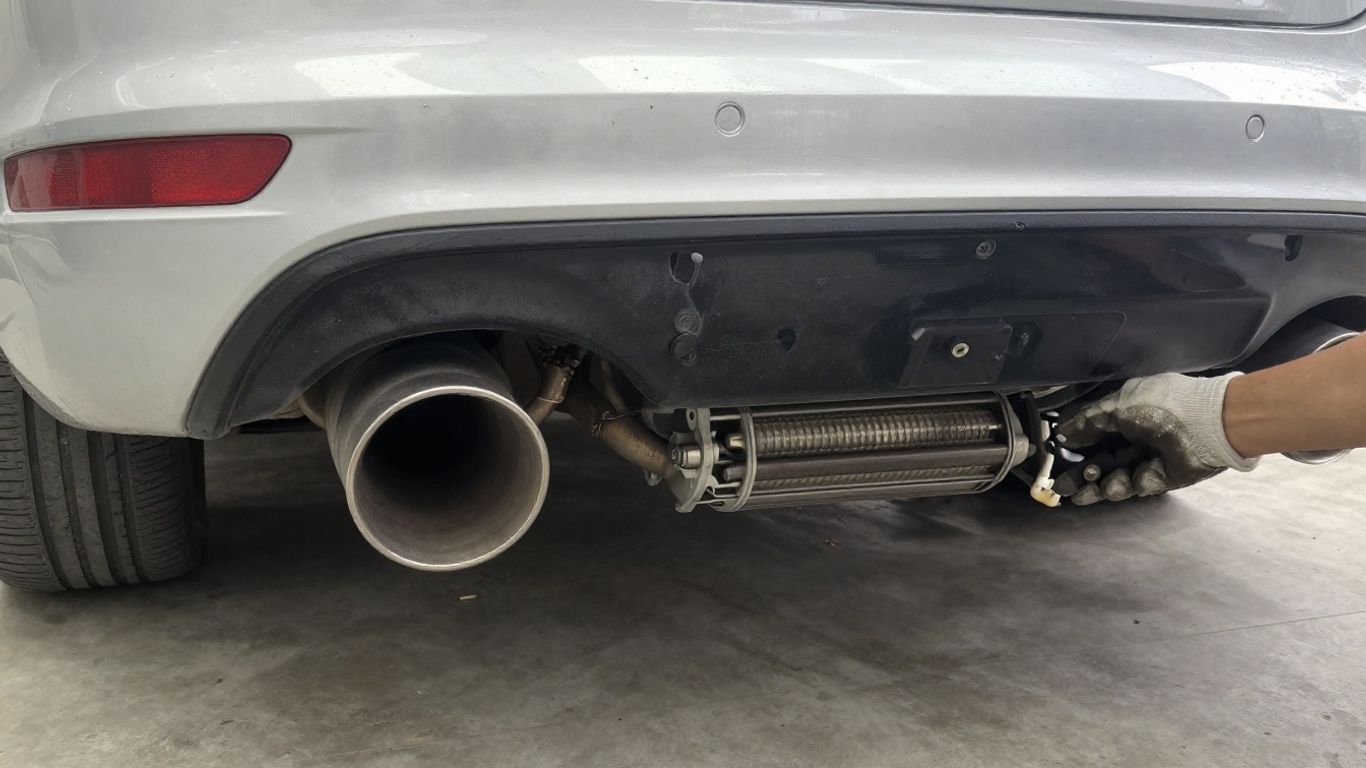
What the DPF does and why soot accumulates
The DPF is a porous filter in the exhaust stream. Soot particles remain in its channels while exhaust gases pass through, reducing particulate emissions. Soot forms whenever diesel combustion produces carbon-rich residue, and the amount tends to rise when the engine runs cold, under light load, or with an air-fuel problem.
A filter can therefore become loaded even when the car feels mostly normal. Frequent idling, poor combustion, a restricted intake, injector problems, or a malfunctioning exhaust sensor may all increase soot production or make the system misread its condition. The filter is doing its job, but the engine around it still needs to be healthy.
Passive, active, and forced regeneration explained
Passive regeneration happens when exhaust temperatures become high enough during ordinary driving to oxidize soot without a dramatic intervention from the driver. Active regeneration is more deliberate: the engine-management system changes operating conditions to increase exhaust heat and burn soot in the filter. A forced regeneration is initiated with diagnostic equipment under controlled conditions, usually after checks have established that the vehicle is safe to run the procedure.
These terms describe different routes to the same broad aim, but they are not interchangeable. A normal drive may support an automatic cycle, while a forced cycle may be inappropriate if the filter is severely blocked or another fault is causing excessive soot. A useful technical overview of DPF regeneration types also separates passive and active processes from situations in which regeneration should be avoided.
How Renault engine and emission systems manage regeneration
On a Renault diesel, the engine-control system uses information from the exhaust and engine-management systems to estimate filter loading and decide when conditions support cleaning. Depending on the vehicle, the instrument panel may show a particle-filter warning or a message related to anti-pollution equipment. The owner’s manual remains the authority for the specific warning symbols, driving instructions, and limits for that model.
The system may adjust fuel injection, exhaust temperature, and other operating parameters while a cycle is underway. It is not wise to assume that every model uses the same trigger, duration, or dashboard wording. Older and newer engines can have materially different hardware and calibration, so diagnosis should begin with the vehicle identification and engine code rather than a generic internet procedure.
Why short trips and low-speed driving can interrupt the process
A short urban trip often ends before the exhaust reaches the temperature needed for a complete cycle. Repeated cold starts, traffic queues, and low engine load can leave the filter partially cleaned, causing the system to request regeneration again later. Turning the engine off is not automatically harmful, but repeated interruptions can gradually increase the soot estimate.
The practical issue is not that city driving instantly ruins a DPF. It is that the vehicle may rarely receive a long, steady period at operating temperature. Drivers who use a diesel almost exclusively for short errands should treat recurring warning messages as a reason to review vehicle suitability and maintenance, not merely as a request to drive faster.
Recognizing when your Renault needs a regeneration
A DPF warning does not always mean the filter is permanently damaged. It may indicate that the system wants a suitable opportunity to complete an automatic cleaning cycle, but the meaning depends on the exact message and any other warning lamps. Read the dashboard carefully, note when the warning appeared, and avoid guessing from the light alone.
DPF warning lights and dashboard messages
The instrument panel may display a particle-filter symbol, an anti-pollution message, or a general engine warning. Some vehicles can also show a message indicating that regeneration is not needed or that the filter is becoming clogged. These messages are model-specific, so the handbook or a workshop manual should be checked before choosing a response.
A single warning with normal driving behavior may justify arranging suitable driving conditions, if the manual permits that approach. A warning that remains illuminated, returns soon after a drive, or appears with another fault message deserves diagnostic attention. A Renault diesel user manual is useful for checking the meaning of the particular warning and the vehicle-specific precautions.
Changes in engine performance, fuel economy, or cooling-fan behavior
During an automatic cycle, the engine may sound slightly different, fuel consumption may temporarily rise, and the cooling fan may continue running after the vehicle stops. A warm or sharp exhaust smell can also occur. These signs are not proof of a successful regeneration, but together they can indicate that the system is managing high exhaust temperatures.
More concerning symptoms include sluggish acceleration, reduced boost, difficult starting, unusual smoke, or a warning that does not clear. A cooling fan running after shutdown can be normal during heat management, whereas persistent poor performance points toward a fault or excessive loading. Record what happens rather than repeatedly switching the ignition off and on.
Distinguishing a normal regeneration from a developing fault
A normal cycle is generally temporary and should finish without steadily worsening performance. Once the soot has been reduced, the warning may go out and the vehicle should return to its usual behavior. A developing fault tends to repeat, escalate, or appear alongside symptoms such as limp mode, abnormal smoke, or an engine-management warning.
The most useful distinction is the trend. One interrupted cycle after a week of short trips is different from three attempted cycles in a few days. Likewise, a temporary increase in fuel use is less alarming than rising oil level, severe power loss, or a warning that remains on after suitable driving.
When warning combinations indicate limp mode or urgent service
Several warnings together can mean the control system has limited torque to protect the engine, turbocharger, or emissions equipment. A check-engine or anti-pollution message combined with substantial power loss should not be treated as a routine request for a motorway drive. Stop safely if the vehicle is overheating, producing heavy smoke, or behaving unpredictably.
If the dashboard calls for immediate inspection, follow that instruction. Continued driving with a heavily loaded filter can raise exhaust backpressure and increase repair risk. Do not erase warning codes before diagnosis, because the stored data may help identify what happened.
How to support a normal DPF regeneration while driving
When the manual allows a driving-based regeneration, the aim is to provide a safe, sustained period of normal operation. This is not a race and it is not a substitute for repair. A suitable route, a warmed engine, and enough fuel matter more than a particular gear or speed copied from another vehicle.
Checking the vehicle conditions before starting
Begin with the basics. Make sure there is enough fuel, the engine has reached normal temperature, and there are no urgent warnings such as overheating or low oil pressure. Check that the vehicle is running normally enough to drive safely and that the route offers a place to stop if the symptoms worsen.
Avoid starting a regeneration attempt where hot exhaust components could contact dry grass, leaves, fuel vapors, or other combustible material. Keep the exhaust area clear, and never use a closed garage for a process that produces substantial heat. If the warning is accompanied by severe power loss, arrange diagnosis instead of trying to force the issue through driving.
Choosing a suitable road and maintaining steady speed
A road with steady traffic flow is preferable to a route full of junctions and stops. Once the engine is warm, maintain a consistent, moderate load within the limits in the owner’s manual. The engine should not be lugged in too high a gear, but there is no universal “regeneration gear” that applies to every diesel model.
Plan for enough uninterrupted time and obey local speed limits. The useful part of the drive is steady operation, not aggressive acceleration. If traffic, weather, or road conditions make that impossible, postpone the attempt rather than creating a safety problem.
Understanding typical duration, engine speed, and temperature
Regeneration duration varies with soot load, engine design, ambient temperature, vehicle speed, and the condition of the emissions system. Exhaust temperature becomes much higher than during ordinary cruising, even when the dashboard gives little direct feedback. For that reason, a driver should rely on the model-specific manual rather than a fixed mileage, rpm, or time promise.
Temporary fan operation, a different idle sound, or a hot smell can occur as heat is managed. Heat is the essential ingredient, but more heat is not automatically better. Deliberately over-revving, driving beyond legal limits, or tampering with sensors can damage components and will not make an unhealthy system reliable.
What to do if the regeneration cycle is interrupted
If you must stop, do so safely; do not continue driving merely to protect a filter. On a later trip, follow the manual’s instructions again if the warning is still in the permitted range and the car otherwise behaves normally. Repeated interruption, a warning that stays illuminated, or worsening performance means the vehicle needs a scan and inspection.
Never assume that a warning has cleared just because the fan stopped or the exhaust smell disappeared. A diagnostic system may retain a soot-load estimate or fault code. The next sensible step is to identify whether the problem is incomplete regeneration, a sensor error, or a mechanical condition producing too much soot.
Diagnosing failed or repeated regeneration cycles
When regeneration repeatedly fails, the filter is often only one part of the story. The control system depends on accurate pressure and temperature readings, correct combustion, sufficient air flow, and appropriate software decisions. Repeating the same drive without finding the cause can turn a manageable issue into a blocked filter or damaged component.
Reading fault codes with a compatible diagnostic scanner
A compatible scanner can retrieve stored and current fault codes, live data, regeneration history, and in some cases the calculated soot or ash load. The code itself is a starting point, not a diagnosis. A sensor-related code may reflect wiring, contamination, a pressure hose, or a genuine change in exhaust flow.
The scan should be performed before clearing anything. Record freeze-frame information, temperatures, pressure readings, and the conditions under which the warning appeared. A prompt-engineering diagnostic data guide is not an automotive manual, but its general advice about specifying inputs and checking outputs is a useful reminder to document scan data precisely rather than relying on a vague fault description.
Checking differential pressure and exhaust temperature sensors
The differential-pressure sensor compares pressure before and after the filter. Its hoses can split, clog, or become disconnected, and the sensor can report implausible values even when the filter itself is not blocked. Exhaust-temperature sensors are equally important because the control unit needs credible temperature information before and during a regeneration.
A technician should compare live readings with the engine cold, at idle, and under suitable load. Wiring, connectors, hoses, and sensor placement deserve a physical inspection. Replacing a sensor without confirming the reading, wiring, and pressure path may leave the original problem untouched.
Inspecting the EGR system, injectors, turbocharger, and intake
Excess soot can be a consequence of poor combustion or incorrect air management. An EGR valve that sticks, an injector with poor spray behavior, a boost leak, a restricted intake, or a turbocharger fault can all affect emissions and regeneration. These checks become especially important when the filter blocks again soon after cleaning.
Look for related symptoms: smoke under acceleration, uneven running, poor boost response, oil contamination, or unusual fuel consumption. The correct repair may be outside the exhaust system. A DPF that is cleaned without repairing the soot-producing fault is likely to load again.
Identifying ash buildup that regeneration cannot remove
Soot can burn during regeneration; ash is the non-combustible residue left behind by oil additives and the cleaning process. Over time, ash occupies filter volume and increases backpressure even when automatic regeneration is functioning. It cannot be removed by simply raising exhaust temperature.
Filter history, measured restriction, mileage, oil specification, and inspection results help distinguish ash loading from soot loading. The distinction resembles the difference between removing a temporary buildup and addressing a lasting accumulation; even general guidance about supporting natural detoxification should not be confused with a mechanical filter-cleaning method. An appropriate off-car cleaning assessment may be needed.
Using a forced regeneration procedure on a Renault
Forced regeneration is a workshop-controlled operation that commands the engine system to raise exhaust temperature while the vehicle is stationary or otherwise placed in a specified service condition. It can be useful when a normal drive cannot complete a cycle and the filter’s calculated load remains within safe limits. It is not a shortcut around diagnosis.
When a workshop-controlled regeneration may be appropriate
A forced cycle may be considered after fault codes have been assessed, the engine is operating correctly, and the filter is not excessively restricted. The technician must confirm that the procedure is supported for the exact vehicle and that the calculated soot load falls within the permitted range. If the original cause has been repaired, the controlled cycle can help verify that the system responds as expected.
The procedure should be monitored from start to finish. A successful completion does not prove that every related component is healthy, so post-cycle readings and a road test may still be required. Treat a forced regeneration as one diagnostic step, not the final answer to every DPF warning.
Required safety checks before beginning the procedure
Exhaust and underbody temperatures can become extremely high. The vehicle must be placed outdoors or in a properly equipped, well-ventilated workshop, away from dry vegetation and flammable materials. The technician should inspect fuel level, oil level and condition, battery stability, cooling system condition, and any active engine or emissions faults.
The vehicle should not be left unattended during the operation. A fire extinguisher, suitable protective equipment, and a clear escape route are sensible workshop precautions. If oil is overfilled or smells strongly of diesel, the procedure should be postponed until the cause is understood.
Why diagnostic software and model compatibility matter
A service tool must communicate correctly with the vehicle’s control modules and expose the functions intended for that engine and emissions configuration. Menus, permitted soot thresholds, preconditions, and completion tests differ by model and software version. A generic command that appears to start a process may not provide the required safeguards or reliable confirmation.
Use the manufacturer’s service information or a reputable tool with verified vehicle coverage. A detailed forced regeneration procedure can help explain the general workflow, but it should not override the instructions for the exact vehicle in the workshop.
Situations where forced regeneration should not be attempted
Do not force a regeneration when the filter is severely blocked, the differential-pressure reading is implausible, or a temperature sensor fault prevents safe monitoring. It is also inappropriate when the engine is misfiring, overfueling, overheating, leaking oil, or producing heavy smoke. High exhaust heat can worsen an underlying mechanical fault.
A forced cycle should never be used to conceal a warning, clear codes without repair, or compensate for an incorrect oil level. In those cases, stopping and diagnosing the vehicle is safer and usually less expensive than escalating the thermal load.
Preventing future DPF problems in a Renault
Prevention is mostly about giving the emissions system the conditions it was designed to use and maintaining the engine that feeds it. A diesel used for regular long journeys may regenerate without much driver involvement, while a vehicle used for very short trips needs more deliberate planning. Maintenance habits matter more than any single “DPF cleaner” product.
Adapting driving habits for diesel emission systems
Avoid making every journey a cold start followed by a few minutes of idling. Combine short errands where practical, allow the engine to reach operating temperature, and include regular steady drives when the handbook supports that approach. Do not treat a high-speed blast as maintenance; smooth, legal, warmed-up driving is the useful pattern.
A simple routine can reduce avoidable interruptions:
- Watch for a regeneration indication before turning off when circumstances allow.
- Keep the vehicle moving steadily rather than stopping repeatedly during a permitted cycle.
- Avoid prolonged idling and unnecessary low-speed engine loading.
- Investigate repeated warnings instead of repeatedly clearing them.
These steps support normal operation but cannot correct a failing sensor, injector, EGR system, or turbocharger. Basic vehicle-care habits, much like garage maintenance checks, work best when they are regular and paired with early inspection.
Following the correct engine oil and fuel specifications
Use the oil grade and low-ash specification required for the particular engine. Oil that is not suitable for a DPF can contribute more ash over the vehicle’s service life. Keep fuel clean and use the grade specified in the handbook; avoid improvised additives unless a qualified technician confirms they are compatible.
Check the oil level periodically. Regeneration strategies can introduce small amounts of fuel into the oil under some conditions, so a rising level or diesel smell deserves attention. The correct service interval is also part of emissions-system maintenance, not a separate concern.
Keeping up with servicing, sensor checks, and software updates
Routine servicing should include inspection of the pressure-sensor hoses, temperature-sensor wiring, intake and EGR condition, and any stored emissions codes. Software updates may address control logic or known calibration issues, but they should be applied through appropriate service channels and matched to the vehicle.
Keep records of warnings, regeneration attempts, oil changes, and repairs. That history helps a technician distinguish a one-off interruption from a pattern. It also prevents unnecessary replacement of a filter when the underlying issue is elsewhere.
Managing vehicles used mainly for short urban journeys
If most journeys are short and slow, plan an occasional longer trip only when it is safe and consistent with the vehicle manual. If warnings appear frequently despite that change, arrange a proper diagnosis. Repeated forced regeneration is not a sustainable ownership strategy.
Before choosing a diesel for predominantly urban use, consider the whole operating pattern, including parking, charging or fueling access, and servicing needs. A review of the Kia EV3, for example, covers urban driving and charging as part of a different powertrain discussion; it is not a recommendation or a substitute for comparing vehicles for your own needs.
Knowing when professional DPF service or replacement is necessary
A DPF can sometimes be restored, but the right remedy depends on its physical condition and the cause of the loading. Regeneration removes burnable soot, while cleaning or replacement addresses material that regeneration cannot remove or damage that it cannot repair. A professional assessment prevents a costly part from being condemned on the basis of a warning lamp alone.
Comparing cleaning, regeneration, repair, and replacement
Regeneration is an in-vehicle process that burns soot. Off-car cleaning may remove ash and other residue when the filter substrate remains sound. Repair means correcting the sensor, engine, air, fuel, or software fault that caused the loading. Replacement is considered when the substrate is cracked, melted, contaminated beyond recovery, or too restricted for safe service.
Ask what evidence supports the recommendation. A technician should be able to explain the measured restriction, calculated loading, fault history, and physical inspection findings. The cheapest immediate action is not necessarily the least expensive outcome if the original cause remains.
Understanding soot load versus permanent ash accumulation
Soot load can change during a drive and may fall after a successful regeneration. Ash accumulation does not burn away, so it gradually reduces the available filtering volume. A high pressure reading can arise from either condition, which is why live data and service history need to be interpreted together.
Cleaning methods vary, and not every filter can be safely cleaned. Do not accept a claim that a chemical poured into the fuel tank will remove permanent ash from the filter. If costs are being discussed, ask which charges are diagnostic, which are cleaning or labor, and which are parts; even a general deductible cost explanation illustrates why a total price should be separated into its components.
Evaluating costs, risks, and replacement-part quality
Compare a tested cleaning service with a replacement option only after the filter’s condition and the root cause are known. A low-cost replacement may have uncertain fit, calibration, materials, or durability, while a high price does not by itself prove quality. Confirm whether the part is new, reconditioned, or used and whether the warranty covers the relevant failure.
The decision should also account for sensors, gaskets, labor, software procedures, and the repair that prevents repeat loading. Replacing the filter without correcting an injector or boost problem can produce the same warning again. Ask for the before-and-after readings rather than relying only on a reset dashboard.
Preparing useful information for a Renault technician
Bring the registration or vehicle identification number, engine details, mileage, recent service history, oil specification, and a clear description of the warning. Note whether the car is used mainly for short trips, whether the fan runs after shutdown, and whether performance changes when the warning appears.
Also report any attempted motorway drive, forced regeneration, code clearing, additive use, or recent repair. This information gives the technician a better starting point and reduces duplicated work. A careful history is often as useful as the first scan.
Conclusion
A DPF is designed to clean itself, but it relies on correct temperature, accurate sensors, healthy combustion, and suitable driving conditions. Support a normal regeneration when the vehicle manual allows it, but treat repeated warnings, power loss, and unusual smoke as diagnostic signals. The safest long-term approach is to fix the cause, use the correct service materials, and reserve forced regeneration or replacement for cases supported by evidence.
Frequently Asked Questions
What is diesel particulate filter regeneration?
It is the process of raising exhaust temperature so accumulated soot in a diesel particulate filter can burn and the filter can continue flowing exhaust gas.
How can I tell that a regeneration is taking place?
Possible signs include a temporary rise in fuel use, a different engine note, a hot exhaust smell, or a cooling fan that continues after shutdown. These signs vary and are not conclusive by themselves.
Can short trips damage a DPF?
Short trips do not automatically damage the filter, but repeated cold, low-speed journeys can prevent complete regeneration and allow soot loading to increase over time.
Is a long motorway drive always enough to clean the filter?
No. It may provide suitable conditions for an automatic cycle, but a sensor, engine, fuel, air, or filter fault can prevent regeneration even during a long drive.
What is the difference between soot and ash in a DPF?
Soot is burnable material that regeneration can reduce. Ash is a permanent residue that accumulates and may require professional cleaning or filter replacement.
Is forced regeneration safe to do at home?
It can create very high exhaust temperatures and should not be attempted without the correct diagnostic equipment, vehicle-specific instructions, safety checks, and a confirmed safe filter load.
When should a DPF be replaced?
Replacement may be necessary when the filter is cracked, melted, irreparably contaminated, or too restricted to clean safely. Diagnosis should also identify and repair the cause of the failure.