Key Takeaways
An overheating engine needs a calm, safety-first response rather than a quick guess at the repair. These checks help you decide what can be inspected at home and what needs professional diagnosis.
- Stop safely when the temperature warning persists or steam appears.
- Never remove a hot coolant cap or reach near escaping steam.
- Check coolant level, leaks, airflow, circulation, and warning symptoms together.
- Match the repair to when and how the overheating occurs.
- Arrange testing after repeated overheating, coolant loss, or recent repairs.
Understand what an overheating Renault is telling you
A rising temperature gauge is a symptom, not a diagnosis. The engine may be struggling because coolant is low, flow is restricted, airflow is poor, or an electrical control has failed. A sensible Renault engine overheating solution starts by protecting the engine and yourself before investigating the cause.
Normal temperature behavior versus a dangerous rise
Most engines settle into a relatively stable operating range once warmed up. The gauge may move slightly with weather, traffic, or a heavy load, but a steady climb toward the hot zone is not normal. If the warning remains on or the gauge continues rising, treat that change as a fault rather than waiting to see whether it corrects itself.
Warning signs beyond the temperature gauge
Steam from under the hood, a sweet coolant smell, a cooling fan that never starts, or a heater that suddenly blows cold air can all add useful context. You may also notice an illuminated warning lamp, rough running, reduced power, or a puddle beneath the vehicle. Overheating warning signs are easier to interpret when you note what happened immediately before the temperature rose.
Why driving an overheated engine can cause serious damage
Excess heat can distort components, damage seals, and turn a small cooling-system fault into an engine repair. Continuing uphill, accelerating hard, or driving several miles with the gauge in the danger zone increases that risk. The safest repair begins with stopping early, before heat damage obscures the original cause.
When to stop immediately and call for roadside assistance
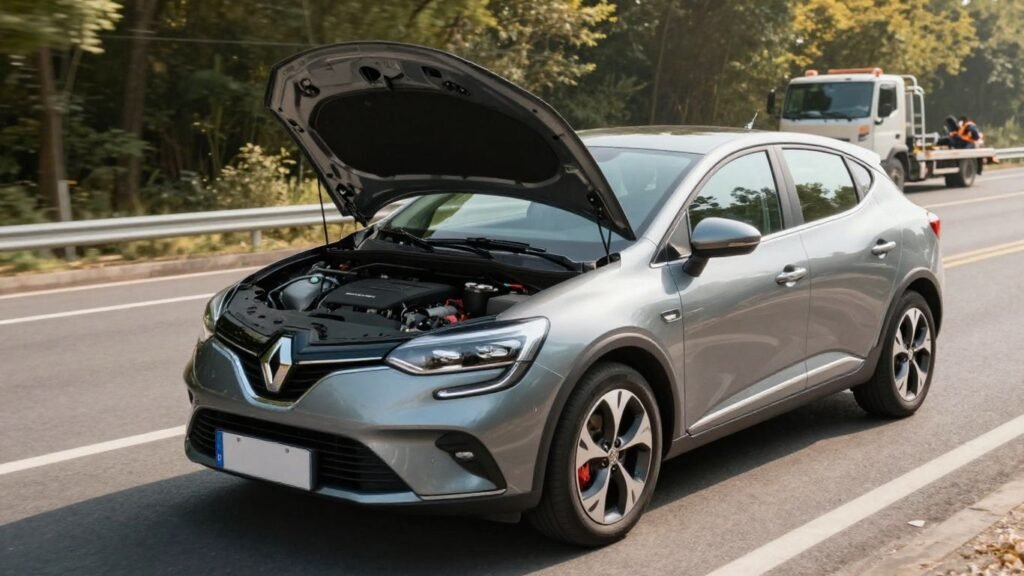
Pull over somewhere safe as soon as practical if the gauge reaches the hot zone, the warning light stays on, or power drops noticeably. If steam is visible, switch the engine off, move away from the front of the vehicle, and wait for assistance rather than opening the hood. If the temperature does not fall after a safe stop, arrange a tow; a short drive to a workshop is not worth risking engine damage.
Check the cooling system safely
Only inspect the cooling system when the engine and surrounding components are fully cool. Park on level ground, keep hands and clothing away from belts and fans, and use the owner’s manual to identify the reservoir and correct markings. The goal is to gather clues without turning a routine check into a burn injury.
How to inspect the coolant level after the engine cools
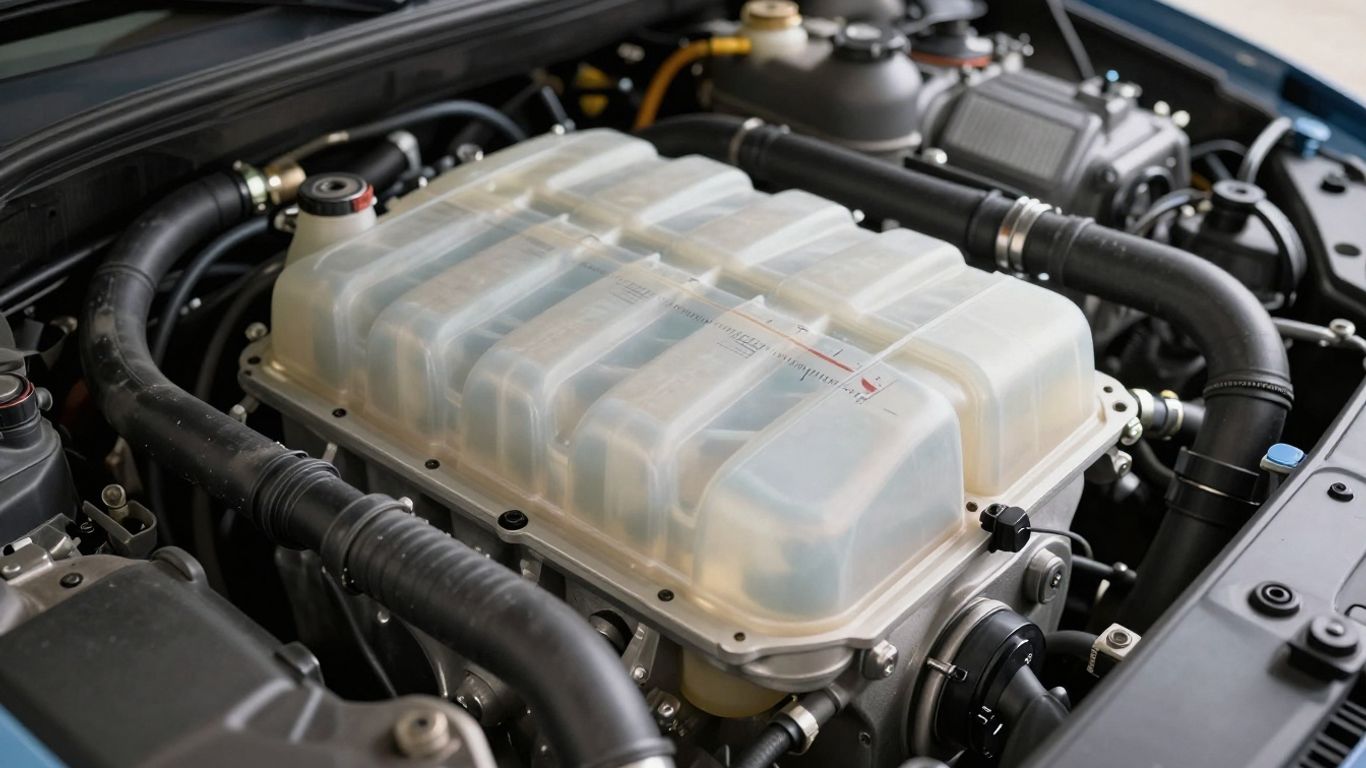
With the engine cold, look at the coolant reservoir and compare the level with its minimum and maximum marks. A low level may indicate a leak or previous loss, but topping it up does not explain why it fell. Record the level and look for fresh wetness before driving again.
Choosing the correct coolant for your Renault model
Use the coolant specification stated in the owner’s manual or confirmed by a qualified technician. Color alone is not a reliable way to identify compatibility, and mixing unsuitable formulations can reduce protection or create later cooling problems. If the correct fluid is unavailable, seek advice before making a permanent refill.
Finding visible leaks around hoses, the radiator, and the water pump
Inspect hose joints, the radiator edges, the reservoir, and the area around the water pump for wet patches, crusty residue, or a strong coolant odor. Do not crawl beneath a hot vehicle, and remember that a leak may only appear when the system is pressurized. A clean, dry driveway can make new drops easier to spot after the car has cooled.
Why removing the coolant cap while hot is dangerous
A hot cooling system can be pressurized, so removing its cap may release boiling fluid and vapor suddenly. Wait until the engine is completely cool before touching the cap, even if the temperature gauge has begun to fall. If steam is still present, leave the hood closed and call for roadside assistance.
Diagnose the most common causes
Overheating usually comes from a failure in one part of a connected system, but symptoms can overlap. Low coolant can cause poor circulation, while a fan fault may appear only in traffic. A useful diagnosis compares the timing of the overheating with the condition of the fluid, airflow, and engine behavior.
Low coolant caused by leaks or poor maintenance
Coolant can be lost through a split hose, loose connection, radiator damage, reservoir fault, or a less obvious internal leak. A neglected service interval may also leave the system underfilled or contaminated. Refill only after the engine cools, then have the source of the loss identified instead of treating the reservoir as a permanent top-up point.
A failed thermostat restricting coolant flow
The thermostat helps control when coolant moves through the radiator. If it sticks closed or opens too late, the engine can heat rapidly even when the reservoir appears full. A technician can compare hose temperatures and circulation behavior, but replacing parts without testing may miss a separate leak or fan fault.
Radiator fan, fuse, relay, and sensor problems
A vehicle that overheats while idling or crawling through traffic may have insufficient airflow across the radiator. The fan itself, its fuse, relay, wiring, or temperature signal may be responsible. Common Renault overheating causes can help organize these possibilities, but electrical testing is safer than jumping circuits at random.
Water pump failure and damaged drive components
The water pump circulates coolant through the engine and radiator. Bearing noise, a damaged impeller, a leak near the pump, or a broken drive component can reduce circulation and produce a rapid temperature rise. Because some drive components are essential to engine operation, stop driving if there is unusual belt noise or visible damage.
Head gasket symptoms that require professional testing
Persistent coolant loss, white exhaust vapor after warm-up, bubbling in the reservoir, contaminated oil, or repeated overheating can point to an internal engine problem. None of these signs proves a failed head gasket on its own. A pressure test, combustion-gas test, compression test, or other workshop diagnosis is needed before approving major repairs.
Use a step-by-step Renault overheating solution
Once the vehicle is cool, work from simple observations toward formal testing. Do not restart it merely to reproduce the fault if the coolant is empty, a belt is damaged, or steam was present. A careful sequence gives a technician better information and reduces the chance of adding new damage.
What to check before starting the engine again
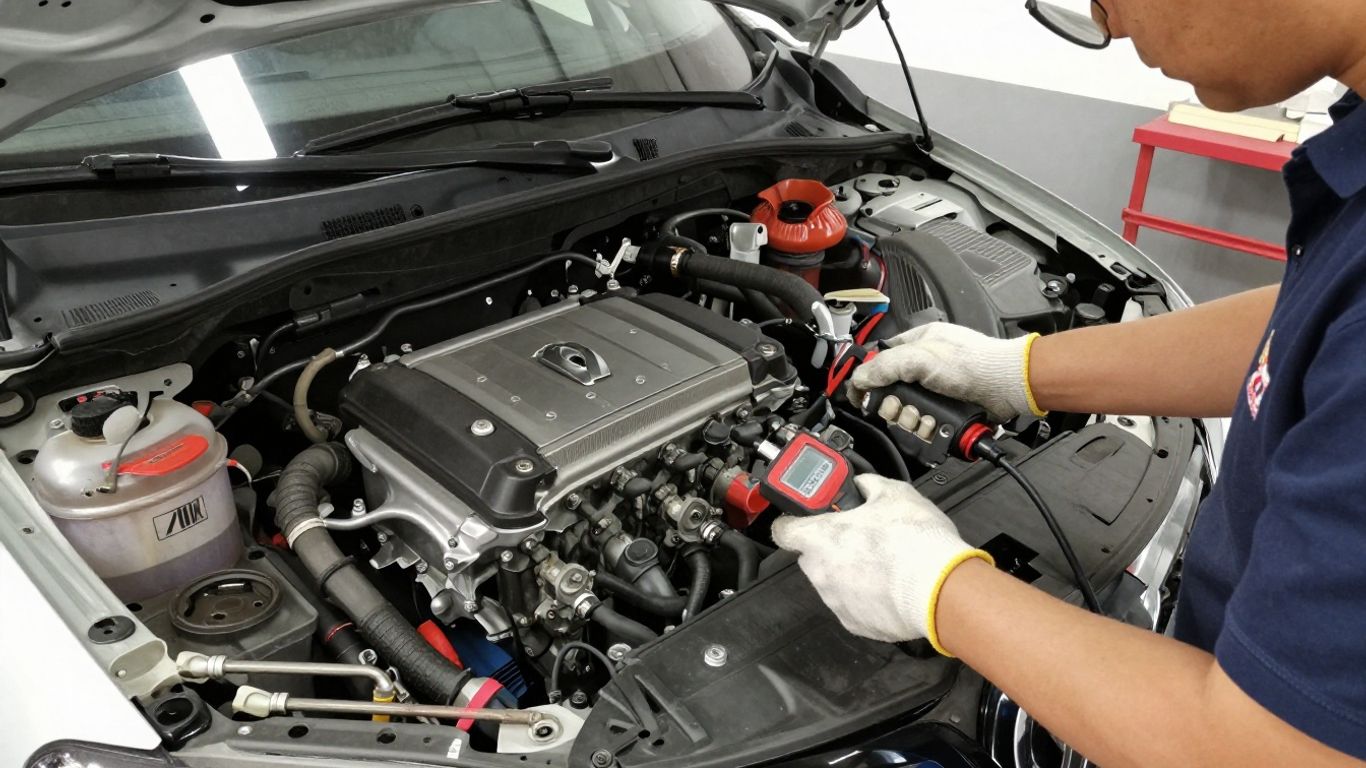
Look for a low coolant level, fresh leaks, damaged hoses, belt problems, and signs of fluid contamination. Check that the oil level and appearance are not obviously abnormal, but avoid removing components that require special tools. If the cause is not clear or the warning was severe, have the vehicle transported rather than restarting it.
How to test coolant circulation and radiator airflow
After a professional confirms that it is safe to run the engine, observe whether the temperature rises normally and whether the radiator fan engages when required. A technician may check temperature differences across the radiator and inspect circulation as the engine warms. These observations distinguish an airflow problem from restricted flow, although they should not involve hands near moving fans.
When a diagnostic scan can identify electrical faults
A scan tool may reveal a stored temperature-sensor fault, fan-control issue, or related electrical code. It cannot, by itself, prove that a thermostat is mechanically stuck or that a radiator is blocked. Use scan results alongside physical inspection and cooling-system tests, not as a substitute for them.
Which repairs require a qualified Renault technician
Cooling-system bleeding, pressure testing, electrical diagnosis, timing-drive work, and internal engine testing can all require model-specific procedures. A qualified Renault technician can also verify the correct coolant specification and confirm that the repair solved the original fault. Car overheating diagnosis offers a useful general overview, but a vehicle with persistent symptoms should be assessed in person.
Match the repair to the overheating symptoms
The moment when overheating occurs often narrows the search. Traffic, highway speeds, hills, and heater behavior each place different demands on the cooling system. Use the pattern as a starting clue, not as permission to replace the first part that seems plausible.
Fixes for overheating in traffic or while idling
Overheating at low speed commonly raises suspicion of radiator airflow, especially if the temperature falls once the vehicle moves. The fan circuit, fan motor, fuse, relay, sensor, and radiator condition should be checked. Turning off the air conditioning may reduce load temporarily, but it is not a repair for a failed fan or restricted radiator.
Causes of overheating at higher speeds or under load
High-speed or uphill overheating can indicate inadequate coolant flow, a partially blocked radiator, a thermostat problem, low coolant, or an internal engine fault. Heavy load also exposes weaknesses that may remain hidden during a short idle test. Compare the symptom with coolant level and leak evidence before deciding which test comes next.
Solutions when the heater blows cold air
A cold heater during an overheating event may mean that hot coolant is not reaching the heater core. Low coolant, trapped air, restricted circulation, or a water-pump problem are possible explanations. Stop if the temperature is high; increasing the heater setting cannot safely compensate for a cooling system that is no longer circulating correctly.
Addressing repeated coolant loss without visible leaks
Coolant may escape only when the system is hot, leaving no obvious puddle after the car cools. A pressure test can expose external leaks, while combustion-gas or other internal tests can investigate loss into the engine. Do not keep adding fluid indefinitely, since repeated loss can leave the system low again without warning.
Handling overheating after recent cooling-system work
Air trapped during refilling, a loose clamp, an incorrectly routed hose, or an unsuitable fluid mixture can cause trouble after repairs. Return to the workshop promptly and describe exactly when the overheating began. Cooling-system maintenance steps can support a basic review, but post-repair overheating deserves a direct inspection of the work performed.
Prevent the problem from returning
Prevention is mostly consistent maintenance and early attention to small changes. Keep records of coolant work, overheating events, and replaced parts so a later technician can see the pattern. Even a successful repair should be followed by a short period of closer monitoring.
Recommended coolant and service intervals
Follow the model-specific service schedule and use the coolant specification in the owner’s manual. There is no single safe interval for every engine, climate, or driving pattern, so avoid relying on a generic mileage claim. Ask the workshop whether the fluid needs replacement, testing, or simply a level inspection at the next service.
Inspecting belts, hoses, fans, and the radiator regularly
During routine maintenance, look for swollen or cracked hoses, loose clamps, belt wear, debris on the radiator, and signs of fan damage. A technician can inspect areas that are difficult to see from above. Small deterioration is easier and cheaper to address before it causes coolant loss or overheating.
Keeping the cooling system free from air pockets
Air introduced during a repair can interfere with circulation and produce uneven temperatures. The system must be refilled and bled according to the vehicle’s procedure, then checked again after a heat cycle. If the level changes noticeably after service, return for an inspection rather than repeatedly topping it up without an explanation.
Early warning signs to monitor after a repair
For the first few drives, watch the gauge for unusual movement and pay attention to fan operation, heater performance, odors, and any new spots under the vehicle. Stop if the warning returns or the temperature behaves differently from before. A written maintenance record system can make these changes easier to communicate, even if you keep it as a simple note on your phone.
When to schedule a cooling-system pressure test
Arrange a pressure test when coolant disappears, a leak is suspected but cannot be seen, or the system has overheated more than once. It is also sensible after a major cooling-system repair if the level continues to fall. Pressure testing should be performed with suitable equipment and a cool vehicle by someone who can interpret the result.
Conclusion
A safe Renault engine overheating solution is less about guessing a single failed part and more about stopping early, checking only when cool, and matching professional tests to the symptoms. Treat steam, persistent warnings, repeated coolant loss, and cold heater output as reasons to stop driving and seek help. That approach protects both your safety and the engine.
Frequently Asked Questions
Can I drive a car that is overheating?
No, not while the gauge remains in the hot zone or a warning light persists. Pull over safely and arrange assistance if the temperature does not return to normal promptly.
Should I open the hood when steam is coming out?
Stay clear of the front of the vehicle and do not open the hood while steam is escaping. Hot vapor and coolant can cause serious burns, so wait for assistance.
Can low coolant cause an engine to overheat?
Yes. Low coolant can reduce the system’s ability to carry heat away from the engine, but the reason for the low level still needs to be found.
Why does overheating happen only in traffic?
Low-speed driving provides less natural airflow through the radiator. A failed fan, fan control, fuse, relay, sensor, or restricted radiator can therefore become noticeable mainly in traffic.
What does cold air from the heater mean during overheating?
It may indicate low coolant, trapped air, restricted circulation, or a water-pump problem. Stop if the engine temperature is high rather than relying on the heater to cool it.
Is a temperature warning light enough to confirm the cause?
No. The warning confirms that the engine or its monitoring system has detected a problem, but testing is needed to distinguish low coolant, poor airflow, restricted flow, sensor faults, and internal damage.
When should a cooling system be pressure-tested?
A pressure test is appropriate when coolant loss is repeated, a leak is suspected but hidden, or overheating returns after a repair. It should be performed with the engine cool and suitable equipment.