Key Takeaways
Maintaining the correct lubricant volume is essential for the smooth operation and longevity of any vehicle engine. Follow this guide to ensure your car stays in peak condition.
- Park on level ground to ensure the most accurate fluid level reading.
- Consult your specific model’s manual for guidance on internal checks.
- Use a lint-free cloth to keep dipstick readings clear and precise.
- Monitor your dashboard for electronic alerts regarding potential oil pressure drops.
- Never exceed the maximum fill line to avoid causing internal engine damage.
Understanding your specific Renault model’s requirements
Identifying engine types across different Renault series
Engines vary significantly between models, so knowing your specific engine type is the first step in maintenance. Much like the design of the Kia EV3 focuses on specific motor output requirements, Renault engines require tailored attention based on their configuration. Whether you drive a compact hatchback or a larger SUV, engine internal components are engineered for unique tolerance thresholds.
Consulting the vehicle owner’s manual for specific instructions
Your owner’s manual serves as the definitive reference for all fluid maintenance protocols. It outlines the exact oil specifications and the frequency required for your specific powertrain. Relying on this documentation ensures you stay within the manufacturer’s suggested service interval for your vehicle.
Recognizing technical differences between diesel and gasoline maintenance
Diesel engines and gasoline engines operate with differing pressure characteristics and lubrication needs. Understanding these nuances is critical when performing your own maintenance. Diesel units often require specific synthetic oil grades to ensure effective performance and exhaust treatment system longevity.
Checking oil levels manually with a dipstick
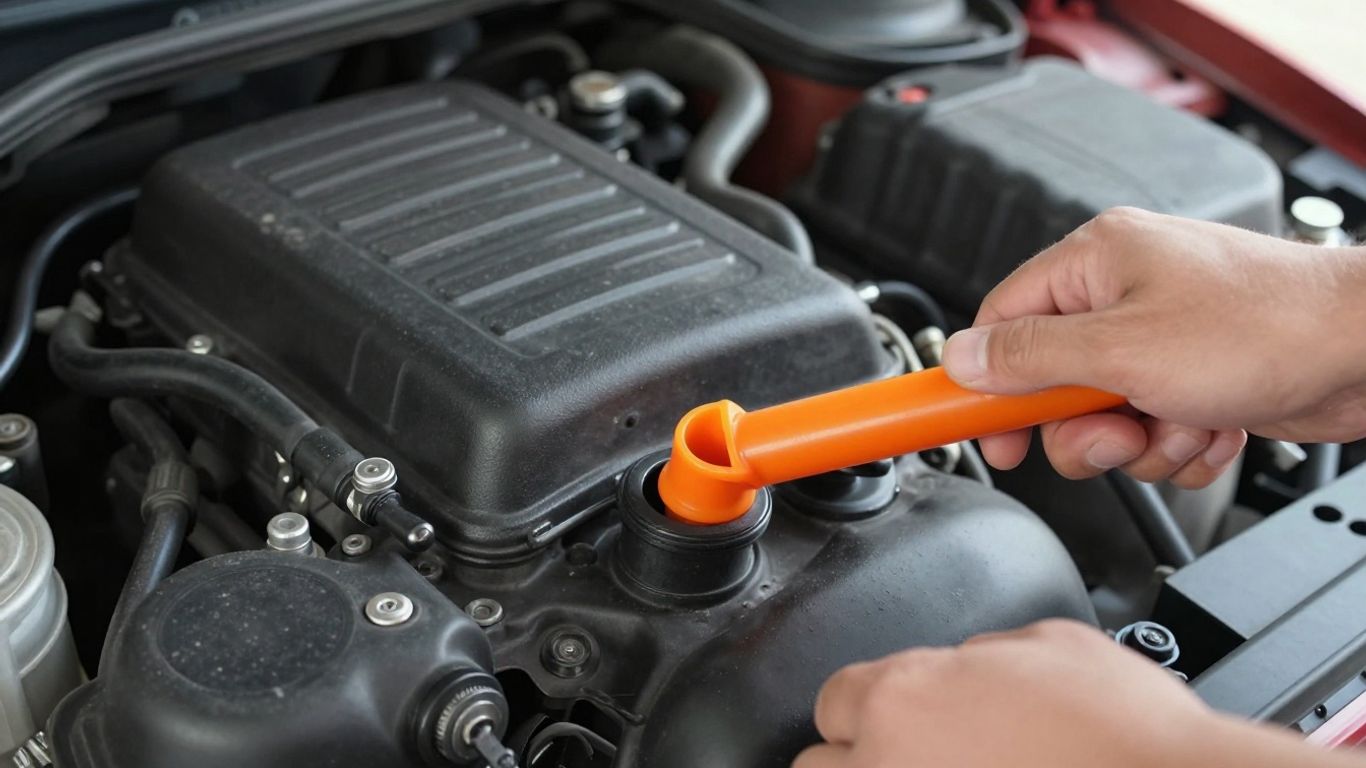
Locating the dipstick handle under the hood
Locating the dipstick is generally straightforward, though it can vary by chassis. Most dipsticks feature a brightly colored loop, typically yellow or orange, designed for easy identification during routine engine inspections. If you find yourself searching through the engine bay, you can seek expert help from an RAC mobile mechanic if specific accessibility remains a challenge.
Cleanliness protocols for accurate oil level readings
Precision depends on a clean dipstick surface. Before reading, wipe away all residual lubricant to ensure that the actual level, rather than old buildup, is captured on the measurement tool. This step helps in identifying the true state of the oil coating the metal rod.
Inserting and removing the dipstick correctly
Proper technique prevents skewed results when monitoring your motor oil. You must ensure the dipstick is fully seated within its tube before extraction, as partial insertion often leads to an artificially low reading.
Consider this standardized maintenance sequence:
- Extract the dipstick gently after the engine has cooled.
- Wipe the stem thoroughly using a lint-free shop towel.
- Reinsert the rod completely until the handle is firmly seated.
- Withdraw the rod a second time to observe the level mark.
Adhering to these steps ensures that you are reading the oil level accurately before making any adjustments.
Navigating digital oil level indicators
Accessing the onboard computer during vehicle startup
Many modern vehicles now incorporate electronic sensors that monitor fluid levels directly through the dashboard. Upon turning the ignition, the onboard computer often performs an automatic diagnostic check. This digital integration removes some guesswork but still requires you to be observant of the visual feedback provided on the instrument cluster.
Understanding visual feedback on the instrument cluster
Display interfaces show the current status of your oil as reported by the sensor located in the sump. The dashboard displays clear alerts to the driver, indicating whether your levels are currently optimal, low, or critically drained. It is essential to understand that these digital readouts focus on level monitoring, not necessarily on the degradation status of the lubricant itself.
Troubleshooting dashboard error messages related to oil
If the instrument cluster displays an error or warning light, it may signify a sensor malfunction rather than a genuine low-oil state. Should you encounter persistent dashboard warnings, consider consulting with a specialist to interpret the diagnostics accurately. You might also want to look into how to navigate car accident claims legal guidance if your engine experiences issues due to improper maintenance incidents, though general mechanical troubleshooting usually resolves simple level errors.
Interpreting oil measurement accuracy and results

Determining the minimum and maximum level markers
Every manual dipstick features clear boundary indicators, typically represented by indentations or text. You should aim to keep the lubricant level within these designated markers. Exceeding the maximum limit can increase pressure significantly, leading to unwanted systemic issues.
To better understand how specific readings correspond to maintenance actions, consult the table below:
| Reading Level | Recommended Action | Risk Factor |
|---|---|---|
| Below Min | Add recommended oil volume | Engine seizure risk |
| Midpoint | Monitor, no addition needed | Low risk |
| At Max | Verify and do not overfill | Internal pressure damage |
Maintaining the level right at or near the maximum marker is the ideal target for most driving conditions. Monitoring the dipstick regularly ensures that any drop is caught well before it poses a danger to your vehicle components.
Deciphering oil color and consistency indicators
Oil color evolves as the vehicle runs, turning from a honey hue to a darker brown over time. Consistent checks allow you to monitor this transition, which provides insight into the lubricant’s state. If the oil appears thick or displays a frothy appearance, it may suggest moisture contamination or other underlying issues that require a professional inspection.
Addressing signs of overfilling or oil depletion
Overfilling is just as detrimental as underfilling, as excess volume can lead to fluid foaming. If you accidentally add too much, you must drain the excess to maintain pressure balance. Conversely, rapid depletion of oil indicates a potential leak or excessive burning that warrants closer examination by your technician.
Safety protocols and preparation for fluid checks
Ensuring the engine is parked on level ground
Performing an accurate check requires a static, flat surface. Any incline will shift the distribution of oil within the sump, providing an incorrect reading on both digital and manual systems.
Timing checks after engine cooling cycles
Checking fluid levels while the engine is cold provides the most reliable data. Allowing the car to sit for at least an hour ensures all lubricant has drained back into the reservoir. This consistency is key for tracking your oil consumption rate accurately over time.
Handling hot engine components safely
Safety is paramount when working with engine components. Always exercise caution, as parts like the exhaust manifold can reach extreme temperatures. If you must check the oil while the vehicle is warm, keep all clothing and tools away from moving parts and heat sources.
Essential supplies for oil maintenance
Choosing the manufacturer-recommended oil grade
Always select the specific oil grade and viscosity recommended by the manufacturer. Using the correct grade ensures that the internal components receive proper protection under diverse temperature ranges, which is essential for performance and reliability.
Stocking lint-free cloths for accurate dipstick readings
Using a standard rag can leave threads or loose fibers inside the tube, which might contaminate the oil system. Stocking dedicated, lint-free cloths specifically for your car maintenance kit is a smart practice that keeps the engine environment clean.
Utilizing proper funnel techniques to prevent spillage
Even a small amount of oil spilled on the hot engine block can produce smoke or create a fire hazard. Using a proper funnel allows you to fill the reservoir accurately without making a mess. Take your time to pour slowly, checking the level frequently during the addition process to avoid accidental overfilling.
Conclusion
Caring for your car by regularly checking its oil level is one of the most effective habits you can adopt for long-term engine health. By following these manual and digital procedures, you stay fully informed about your vehicle’s performance needs while protecting your investment against unnecessary wear and breakdown.
Frequently Asked Questions
How often should I manually check my vehicle’s oil level?
It is generally advised to perform a manual check at least once every few weeks, or before you embark on a long journey, to stay ahead of any significant depletion.
Can I mix different brands of engine oil?
Mixing brands is generally acceptable provided the oil viscosities and performance ratings meet the manufacturer’s requirements, but using the same brand is always the safest route.
Is it okay to drive if the oil level is just below the minimum mark?
Driving with oil levels below the minimum mark is highly discouraged, as it significantly increases the risk of engine friction damage due to inadequate lubrication.
Do I need to run the engine before checking the oil?
Most manufacturers recommend checking the oil when the engine is cool, as this ensures all the fluid has gravitationaly drained into the pan for an accurate reading.
What happens if I accidentally put too much oil in the engine?
Excessive oil can create high pressure and lead to aeration, which forces air bubbles into the oil pump, effectively reducing its ability to protect moving components.
Are electronic oil sensors always accurate?
While electronic sensors are convenient, they can occasionally experience faults or inaccuracies, which is why cross-referencing with a manual dipstick is a best practice for peace of mind.
Does the oil color indicate if it needs to be changed?
Darkening oil is a natural part of the engine’s cleaning process, but extreme sludge or a milky appearance are clear signs that the oil is past its usable stage and needs replacement.